


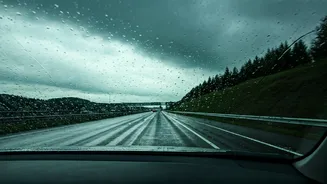


Ignoring Your Tyres and Brakes
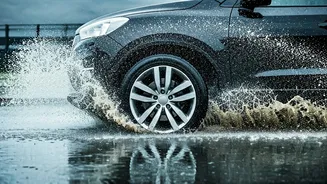
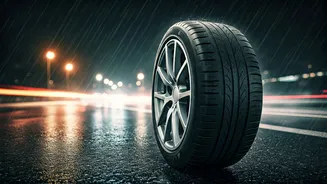
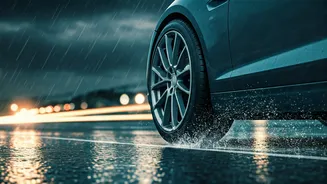
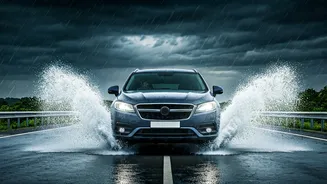
This is the most critical mistake before you even start the engine. Your tyres are the only contact between your car and the road. During the monsoon, worn-out tyres with shallow treads can't channel water away effectively, leading to a loss of grip.
This drastically increases the risk of hydroplaning, where your car essentially floats on a thin layer of water, making steering and braking impossible. Before the season begins, check your tyre pressure and ensure the tread depth is well above the minimum legal limit. Similarly, get your brakes inspected. Wet roads increase braking distances, and you need your brake pads, discs, and fluid to be in optimal condition to respond when you need them most.
Driving Too Fast for Conditions
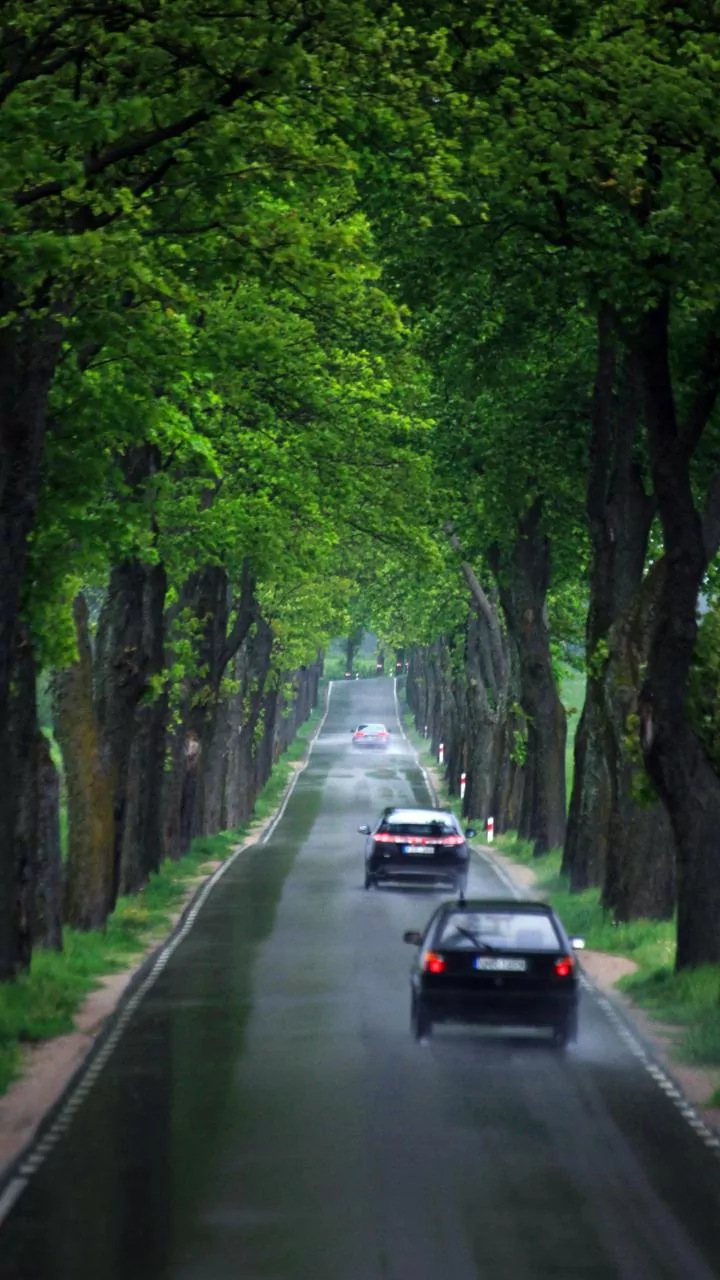
It sounds obvious, but it’s the most frequent cause of monsoon accidents. The posted speed limit is for ideal, dry conditions. In heavy rain, your visibility is reduced, and your car’s braking distance can double or even triple. Driving too fast gives you less time to react to sudden obstacles like a pedestrian, a stray animal, or a massive, water-filled pothole. Speed is also the primary ingredient for hydroplaning. Even with good tyres, exceeding 80 km/h on a wet highway can be enough to lose control. The golden rule is simple: slow down significantly. A journey that takes a few extra minutes is infinitely better than one that doesn't end safely.
Following the Car Ahead Too Closely
Tailgating is a dangerous habit year-round, but it becomes potentially lethal in the rain. As mentioned, your braking distance increases dramatically on wet surfaces. If the car in front of you suddenly brakes, you won't have enough space or time to stop, leading to a certain collision. A good practice is to double the standard 'three-second rule.' To do this, watch the vehicle in front of you pass a fixed object like a lamp post or a tree. Then, count the seconds it takes for you to pass the same object. In the monsoon, this gap should be at least five to six seconds. This buffer gives you the crucial reaction time needed to brake safely without skidding.
Underestimating Waterlogged Roads
That large, innocent-looking puddle could be hiding a deep pothole, an open manhole, or debris that could wreck your tyres and suspension. Worse, driving through deep water can cause catastrophic damage. If water enters your engine's air intake, it can lead to hydrostatic lock, seizing the engine and resulting in an enormously expensive repair. It can also short-circuit your car’s complex electrical systems. If you can't gauge the depth of the water, do not attempt to drive through it. It is always better to turn around and find an alternative, drier route, even if it’s longer. If you must proceed, watch other cars and stick to the centre of the road where the water is usually shallowest.
Misusing Your Hazard Lights
Many drivers switch on their hazard lights (blinkers) the moment it starts raining heavily, thinking it improves their visibility to others. This is a dangerous misconception. Hazard lights are legally meant to indicate a stationary, broken-down vehicle. When you drive with them on, other drivers behind you can't tell if you are slowing down, stopping, or changing lanes, as your turn indicators won't work. This creates immense confusion and increases the risk of being rear-ended. The correct approach in low visibility is to switch on your headlights (on low beam) and your rear fog lamps if you have them. This makes you visible without confusing other road users.
Neglecting Wipers and Defogging
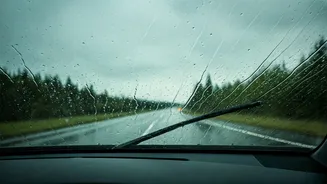
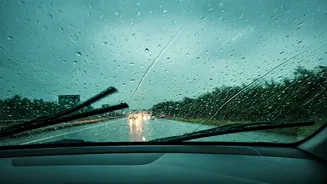
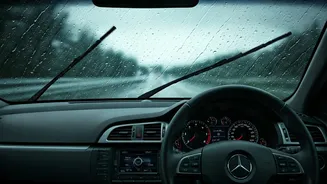
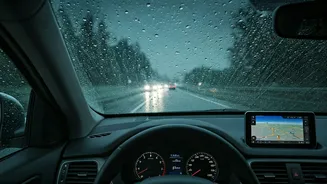
Your ability to see is paramount. Old, cracked, or hardened wiper blades won't clear water from your windshield effectively, leaving behind streaks that impair vision, especially at night when dealing with oncoming headlight glare. Replace your wipers annually before the monsoon. Just as important is the view from the inside. The high humidity causes windshields to fog up quickly. Don't resort to wiping it with your hand, which leaves a greasy, smeary mess. Instead, learn to use your car’s air-conditioning system correctly. Direct the AC vents towards the windshield and turn up the blower speed. This dry air is the fastest way to clear the fog and maintain clear visibility.