



A New Chapter in Cosmic Observation
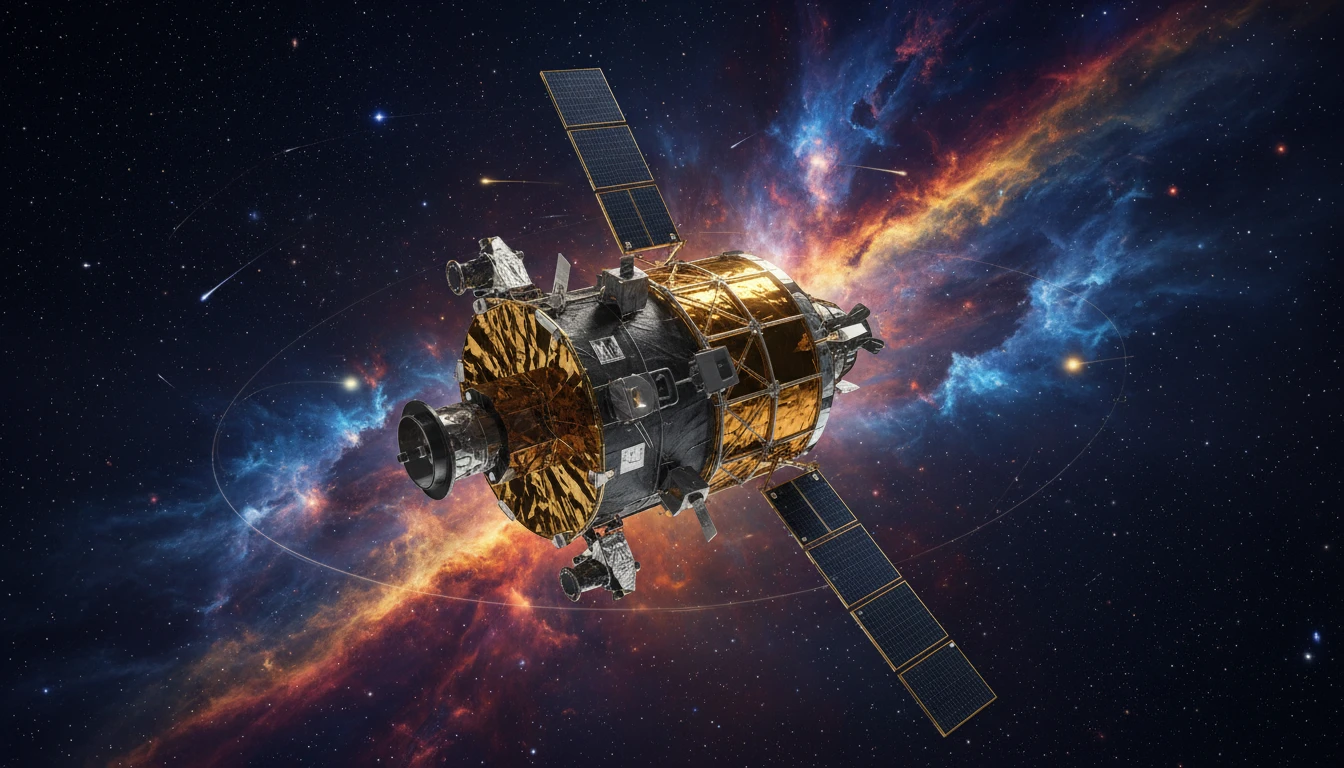
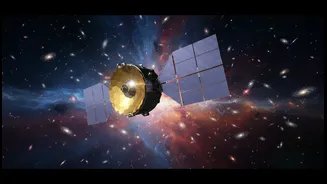
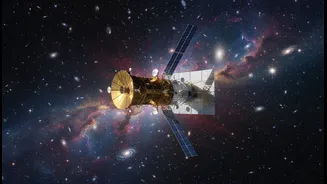
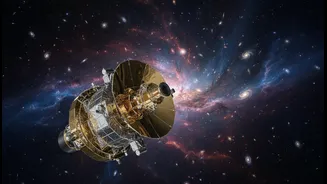
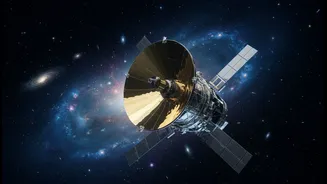
Named after Nancy Grace Roman, NASA’s first chief of astronomy and a key figure in the development of the Hubble Space Telescope, the Roman Space Telescope represents the next step in space-based observatories. While telescopes like Hubble and the James
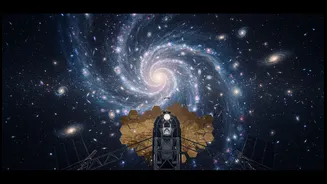
Webb Space Telescope provide stunning, high-resolution close-ups of cosmic objects, Roman is designed for the big picture. Its mission is not to zoom in on a single star or galaxy, but to survey enormous swaths of the sky with incredible speed and detail. It’s less like a magnifying glass and more like a panoramic camera, built to create the largest, deepest maps of the universe ever made.
What 'At Scale' Really Means
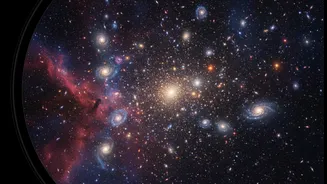
The defining feature of the Roman Space Telescope is its immense field of view. Its Wide Field Instrument will be able to capture an area of the sky at least 100 times larger than Hubble can in a single image, all while maintaining a similar, razor-sharp resolution. To put that into perspective, where Hubble might need hundreds of individual images to map a portion of a nearby galaxy like Andromeda, Roman could do it in just a handful of shots. This ability to see both wide and deep allows it to perform massive surveys, collecting data on billions of galaxies and stars over its five-year primary mission. This approach will generate vast amounts of data, enabling scientists to study the universe from a statistical standpoint, looking for patterns and clues that are only visible at a grand scale.
Chasing the Universe’s Dark Secrets
Two of the biggest puzzles in modern physics are dark energy and dark matter. Dark energy is the mysterious force thought to be causing the universe's expansion to accelerate, while dark matter is the unseen substance that provides the gravitational scaffolding for galaxies. Together, they make up about 95% of the universe, yet we know very little about them. Roman's primary mission is to tackle these questions head-on. By measuring the positions and distances of billions of galaxies, tracking distant stellar explosions known as supernovae, and mapping how gravity bends light across the cosmos, the telescope will provide crucial data to test our theories about these dark components and their influence on cosmic evolution.
A Galactic Census of New Worlds
Beyond cosmology, Roman is set to revolutionize the search for planets outside our solar system. The mission is expected to discover thousands, and possibly even a hundred thousand, new exoplanets. Instead of looking for the dimming of a star as a planet passes in front, Roman will primarily use a technique called gravitational microlensing. This method detects the way a foreground star and its planets bend and magnify the light from a distant background star. This technique is sensitive enough to find planets thousands of light-years away, including rogue planets that drift through space without a host star. The resulting data will provide a statistical census of planets across our galaxy, helping us understand how common different types of solar systems are.
Ready for Liftoff
After years of development and construction, the Roman Space Telescope arrived at NASA's Kennedy Space Center in Florida in late June 2026 for its final pre-launch preparations. Engineers are now conducting final tests and will soon integrate the observatory with its launch vehicle, a powerful SpaceX Falcon Heavy rocket. Scheduled for liftoff on August 30, 2026, the telescope will travel to the second Lagrange point (L2), a gravitationally stable spot nearly one million miles from Earth. From this distant vantage point, shielded from the heat and light of Earth, Roman will begin its ambitious survey of the cosmos, opening a new window onto the universe's greatest mysteries.