
Understanding the Sadya
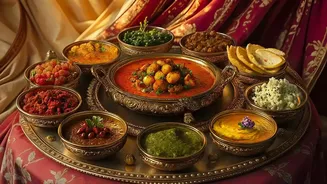
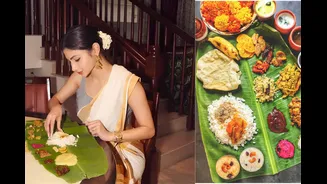
The Onam Sadya is a symbol of prosperity and togetherness, traditionally served on a fresh banana leaf and eaten by hand. It is an elaborate affair that can feature anywhere from a dozen to over sixty dishes, though a home-style Sadya can be just as special
with fewer items. The feast is designed to be a complete sensory experience, balancing all six tastes mentioned in Ayurveda: sweet, sour, salty, bitter, pungent, and astringent. Each dish has its specific place on the leaf, creating a visually stunning and nutritionally balanced meal.
The Anatomy of a Feast
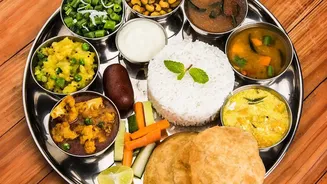
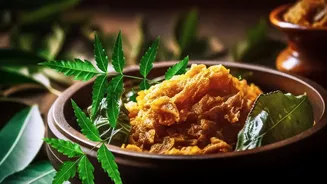
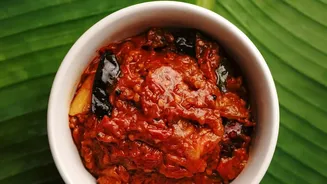
The components of a Sadya can be broken down into several categories. At its heart is Kerala Matta Rice, a distinct, nutty-flavoured red rice. This is accompanied by a series of 'Ozhichu Curries' (wet curries) like Parippu (a simple lentil dish with ghee), Sambar, and Rasam. Then come the 'Kootan' or side dishes, which include dry vegetable preparations like Thoran, and richer coconut-based dishes like Avial and Erissery. No Sadya is complete without tangy pickles like Inji Puli (ginger-tamarind chutney), crunchy Pappadams, and banana chips (Upperi). The meal concludes with one or more sweet Payasams, a traditional pudding.
Your Game Plan: A Prep Timeline
The key to a stress-free Sadya is planning. Spreading the work over a few days makes the process manageable. Two days before, do your grocery shopping for fresh produce like yam, pumpkin, ash gourd, raw bananas, and plenty of coconut. You can also buy store-bought items like banana chips and pappadams. The day before is for chopping vegetables and preparing dishes that keep well, such as pickles and Inji Puli. Soaking lentils can also be done a day ahead. On the morning of Onam, focus on cooking the fresh dishes like Avial, Thoran, Sambar, and the rice. The final tempering for the curries and frying the pappadams can be done just before serving.
The Art of Serving
Serving the Sadya is a ritual in itself. A fresh banana leaf, known as a 'thooshanila', is placed with its narrow tip pointing to the left of the diner. The accompaniments and side dishes are served on the top half of the leaf. Starting from the left tip, small portions of salt, banana chips, Sharkkara Varatti (jaggery-coated chips), and a small banana are placed. This is followed by pickles and the various vegetable dishes like Kichadi, Pachadi, Avial, and Thoran, moving from left to right. The bottom half of the leaf is reserved for the rice, which is served only after the guests are seated. The wet curries—Parippu with ghee, followed by Sambar—are ladled over the rice in courses. Payasam is served next, often on the leaf itself to be mixed with a banana. The meal traditionally concludes with Rasam and finally a glass of spiced buttermilk (Moru or Sambharam) to aid digestion.
Making It Your Own
While a 26-dish Sadya is traditional, don't feel pressured to make everything. Even a simpler spread with a dozen essential dishes can capture the festive spirit. The most important dishes for a core Sadya experience are typically considered to be rice, Parippu with ghee, Sambar, Avial, a Thoran, a pickle, Pappadam, and a Payasam. The goal is to enjoy the process and the company. You can use ready-made spice mixes or even involve family members in the chopping and preparation to make it a shared celebration.