








An Exotic Fruit Now Grown Locally
Dragon fruit, also known as pitaya, is a tropical fruit from a cactus plant native to the Americas but now cultivated extensively across Asia. In India, its popularity has surged, with local cultivation ramping up in states like Gujarat, Maharashtra,
and Karnataka to meet growing demand. This increasing local production means the fruit is more accessible and affordable than ever. It has even been given the local name 'Kamalam' in some regions, reflecting its growing place in the Indian agricultural landscape. Once a niche import, it's now a common sight, beloved for its refreshing taste often described as a mild cross between a kiwi and a pear.
More Than Just a Pretty Face
While its vibrant colour is what first catches the eye, the health benefits of dragon fruit are what create lasting fans. It's a low-calorie fruit packed with nutrients. It is an excellent source of fibre, which aids digestion and can help you feel full longer. The fruit is also rich in vitamin C and other antioxidants like flavonoids and betalains, which help protect your cells from damage caused by free radicals and can boost your immune system. Some studies suggest the betalains found in the red-fleshed varieties may help lower 'bad' LDL cholesterol. It is also a decent source of minerals like magnesium and iron.
A Guide to Choosing and Cutting
Picking a good dragon fruit is simple. Look for one with bright, evenly coloured skin. Avoid fruits with lots of blemishes or dry, wrinkled skin. It should feel heavy for its size and have a slight give when you press it gently, much like a ripe avocado or kiwi. If it’s rock hard, it needs a few days to ripen at room temperature. Prepping it is just as easy. Simply place the fruit on a cutting board, slice it in half lengthwise, and from there you can scoop the flesh out with a spoon. The skin is not edible, but the tiny black seeds are, providing a pleasant crunch.
A Rainbow of Varieties
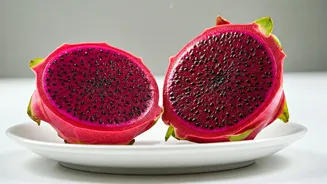
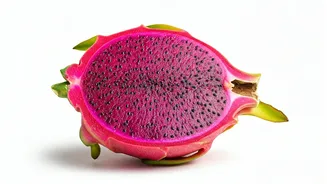
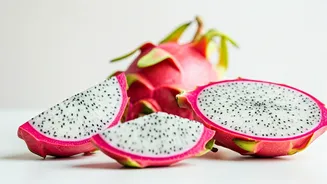
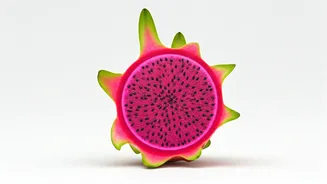
Not all dragon fruits are the same. The most common variety has bright pink skin with white flesh inside. This type has the mildest flavour. Another popular type has pink skin but with a stunning, deep red or magenta flesh. This variety tends to be sweeter and more flavourful. A third type, which is often considered the sweetest of all, has a bright yellow skin with white flesh. The red-fleshed varieties owe their vibrant colour to betalains, the same potent antioxidants found in beetroot. Your choice depends on whether you're seeking a subtle flavour or a sweeter, more intense experience.
Simple Ways to Enjoy Dragon Fruit
The beauty of dragon fruit is its versatility. Its mild sweetness means it pairs well with other flavours without overpowering them. The easiest way to enjoy it is fresh; simply scoop and eat. For a stunning and healthy breakfast, blend frozen dragon fruit into a thick smoothie bowl and top with granola and other fruits. Diced dragon fruit is a fantastic addition to fruit salads, adding colour and a refreshing element. It can also be blended into mocktails, lassis, or simple juices. You can even get creative and add it to a fresh salsa with onion, coriander, and a hint of lime for a tropical twist on a savoury favourite.