





More Than Just a Meal
When Indian astronauts embark on the nation's first crewed spaceflight, they will carry the aspirations of a billion people. But they will also carry something much more personal: a specially curated menu of Indian food. This isn't just about providing
sustenance; it's about providing comfort, psychological support, and a vital connection to home while orbiting the Earth. The task of designing this menu fell to the Mysuru-based Defence Food Research Laboratory (DFRL), a DRDO lab with decades of experience creating specialized food for the armed forces. For Gaganyaan, they faced a unique set of challenges, blending tradition with cutting-edge food technology to ensure India's space pioneers are well-fed and healthy.
The Challenge of Eating in Space
Eating in a zero-gravity environment is far from simple. Food must be lightweight, compact, and produce minimal crumbs, as floating fragments can damage sensitive equipment. More importantly, spaceflight alters human physiology. Astronauts can experience a loss of appetite, changes in taste and smell, and a negative energy balance that leads to weight loss. There are also critical nutritional concerns, such as bone density loss. To counteract this, space diets must be carefully calibrated. The Gaganyaan menu is designed to provide around 2,500 calories per day, packed with essential nutrients, proteins, and carbohydrates, while keeping salt and fat content low. The food is prepared to be easy to digest and will be available in ready-to-eat and semi-solid forms to suit the conditions of microgravity.
A Taste of India in Orbit
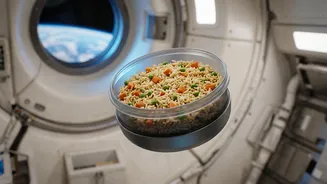
So, what exactly is on the menu? Astronauts will have a variety of familiar dishes to choose from, ensuring that the flavours of home are never far away. The extensive list includes both vegetarian and non-vegetarian options. For meals, they can look forward to vegetable biryani, chicken biryani, khichdi, dal chawal, shahi paneer, and aloo paratha. There are also lighter options like veg rolls, egg rolls, and idli with sambar. For dessert, astronauts will have comforting sweets like moong dal halwa and sooji halwa. Even staples like mango pickle have been included to add a familiar zest to their meals. Beverages such as tea, coffee, and juices have also been specially packaged for consumption in space.
The Science of Space Food
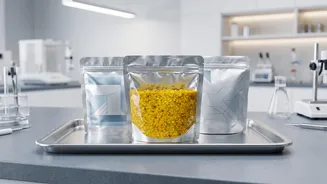
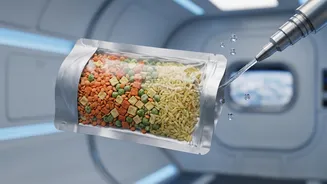
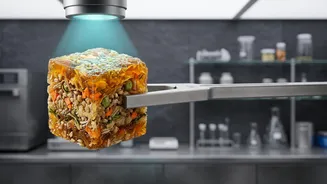
Preparing these dishes for space travel is a highly scientific process. The DFRL uses technologies like freeze-drying and dehydration to make the food stable, lightweight, and to give it a long shelf life without compromising on nutrition. The food is packed in special pouches. Astronauts will also be provided with food heaters to enjoy a warm meal. Another key innovation is the packaging for liquids. Special containers and straws have been developed that prevent liquids from escaping and floating away in zero gravity. The menu has been developed in close consultation with ISRO and the astronauts themselves, who review and taste the food to ensure it meets their preferences. This collaborative process ensures the final menu is not just scientifically sound but also genuinely palatable for the crew.
A Symbol of Self-Reliance
The development of a unique Indian space menu is a significant achievement. When Rakesh Sharma became the first Indian in space in 1984, he took Indian food prepared by the same lab, including suji halwa and aloo chole. Today, the Gaganyaan menu is far more extensive and technologically advanced, reflecting India's growing capabilities. It showcases a holistic approach to space exploration, where every detail, down to the crew's diet, is being handled indigenously. This meticulous planning provides a crucial morale boost for the astronauts, reminding them of home while they undertake their historic mission. The ability to provide familiar, comforting, and nutritionally complete food is a testament to the nation's scientific self-reliance and a critical component for the success of future long-duration missions.