




A New Challenge: The Lunar South Pole
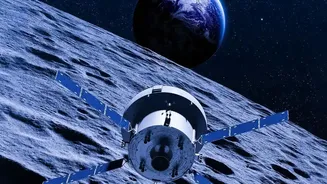
When the Apollo astronauts famously “bunny-hopped” across the lunar surface in the 1960s and 70s, they were exploring relatively flat, equatorial regions. NASA's Artemis program has a much more challenging destination in mind: the Moon’s South Pole. This
region is a rugged, heavily cratered landscape of steep slopes, deep shadows, and extreme temperatures. Scientists are interested in this area because the permanently shadowed craters may hold water ice, a crucial resource for future long-term exploration. However, the old Apollo suits, masterpieces of their time, were stiff and limited astronauts' mobility. To conduct meaningful science in such a difficult environment—to bend, kneel, and explore—astronauts need a completely new wardrobe.
Introducing the AxEMU Spacesuit
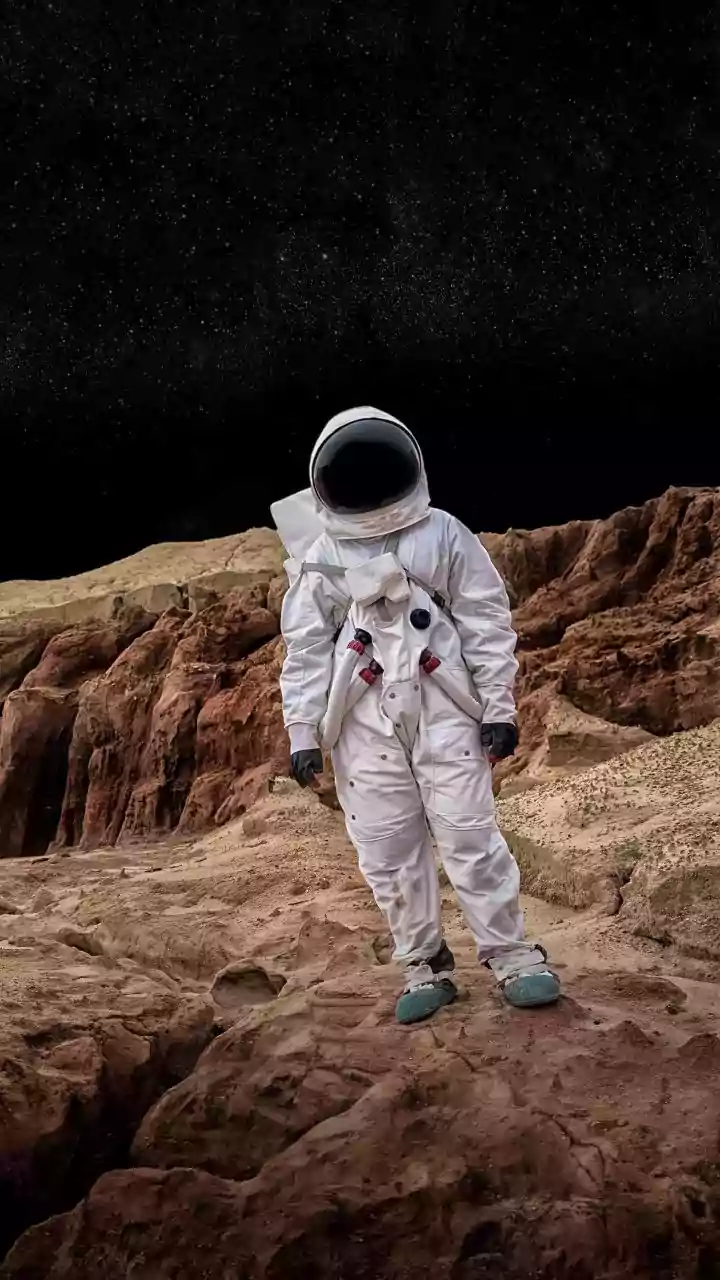
Enter the Axiom Extravehicular Mobility Unit, or AxEMU. Developed by the commercial company Axiom Space under contract with NASA, this next-generation spacesuit is designed from the ground up for the demands of Artemis. This partnership represents a modern approach for NASA, which is increasingly relying on commercial providers to develop key technologies for space exploration, reducing costs and driving innovation. The AxEMU builds on years of NASA's own prototype research but incorporates the latest technology in materials and design to give astronauts a personal spacecraft with greatly enhanced capabilities. The Italian luxury fashion house Prada even collaborated with Axiom, contributing its expertise in high-performance materials and manufacturing techniques to the suit's outer layers.
Engineered for Unprecedented Flexibility
The key innovation of the AxEMU is its remarkable flexibility. Unlike the rigid suits of the past that forced astronauts into a limited range of motion, the new design uses a combination of advanced soft-goods and hard-joint components that allow for much more natural movement. This means astronauts will be able to walk more easily, twist, bend down to pick up rock samples, and perform complex scientific tasks without fighting against their own suit. The goal is to make movement on the Moon's 1/6th gravity feel less like a chore and more like a natural extension of the astronaut's body. This increased mobility is critical for navigating the treacherous, uneven terrain of the lunar South Pole safely and effectively.
More Than Just Mobility
While flexibility is a headline feature, the AxEMU is packed with other crucial upgrades. It is designed to accommodate a much wider range of body types, fitting both men and women from the 1st to the 99th percentile, a significant improvement over past designs. The suit offers enhanced protection from the harsh lunar environment, including the extreme cold of permanently shadowed regions, where temperatures can plummet to -238°C. The life support system is also state-of-the-art, with redundant systems for safety and the ability to support spacewalks for at least eight hours. An advanced helmet and visor system, with contributions from Oakley, provides a better view and protection from solar glare, while custom-designed gloves offer improved dexterity.
A Stepping Stone to Mars
The AxEMU is not just a suit for the Moon. Axiom Space has designed it with a modular and scalable architecture, meaning it can be adapted for different missions, including work in low-Earth orbit and, eventually, the first human missions to Mars. The lessons learned and technologies developed for the Artemis program are a critical proving ground for the even greater challenges of exploring the Red Planet. The suit is currently undergoing extensive testing in simulated lunar environments, including underwater at NASA's Neutral Buoyancy Laboratory, to ensure it is ready for the Artemis III mission, currently planned to return humans to the Moon. Each test brings humanity one step closer to not just visiting other worlds, but truly working and living on them.