






A Strategic Shift in Orbit
India's space journey is undergoing a monumental transformation. While ISRO continues its legacy of pioneering scientific missions, a parallel and equally ambitious agenda has taken flight: the full-scale commercialisation of its space capabilities. This
isn't just about earning revenue; it's a calculated strategy to build a self-sustaining ecosystem that positions India as a dominant force in the global space economy, which is projected to grow significantly. The government has restructured the landscape by creating two specialist entities: NewSpace India Limited (NSIL) and the Indian National Space Promotion and Authorisation Centre (IN-SPACe). Together, they form a dynamic network designed to market ISRO's proven technologies to the world while simultaneously nurturing a new generation of private Indian space companies.
NSIL: India’s Global Space Broker
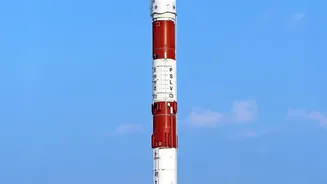
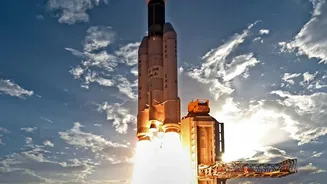
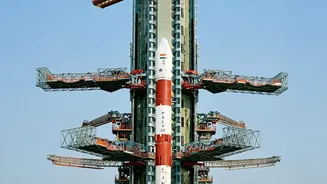
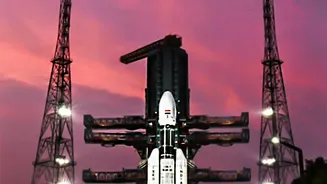
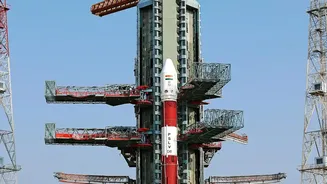
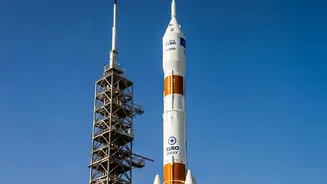
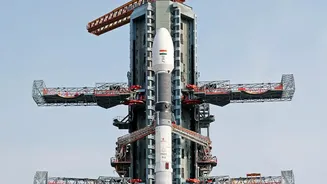
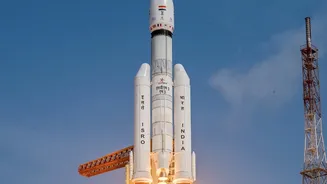
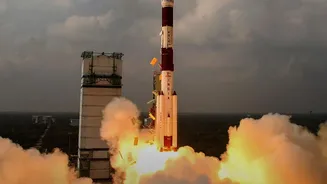
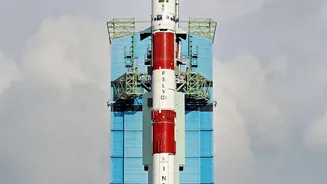
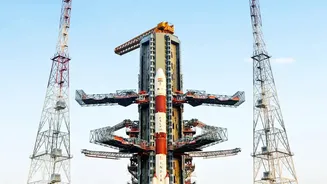
Established in 2019, NewSpace India Limited (NSIL) acts as the primary commercial arm of ISRO. Its core mandate is to take the proven products and services developed by ISRO and market them to global customers. This primarily involves selling launch services on its workhorse rockets like the Polar Satellite Launch Vehicle (PSLV) and the heavier LVM3. NSIL has already found significant success, launching hundreds of foreign satellites for countries including the USA, UK, Singapore, and Luxembourg. A prime example was the launch of 36 satellites for the UK-based company OneWeb, a mission that showcased India's capability to handle large-scale commercial contracts. Beyond launches, NSIL is also responsible for manufacturing launch vehicles through industry consortiums, managing satellite-based services, and transferring ISRO-developed technology to the private sector. This shift to a "demand-driven" model means NSIL actively seeks out and serves commercial needs, transforming ISRO's capabilities into a consistent business pipeline.
IN-SPACe: Fuelling the Private Rush
If NSIL is about commercialising ISRO's own assets, IN-SPACe is about empowering others to build their own. Acting as a single-window regulatory and promotion agency, IN-SPACe is designed to enable and authorise the activities of Non-Governmental Entities (NGEs) in the space sector. This is a game-changer for the nearly 400 space startups that have emerged in India since the sector was opened up. IN-SPACe facilitates access to ISRO's world-class testing facilities, infrastructure, and technical expertise, which would otherwise be prohibitively expensive for a startup to build. By handling authorisations for launches, satellite operations, and technology transfers, it clears the path for private companies to innovate and compete globally. This supportive framework is crucial for building a diverse domestic industry capable of developing everything from launch vehicles to satellite applications, turning India from a service provider into a hub of end-to-end space solutions.
Why the World Is Choosing India
India's appeal as a commercial launch destination rests on two key pillars: reliability and cost-effectiveness. ISRO's PSLV, for instance, has a proven track record of dozens of successful flights, earning it the reputation of a dependable workhorse. This reliability, combined with competitive pricing compared to other international space agencies, makes it an attractive option for satellite operators worldwide. India has launched over 400 satellites for more than 35 countries, generating hundreds of millions in foreign revenue. The growing portfolio includes a range of vehicles like the PSLV for smaller satellites, the LVM3 for heavy payloads, and the new Small Satellite Launch Vehicle (SSLV) designed for on-demand launches of smaller satellites. This diverse launch capability allows NSIL to cater to a wide spectrum of the market, from large communication satellites to clusters of small earth-observation satellites.
Building a Self-Sustaining Future
The long-term vision is clear: create a thriving, self-sustaining space economy where ISRO focuses on advanced research and development while the private sector drives commercial activities. The current space economy, valued at around $8.4 billion, is projected to potentially reach over $40 billion by the next decade, with India aiming to capture a much larger share of the global market. The strategy is already showing results, with private Indian startups like Skyroot Aerospace developing and launching their own rockets. The combination of NSIL's global marketing efforts and IN-SPACe's domestic industry enablement creates a powerful feedback loop. As more private players enter the field, the supply chain strengthens, innovation accelerates, and India's capacity to take on more complex and valuable commercial missions grows, securing its place as a formidable power in the final frontier.