





More Than Just Water
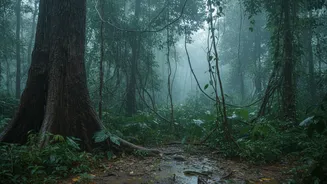
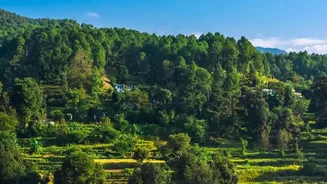
For India's diverse forests, from the moist deciduous stretches of the Western Ghats to the dry teak forests of the central highlands, rainfall is the master conductor of life. It’s not just about the total amount of rain that falls, but its timing, intensity,
and duration. A consistent, predictable monsoon allows dense forests with deep canopies to thrive. In contrast, sharp swings between wet and dry periods favour savannas—grassy, open landscapes with scattered trees. Scientists are finding that it is this variability that poses a significant threat, potentially driving a shift from stable forests to more fragile savanna ecosystems. This delicate balance is why researchers are using everything from satellite data to on-ground measurements to track every nuance of the monsoon.
Reading the Signs in the Trees
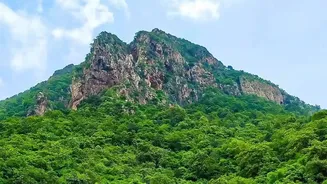
To understand how forests are responding to changing rain patterns, scientists look for telltale signs. By analysing decades of climate data alongside satellite imagery, they can measure changes in forest cover and health over time. One recent study in Madhya Pradesh's Panchmarhi Biosphere Reserve found that the reserve lost about 13% of its forest cover over nearly 50 years, a loss driven by both human activity and climate shifts. Researchers observed that dry teak forests were the most vulnerable, losing a significant portion of their canopy cover. Changes in precipitation have also been shown to disrupt phenology—the life cycle of trees, including when they develop leaves. These shifts can affect a forest's productivity and even its ability to act as a long-term carbon sink.
A Climate of Change
The fingerprints of climate change are increasingly visible in India's weather patterns. Studies have noted a worrying trend of rising temperatures combined with shifting rainfall. For instance, some regions are seeing a shift in precipitation away from the post-monsoon period to the pre-monsoon period. This, combined with overall warming, increases the risk of forest fires and puts moisture-stressed forests, like dry deciduous ones, at greater risk. Research indicates that widespread deforestation can also weaken the monsoon, particularly in the Ganga basin and northeast India, creating a dangerous feedback loop: less forest leads to less rain, which in turn harms the remaining forests. These changes don’t just affect the trees; they disrupt entire ecosystems, altering the behaviour, migration, and breeding cycles of wildlife that depend on predictable seasons.
From Data to Crucial Decisions
The painstaking work of tracking rainfall is not just an academic exercise; it provides the critical evidence needed for effective forest management and climate adaptation. By identifying which forest types are most vulnerable, policymakers can develop targeted conservation strategies. This research helps predict future changes in vegetation, productivity, and overall forest health. Understanding that some ecosystems are more resilient than others—for example, moist forests in the Western Ghats are better able to withstand rainfall changes compared to those in drier landscapes—allows for smarter allocation of resources. As India continues to develop its national forest policies, this scientific data is essential for creating adaptable strategies that can protect these invaluable natural assets from further damage and ensure their survival for generations to come.