




The Great Monsoon Retreat
The Southwest Monsoon doesn't just switch off like a tap. Its departure is a gradual process known as the monsoon withdrawal. This retreat typically begins from the northwestern parts of India around the start of September and slowly moves southeast across
the country over several weeks. This withdrawal means the thick cloud cover that dominated the skies for months begins to break apart. While some regions are still experiencing rain, others see the weather start to shift dramatically. The India Meteorological Department (IMD) has specific criteria for declaring the withdrawal, including a cessation of rain for five consecutive days and a significant drop in atmospheric moisture.
More Sun, More Heat
The most immediate consequence of the monsoon's retreat is clearer skies. With fewer clouds to block or reflect sunlight, more direct solar radiation reaches the ground. This uninterrupted sunshine heats the land and the air above it much more effectively than during the cloudy monsoon months. As the land heats up, the ambient temperature rises, leading to the hot daytime conditions that characterise the 'September heat'. This is particularly noticeable in northern and central India, where the monsoon recedes earlier, leading to a sharp increase in sunny days.
The Humidity Trap
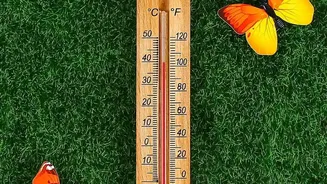
While rainfall decreases, a huge amount of moisture remains in the soil and the lower atmosphere from the preceding wet season. This lingering humidity is a crucial part of the puzzle. High humidity makes the heat feel far more oppressive. This is because your body's primary cooling mechanism—sweating—becomes less effective. Sweat can't evaporate easily into air that's already saturated with moisture. This is why the 'feels like' temperature, or heat index, can be significantly higher than the actual air temperature. You're left feeling sticky, sweaty, and drained, even if the thermometer reading isn't at its summer peak.
Shifting Atmospheric Patterns
Another key factor is a change in large-scale wind patterns. As the monsoon system weakens, a different type of weather system, known as an anticyclone, often begins to establish itself over parts of the country. An anticyclone is a region of high atmospheric pressure where air sinks. As the air descends, it gets compressed and warms up. This process not only adds to the overall heat but also suppresses cloud formation, leading to even more clear skies and sunshine. This combination of sinking, warming air and reduced cloud cover creates a stable, hot, and dry atmospheric setup that can persist for days.
India's Unofficial 'Second Summer'
This period is often referred to as the 'retreating monsoon season' or, more colloquially, a 'second summer'. It's a distinct phase between the peak of the wet monsoon and the arrival of the cool, dry winter season. The intensity and duration can vary each year and across different regions. For example, northwest India typically experiences this phase first, while the southern peninsula may still be receiving monsoon showers. In some years, if the monsoon withdrawal is particularly early, the September heat can be more pronounced and last longer, breaking temperature records as seen in some past years.