








Why Calm is Key
Pets, much like people, thrive on predictability. Travel inherently disrupts their routine, introducing a barrage of new sights, sounds, and smells that can be overwhelming. This sensory overload can trigger anxiety, manifesting as excessive barking or meowing,
pacing, drooling, or even aggression. A calm pre-departure routine works to counteract this by building positive associations and making the process feel familiar and safe. Your own energy is a huge factor; if you are stressed and rushing, your pet will pick up on your anxiety. By preparing in a calm, organised manner, you signal to them that everything is okay.
The Crate as a Sanctuary
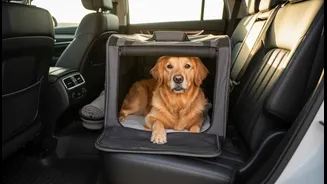
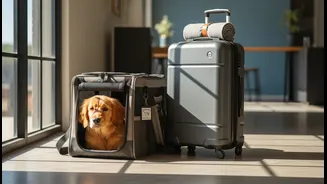
For both dogs and cats, a travel crate should be a safe haven, not a punishment. This is the most crucial part of your pre-travel preparation. Start weeks, or even months, in advance. Place the carrier in a common area of your home with the door open, making it a normal part of the furniture. Make it inviting by placing soft bedding, favourite toys, or even a worn T-shirt that smells like you inside. Begin by tossing treats near the crate, then just inside, and eventually all the way in to encourage them to enter voluntarily. Feed your pet their meals inside the crate to build a positive association. Never force them in; the goal is for them to see the crate as their own personal, secure space.
Practice Makes Perfect
Once your pet is comfortable with the crate, it's time to simulate the travel experience. Start with short periods with the door closed while you are still in the room. Gradually increase the duration. Next, take them on short car rides that end with a positive experience, like a visit to a park or a quiet, pleasant walk, not just the vet. This helps break the association that the car only leads to stressful events. For cats, even a trip to the end of the driveway and back, followed by a treat, can build confidence. These practice runs help your pet get used to the motion and sounds of travel, making the actual trip far less daunting.
Packing and Preparation
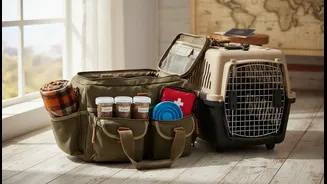
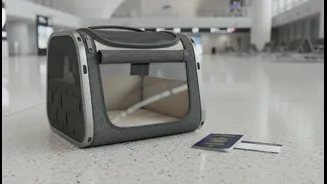
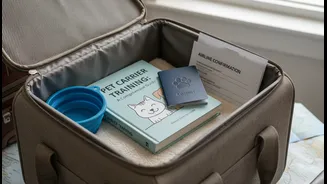
As the departure date nears, maintain your pet's regular feeding and exercise schedule as much as possible. When you pack their bag, include familiar items. Along with food, water bowls, and any necessary medications, pack their favourite blanket or toy. These familiar scents are incredibly comforting in a new environment. It is also wise to prepare a pet first-aid kit and have all essential documents, like vaccination records and a recent health certificate from your vet, easily accessible. In India, a 'Fit-to-Travel' certificate is often required, especially for interstate travel. Having digital and physical copies is recommended.
The Day of Departure
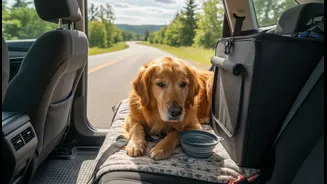
On travel day, stick to the routine. Go for a long walk or have a vigorous play session before you leave to help burn off excess energy. Feed your pet a light meal about four to six hours before departure to help prevent motion sickness. Avoid feeding them in a moving vehicle. Stay calm and positive as you load the car. Your pet will take cues from you, and your relaxed demeanour will reassure them. Once you're on the road, plan for breaks every two to three hours. This gives your pet a chance to stretch, hydrate, and relieve themselves in a safe, leashed area.