





Aligning with Your Body's Clock
The secret to better sleep lies in regulating your body's internal clock, or circadian rhythm. Yoga is uniquely equipped to help. Different styles of practice can either energize or relax your nervous system. An invigorating session can signal 'wake up'
to your body, while a gentle one can signal 'wind down'. A recent study led by researchers at NIMHANS in Bengaluru found that while any yoga is beneficial, morning practice may have an edge in regulating sleep cycles long-term. The study showed morning yoga led to fewer sleep disturbances and a natural shift towards being more active and alert in the daytime. This happens because morning activity helps anchor your body’s rhythm, promoting a stronger biological drive for sleep when night falls.
The Case for a Morning Practice
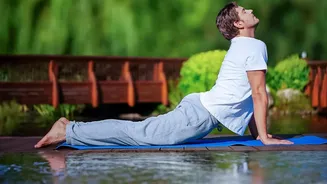
Starting your day on the mat can be a powerful way to enhance your sleep quality later that night. A morning practice, especially one involving dynamic sequences like Sun Salutations (Surya Namaskar), stimulates circulation and invigorates the body and mind. This can help kickstart your metabolism and set a positive, energetic tone for the day. Research suggests this early movement helps regulate the healthy release of cortisol, the body's stress hormone, which naturally peaks in the morning to promote wakefulness. By reinforcing this natural rhythm, you help your body prepare for a more efficient shutdown in the evening. Studies show that people who stick to a morning routine are often more consistent, as fewer distractions tend to get in the way compared to later in the day.
The Power of an Evening Wind-Down
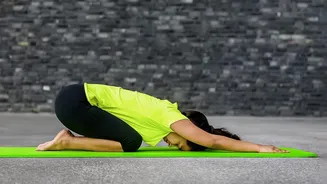
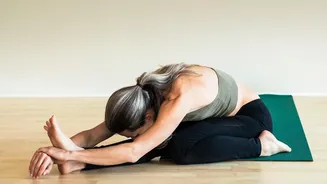
If your days are filled with stress and tension, an evening yoga session can be your ticket to a more peaceful night. The goal here isn't to get your heart pumping but to actively transition your body into a state of rest. Gentle, restorative styles like Yin Yoga or Hatha Yoga are ideal. These practices activate the parasympathetic nervous system—the body's 'rest and digest' mode—which helps lower cortisol levels, reduce heart rate, and calm a racing mind. Poses like Child’s Pose (Balasana), Legs-Up-the-Wall (Viparita Karani), and Seated Forward Bend (Paschimottanasana) are excellent for releasing physical tension stored in the hips, back, and shoulders, making it easier to fall and stay asleep. An evening practice helps create a clear buffer between the chaos of the day and the calm needed for sleep.
Which Poses Are Best for Sleep?
For an evening routine, focus on poses that are grounding and calming. Avoid anything too strenuous or stimulating. Viparita Karani (Legs-Up-the-Wall) is a deeply restorative pose that calms the nervous system and can help with insomnia. Balasana (Child’s Pose) soothes the mind and gently stretches the back and hips. Supta Baddha Konasana (Reclining Butterfly Pose) allows for deep relaxation while opening the hips, supported by pillows under the knees for comfort. Finally, Savasana (Corpse Pose) is the ultimate relaxation pose; lying flat on your back allows your entire body to absorb the benefits of the practice and let go completely. Holding each of these gentle poses for several minutes while focusing on deep, slow breathing can profoundly impact your readiness for sleep.
The Best Time Is Personal
While research points to unique benefits for both morning and evening sessions, the most effective yoga schedule is the one you can stick with. The best time to practise yoga is ultimately a personal decision that depends on your lifestyle, energy levels, and daily commitments. An 'early bird' might thrive with a sunrise session, while a 'night owl' might find more value in a calming pre-bedtime routine. Some people even benefit from a short, energizing morning flow and a second, gentler session at night. The key is to listen to your body. Experiment with different times and styles to discover what leaves you feeling most balanced and what best supports your journey to a restful night's sleep.