



The Universe’s Delivery Rooms
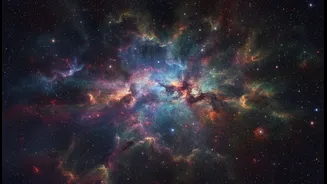
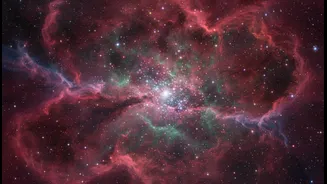
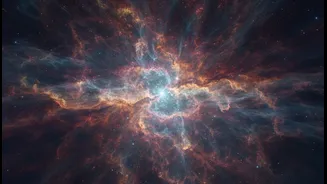
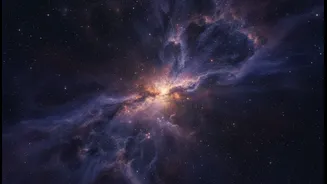
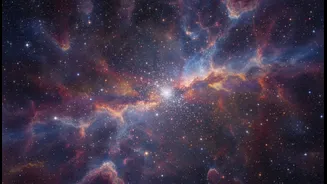
Imagine a place hundreds of light-years across, a colossal cloud of cold gas and dust adrift in the galaxy. This is a stellar nursery, or more technically, a molecular cloud. Within these dark, dense regions, gravity works its slow magic, pulling clumps
of matter together. As these clumps grow denser and hotter, they ignite, giving birth to protostars—the infants of the cosmic world. For eons, these nurseries were mostly opaque, their secrets locked behind impenetrable veils of dust. We knew stars were born there, but watching the process was like trying to see inside a locked room through a keyhole. That is, until we got a new key.
A VIP Pass to the Cosmos
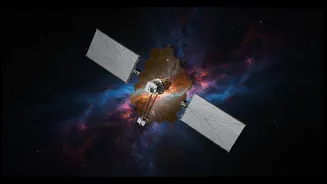
The game-changer is the James Webb Space Telescope (JWST). Unlike its famous predecessor, the Hubble Space Telescope, which primarily sees in visible light, JWST is designed to see the universe in infrared. This is a superpower when it comes to astronomy. Infrared light can pierce through the thick clouds of cosmic dust that hide stellar nurseries from view. Suddenly, what was opaque becomes translucent. JWST gives astronomers a front-row seat to the entire process of star formation, from the initial collapse of gas to the moment a young star bursts forth, sometimes firing powerful jets into the surrounding cloud.
Iconic Landmarks, New Filters
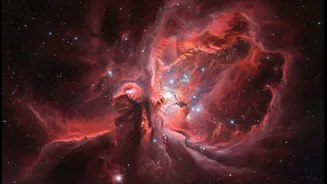
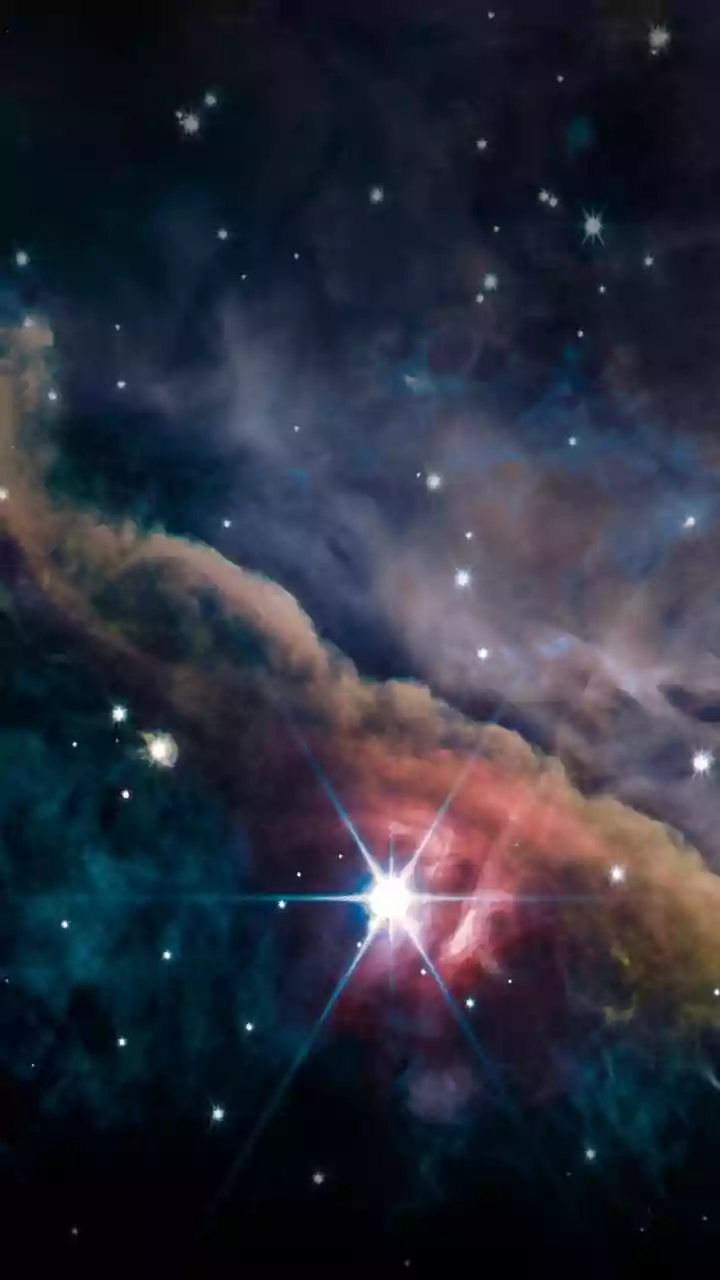
Thanks to JWST, we’re revisiting some of the most iconic objects in the night sky and seeing them in a completely new light. Take the Pillars of Creation, a small region within the Eagle Nebula made famous by a Hubble image in 1995. In Hubble's view, they are dark, imposing columns of gas and dust. In Webb's infrared image, they become semi-transparent and ethereal, revealing countless newborn red stars sparkling within and behind them. Similarly, Webb has peered into the heart of the Orion Nebula, the closest large star-forming region to Earth. Its images show intricate filaments of matter that could trigger the next generation of stars and even reveal the presence of mysterious, Jupiter-sized objects floating in pairs, unattached to any star.
Spilling the Cosmic Tea
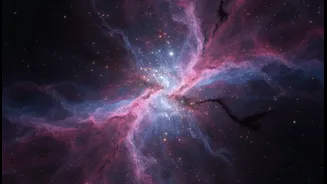
These new images are more than just pretty pictures; they are packed with scientific data. By looking at a single image of a star-forming region, scientists can now see stars at every stage of their lifecycle, all at once. They can see the youngest protostars still wrapped in their dusty cocoons and the more mature stars that have already blown their gas away. One of the most stunning examples is the 'Cosmic Cliffs' in the Carina Nebula. Webb’s view shows a landscape of gaseous mountains and valleys being carved out by intense radiation from massive young stars, revealing hundreds of previously hidden stars and protostellar jets shooting out from their dusty cradles. This allows scientists to study not just the stars themselves, but how they interact with and shape their environment—a process that was once largely theoretical.
More Than Just Pretty Pictures
Observing these distant births helps us understand our own origins. Our sun was born in a similar nursery about 4.6 billion years ago. By studying these active regions, we learn about the conditions that led to the formation of our solar system and, ultimately, life on Earth. These stellar nurseries are also where planets are born, from the same swirling disks of gas and dust that create a central star. JWST has even detected dusty disks around planet-sized objects, which might one day form moons. Each new image adds a piece to the puzzle of how galaxies evolve, how stars shape their surroundings, and how common the ingredients for planets like our own might be across the universe. The group chat is buzzing, and the insights are just getting started.