

The Quest for Lunar Water
The story of water on the Moon has unfolded over several missions. India's Chandrayaan-1 in 2008 played a pivotal role by providing evidence of water molecules. Later missions, including NASA's Lunar Reconnaissance Orbiter and ISRO’s own Chandrayaan-2
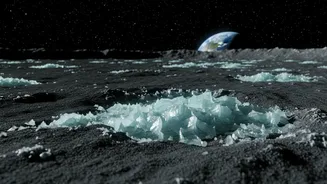
orbiter, gathered more data, culminating in Chandrayaan-3's successful landing, which furthered our understanding of the lunar south pole. Now, the focus is shifting from confirmation to utilisation. Recent studies involving ISRO scientists suggest there could be five to eight times more water ice trapped beneath the surface than on it, making excavation a key objective for future missions.
Targeting the Cold Traps
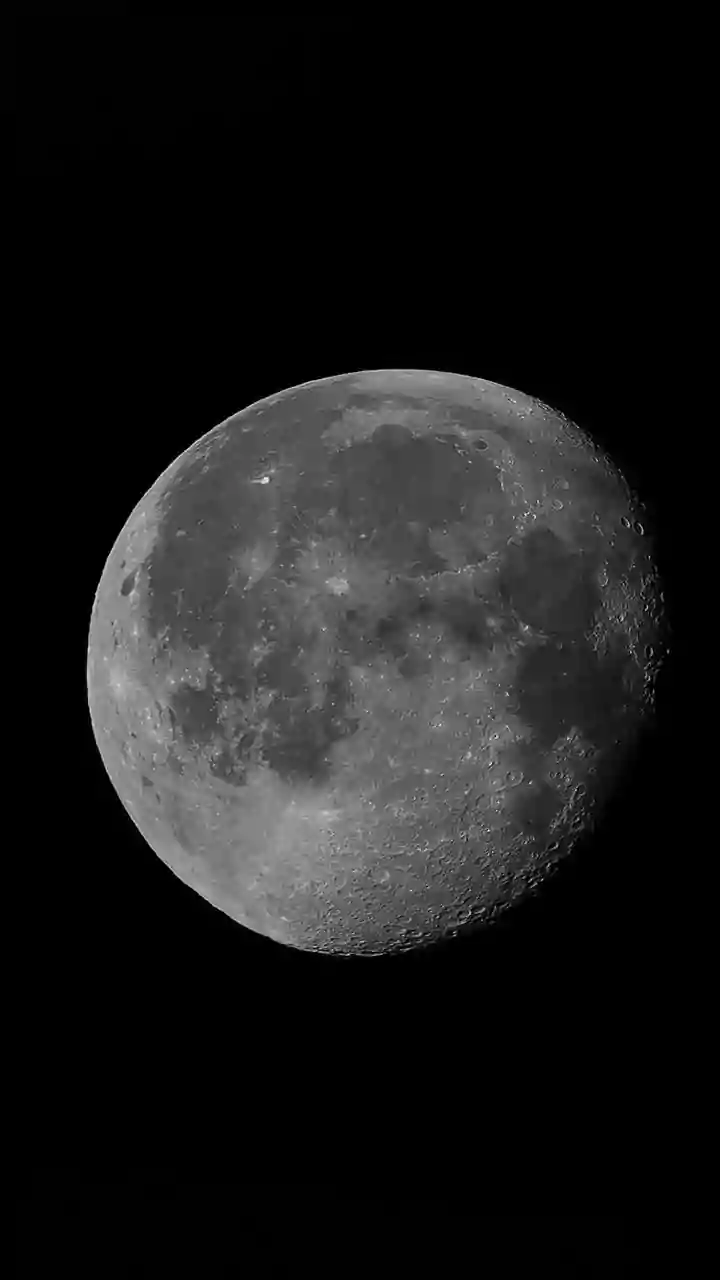
The most promising locations for water-ice are the Moon's Permanently Shadowed Regions (PSRs), primarily located in deep craters at the poles. These areas haven't seen direct sunlight for billions of years, creating 'cold traps' with temperatures cold enough to preserve water ice. Any water delivered by comets or created by chemical processes would be locked in these frigid, dark environments. Exploring these PSRs is the primary goal, as they are the most likely reservoirs of this precious resource. The challenge is immense: these regions are not only perpetually dark but also incredibly cold, making them one of the most hostile environments for robotic explorers.
The LUPEX Mission: A Collaborative Push
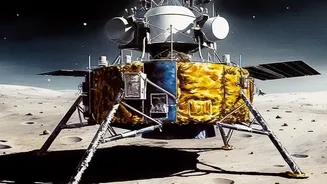
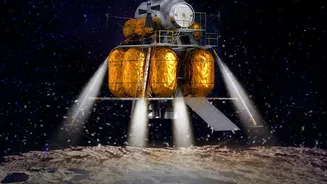
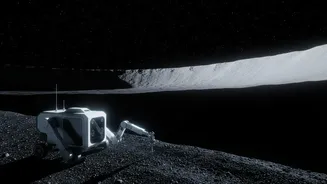
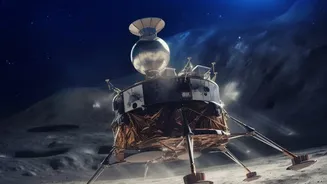
ISRO's most concrete plan for this next phase is the Lunar Polar Exploration Mission (LUPEX), a joint project with the Japan Aerospace Exploration Agency (JAXA). Scheduled for no earlier than 2028, this mission is a significant step up in complexity. Under the collaboration, JAXA will provide the powerful H3 launch vehicle and a sophisticated rover, while ISRO is responsible for developing the lander that will safely deliver the rover to the lunar surface. This mission, sometimes referred to as Chandrayaan-5, will specifically target a polar region to prospect for water. The collaboration also extends to include instruments from NASA and the European Space Agency, making it a truly global effort.
The Technology of Lunar Ice Mining
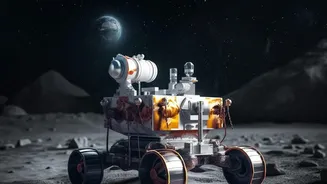
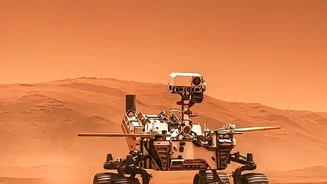
The LUPEX rover will be equipped with a drill capable of penetrating at least 1.5 meters below the lunar surface to collect samples. This is crucial, as studies indicate the most significant ice deposits are likely buried. These samples will then be analysed by onboard instruments, such as spectrometers, to determine their composition and confirm the presence of water ice. This kind of technology is at the cutting edge. For instance, NASA has been testing its own ice-mining drill and spectrometer technology, known as PRIME-1, on commercial lunar missions, proving that such hardware can function in the harsh lunar environment. The LUPEX mission will build on these principles to perform in-situ analysis, essentially a robotic geology lab on the Moon.
Why This Ice Is a Game-Changer
Extracting water on the Moon would revolutionize space exploration. Launching materials from Earth is incredibly expensive, so producing resources on-site—a concept called in-situ resource utilization (ISRU)—is the key to sustainable, long-term human presence. Lunar water can be purified for drinking and growing plants. More importantly, it can be split into its components, hydrogen and oxygen. These elements provide breathable air for astronauts and can be used to create rocket propellant. This would effectively turn the Moon into a cosmic refueling station, enabling more ambitious missions to Mars and beyond at a fraction of the current cost.