





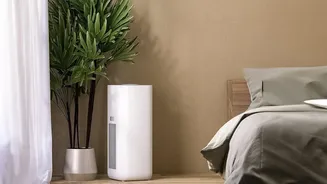
The Green Solution: A Breath of Fresh Air?
The belief that houseplants can purify indoor air is widespread, largely thanks to a famous 1989 NASA study. This research showed that in a sealed, controlled chamber, common plants could remove volatile organic compounds (VOCs) like formaldehyde and
benzene from the air. However, translating this to a real-world home environment is problematic. Subsequent research has concluded that you would need an enormous number of plants—some estimate between 10 and 1,000 plants per square meter—to match the air cleaning effects of a building's natural ventilation, let alone a purifier. While plants can absorb some gases, they are largely ineffective at removing particulate matter like dust, pet dander, or smoke particles. Their primary benefits are aesthetic and psychological; they can boost your mood, reduce stress, and add a touch of nature to your space.
The Tech Fix: How Air Purifiers Work
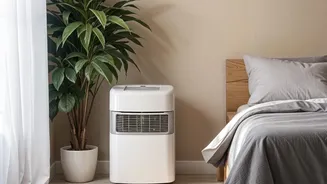
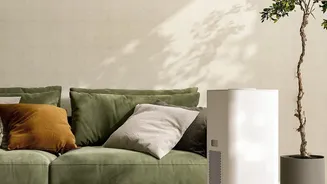
Air purifiers, on the other hand, are machines engineered specifically to clean the air. Most effective models use a combination of filters to trap a wide range of pollutants. The key component for tackling dust and smoke is the HEPA (High-Efficiency Particulate Air) filter. A true HEPA filter is certified to capture 99.97% of airborne particles as small as 0.3 microns. This includes dust, pollen, mould spores, and the fine particulate matter found in smoke. Many purifiers also include an activated carbon filter, which works by adsorbing gases, chemicals, and odours that a HEPA filter can't trap. Unlike plants, which are passive, an air purifier actively draws in large volumes of air, filters it, and circulates the clean air back into the room, offering a much faster and more significant impact on air quality.
Plants vs. Purifiers for Smoke and Dust
When it comes to the specific challenges of smoke and dust, there is a clear winner. Air purifiers with HEPA filters are designed to capture these very particles. They can significantly reduce concentrations of indoor particulate matter, making the air healthier to breathe, especially for individuals with allergies or asthma. Houseplants, by contrast, have a negligible effect on these types of pollutants. They simply lack the mechanism to physically remove fine particles from the air in any meaningful quantity. While a purifier with an activated carbon filter can also help reduce the smoky smell, plants do very little for either the particles or the odour. Relying on plants to combat smoke or a dusty environment is not an effective strategy.
The Unsung Hero: Source Control
Perhaps the most effective strategy for cleaner indoor air is also the most overlooked: reducing pollution at its source. Before you buy a plant or a purifier, consider how you can prevent pollutants from entering your home in the first place. Simple habits can make a huge difference. Use exhaust fans when cooking or showering to vent moisture and particles outside. Make your home a smoke-free zone. Use doormats and take off shoes to reduce tracked-in dust and dirt. Regular cleaning with a vacuum equipped with a good filter and wiping surfaces with a damp cloth can remove dust before it becomes airborne. When painting or using cleaning products, opt for low-VOC or VOC-free options and ensure good ventilation by opening windows. Source control is the foundation of good indoor air quality and is often more cost_effective than any technological solution.