




An Unspoken Monsoon Ritual
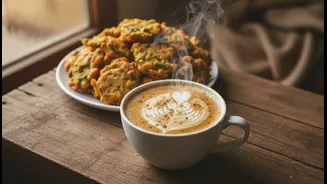
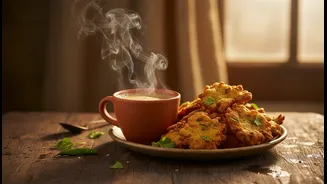
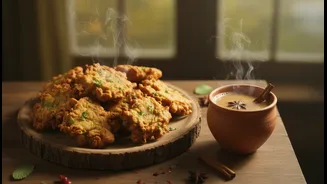
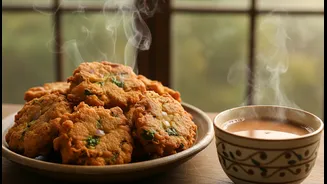
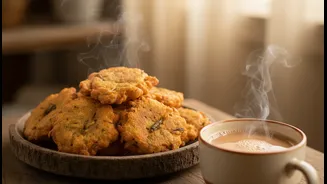
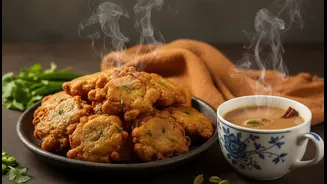
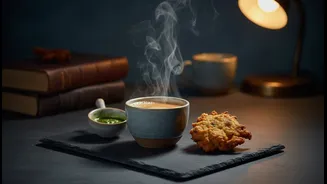
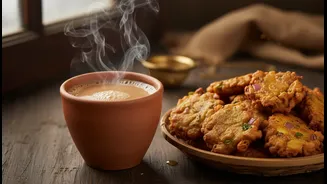
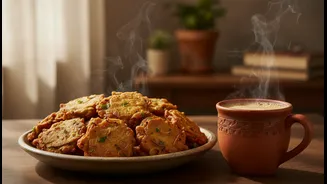
Across India, the arrival of monsoon rain triggers an almost Pavlovian response. It’s a tradition so ingrained it feels like an unwritten rule: rain necessitates chai and pakoras. This isn't a recent trend; the pairing has become the unofficial cuisine
of the Indian rains, solidifying its status in the mid-20th century as street food culture grew. Chai stalls become community hubs, and the act of sharing this combination fosters a sense of belonging and connection. The ritual itself is a form of comfort, a signal to slow down, gather with family, and enjoy a simple pleasure while the weather turns gloomy outside. It’s a collective cultural habit, passed down through generations, transforming a simple snack into a cherished event.
A Symphony for the Senses
The craving is powerfully driven by a contrast of sensations that feels particularly rewarding during damp, humid weather. You have the steaming, milky, aromatic warmth of the masala chai, which creates a feeling of psychological and physical comfort against the cool rain. This is paired with the pakora's deeply satisfying texture. Food psychologists note that the loud crunch of a crispy food stimulates multiple senses at once—the sound, the feel, and the contrast with the soft interior—making the experience more intense and memorable. The spices in the chai, like ginger and cardamom, and the savouriness of the gram-flour fritters create a complete sensory package that feels incredibly satisfying when the world outside is damp and sluggish.
How Memory Shapes Desire
Our brains are wired to link food with memories, a phenomenon called associative learning. The combination of chai and pakoras is deeply embedded in our sensory memory, tied to countless moments of comfort, family gatherings, and relief from the rain. The smell of wet earth, followed by the aroma of ginger tea and sizzling batter, can trigger a flood of positive emotional memories. Studies suggest that specific neurons in the brain's hippocampus store memories related to calorie-rich foods, and these memories can directly drive our cravings, even when we aren't physically hungry. So, when it rains, your brain isn't just asking for food; it's seeking to recreate the feeling of warmth, safety, and happiness associated with past monsoon experiences.
The Real Benefits
The benefits of this pairing are both psychological and physiological. On a dreary day, lack of sunlight can lead to a dip in serotonin, our 'feel-good' hormone. Carbohydrate-rich foods, like fried pakoras, can provide a quick boost. Furthermore, comfort foods can trigger the release of dopamine, a neurotransmitter associated with pleasure and reward. The spices in masala chai, such as cloves, cinnamon, and ginger, have long been used in Ayurveda for their anti-inflammatory properties and to aid digestion. More than anything, the ritual itself is a form of self-care. It provides a legitimate reason to pause, connect with others, and find a moment of joy, which is a significant mood booster in itself.
Enjoying Mindfully: The Limits
While the combination is a cultural treasure, it's best enjoyed as an occasional indulgence. Pakoras are deep-fried, meaning they are high in calories and absorb a lot of oil during cooking. Regular consumption of fried foods is associated with an increased risk of health issues, including heart disease, type 2 diabetes, and obesity. The fats used for frying, especially if the oil is reused or heated to very high temperatures, can become unhealthy trans fats. A standard cup of masala chai with milk and sugar can also contribute to your daily calorie and sugar intake. This doesn't mean you should feel guilty; rather, the key is balance. Enjoying your chai and pakoras mindfully during the rains, without making it a daily habit, allows you to celebrate the tradition without compromising long-term health.