




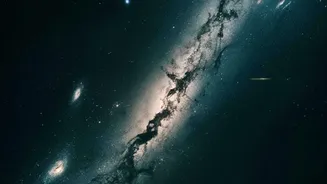
Beyond the Rainbow
The light our eyes can see is a small part of a much broader range of light called the electromagnetic spectrum. This spectrum includes everything from long-wavelength radio waves to short, high-energy gamma rays. Each part of this spectrum tells a different
story about the universe. Objects that are cool and diffuse emit longer wavelengths, while extremely hot and energetic events produce shorter ones. To get a complete picture of a galaxy, scientists must observe it across multiple wavelengths, a practice known as multi-wavelength astronomy. It is like switching from looking at a painting to examining it with a thermal camera and an X-ray machine—each view reveals details the others miss.
Infrared: The Universe of Dust and Birth
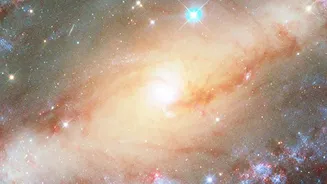
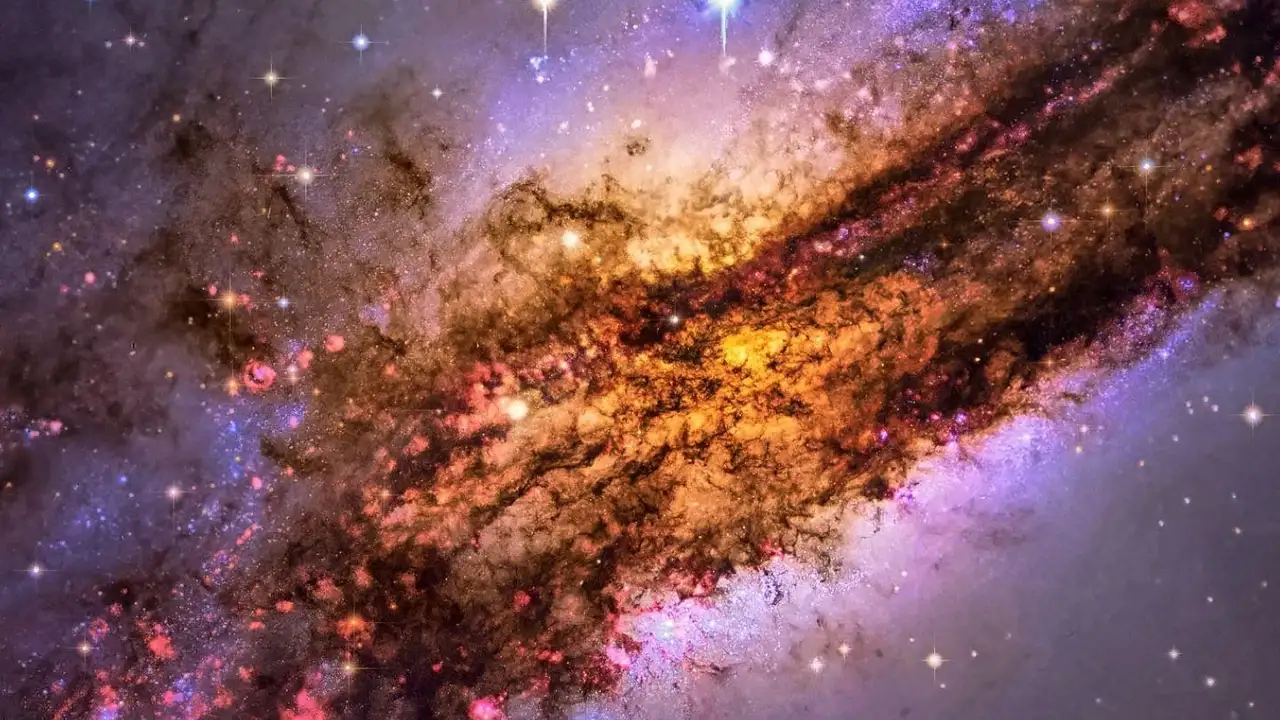
Infrared light is essentially heat radiation. Telescopes that detect infrared, like the James Webb Space Telescope, are perfect for studying the cooler, gentler side of the cosmos. Cosmic dust, which normally blocks our view in visible light, glows brightly in the infrared. This allows astronomers to peer through opaque dust clouds and witness the birth of new stars tucked away in stellar nurseries. These observations reveal the warm, skeletal structures of galaxies, tracing the lanes of gas and dust where future generations of stars will form. Up to 90% of the matter in a galaxy can be invisible to optical telescopes, but infrared light helps uncover this hidden mass.
Radio Waves: Cosmic Whispers and Cold Gas
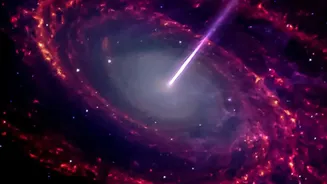
At the other end of the spectrum, radio waves have the longest wavelengths. Radio telescopes, which often look like giant dishes, don't see stars in the traditional sense. Instead, they pick up faint signals from some of the coldest and some of the most energetic phenomena in the universe. They can map vast clouds of cold hydrogen gas, the raw fuel for star formation that is otherwise invisible. Radio astronomy also reveals the dramatic jets of material blasted out from the supermassive black holes at the centers of galaxies. These jets, which can stretch for thousands of light-years, are completely invisible in other forms of light but roar with energy at radio frequencies.
X-Rays: A Vision of Violent Power
X-rays are a sign of extreme energy and heat. Since Earth's atmosphere blocks them, X-ray telescopes must be placed in space. These orbiting observatories, like NASA's Chandra X-ray Observatory, detect phenomena that are millions of degrees hot. When astronomers look at a galaxy in X-rays, they see a vision of its most violent processes. This includes matter swirling into a supermassive black hole at scorching temperatures, the expanding debris from exploded stars (supernova remnants), and vast halos of superheated gas surrounding entire galaxies. It’s a view of stellar life and death at its most extreme.
Assembling the Full Picture
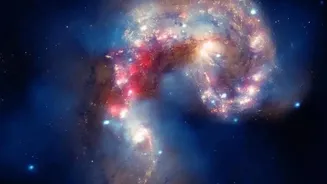
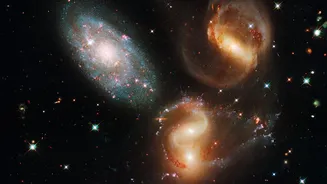
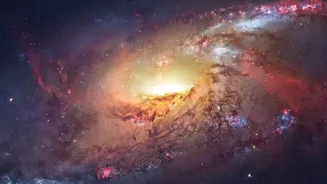
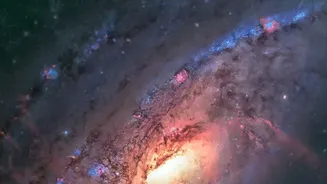
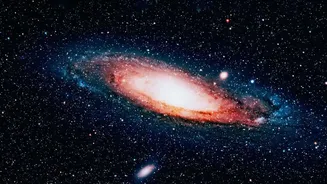
Each wavelength provides one piece of the puzzle. An optical image shows a galaxy's stars, but an infrared image reveals its nurseries. A radio image maps its fuel supply, while an X-ray image pinpoints its most violent events. The true power of modern astronomy comes from combining these different views. Scientists create composite images, assigning visible colors (like red, green, and blue) to represent the invisible infrared, radio, and X-ray data. The result is a breathtakingly complete and often stunningly beautiful portrait of a galaxy, showing how the serene processes of star birth and the violent energy of black holes are all interconnected in the grand cosmic ecosystem.