




The Core Benefits of Twisting
Rotational movements are essential for a well-rounded fitness routine, yet they are often neglected in favour of linear exercises like squats or presses. Standing twists specifically target the muscles responsible for rotating your trunk, which is crucial
for everyday activities like reaching for something, turning to look behind you, or participating in sports. Incorporating this exercise can lead to a stronger, more stable core, improved posture, and increased flexibility in your spine. This improved range of motion not only helps in preventing potential back pain but also builds a foundation for more complex athletic movements.
Muscles Engaged During the Twist
The standing torso twist is a comprehensive core exercise. The primary muscles at work are your obliques, which are the muscles running along the sides of your abdomen. Both the internal and external obliques are engaged to control the rotation. However, the benefits don't stop there. This movement also activates deeper core muscles like the transverse abdominis, which acts like a natural corset for your midsection, as well as the rectus abdominis (the 'six-pack' muscles). Additionally, muscles in your lower back, such as the spinal erectors, and even your hip flexors play a supportive role.
How to Perform the Standing Torso Twist
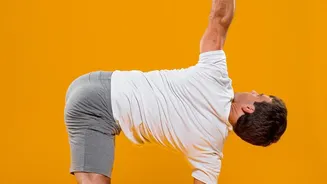
Proper form is key to maximizing benefits and preventing injury. Follow these steps for a perfect standing torso twist: 1. Start by standing with your feet shoulder-width apart and your knees slightly bent. This stable base is crucial for protecting your spine. 2. Engage your core by bracing your abdominal muscles, as if you're about to be punched in the stomach. 3. You can either cross your arms over your chest or bend them at a 90-degree angle at your sides. 4. Initiate the movement by rotating your torso to one side in a slow, controlled manner. It's important that the twist comes from your core, not from swinging your arms or hips. 5. As you twist to one side, allow the opposite foot to pivot naturally. For instance, as you turn right, your left heel will lift slightly off the ground. 6. Rotate as far as is comfortable without forcing the movement, then smoothly return to the center and twist to the other side.
Common Mistakes to Avoid
To get the most out of this exercise, be mindful of common errors. The biggest mistake is using momentum instead of muscle control; avoid swinging your body back and forth wildly. The movement should be deliberate and controlled. Another frequent error is moving the hips too much. While your hips will rotate slightly, they should not be the primary driver of the twist. The goal is to isolate the torso rotation. Lastly, ensure you are not just turning your head and arms. The rotation should originate from your midsection to properly engage your obliques and other core muscles.
Variations and Progressions
Once you have mastered the basic standing torso twist, you can introduce variations to increase the challenge. One simple progression is to hold your arms straight out in front of you, which adds a lever that makes your core work harder to control the movement. For a greater stability challenge, you can perform the twist while in a lunge position, which forces your core to work harder to maintain balance. You can also combine the twist with a squat; as you rise from the squat, you twist your torso to one side, alternating with each repetition. These variations add complexity and continue to build functional strength without needing any equipment.