


The Cosmic Speed Limit
Everything in the universe has a speed limit, and light travels at the absolute maximum. In the vast emptiness of space, a photon—a particle of light—zips along at a staggering 2,99,792 kilometres per second. That’s fast enough to circle the Earth more
than seven times in a single second. It feels instantaneous. When you flip a switch, your room is flooded with light immediately. The Sun’s light takes a mere eight minutes to reach us. But once we look beyond our own solar system, the distances become so mind-bogglingly vast that even light’s incredible speed isn't enough to make the journey a quick one.
What Exactly Is a Light-Year?
Because interstellar distances are so huge, measuring them in kilometres is like measuring the distance from Mumbai to Delhi in millimetres—the numbers become too unwieldy. So, astronomers came up with a better unit: the light-year. Despite its name, a light-year is a measure of distance, not time. It is simply the distance that light travels in one year. That journey covers about 9.5 trillion kilometres. So when we say a star is 10 light-years away, we mean its light has traveled for 10 years and covered 95 trillion kilometres to reach our eyes. This one concept is the key to understanding why the night sky is a time machine.
A Visit to Our Neighbours
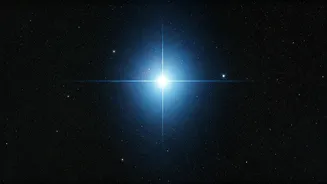
Let’s start close to home. The nearest star to our Sun is Proxima Centauri. It is ‘only’ 4.24 light-years away. This means the starlight you see from it tonight actually left the star over four years ago. If Proxima Centauri were to suddenly vanish, we wouldn’t know about it until 2028. Now consider Sirius, the brightest star in our night sky. It's about 8.6 light-years away. The light we see from Sirius began its journey around the time the first iPhone was becoming a global phenomenon. Every star we see is a postcard from its own past, with a different postmark.
Gazing Into Centuries Past
This is where the headline’s true magic comes to life. While our closest neighbours are years away, most of the familiar stars that form our constellations are much farther. Take Polaris, the North Star. Its distance is estimated to be around 323 to 433 light-years away. The light from Polaris that guides travellers tonight left the star sometime during the Mughal Empire in India. The light from Betelgeuse, the reddish star in the Orion constellation, left its source around 640 years ago, when the Tughlaq dynasty was ruling the Delhi Sultanate. You are not seeing these stars as they are now; you are seeing them as they were centuries ago.
A Telescope Is a Time Machine
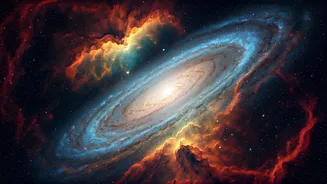
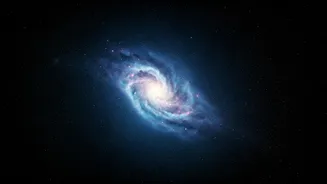
Astronomers push this principle to its extreme. The farther they look into space, the further back in time they see. The Andromeda Galaxy, the nearest major galaxy to our own Milky Way, is 2.5 million light-years away. The light we see from it is older than the human species itself. When powerful instruments like the James Webb Space Telescope peer at the most distant galaxies, they are seeing light that has traveled for over 13 billion years. They are effectively looking at the universe in its infancy, capturing baby pictures of the cosmos just a few hundred million years after the Big Bang. Every beam of starlight isn't just a point of light; it’s a fossil—a preserved relic of a time long past.