


A Groundbreaking Discovery
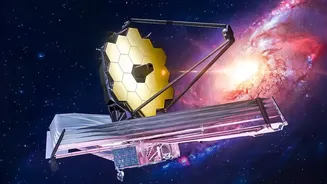
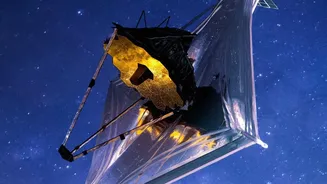
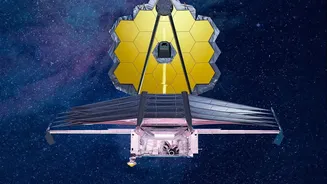
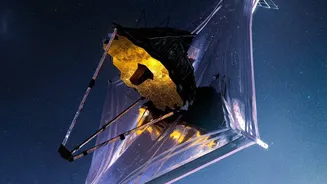
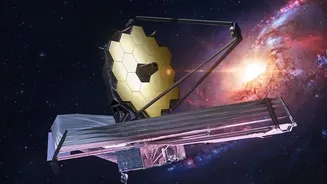
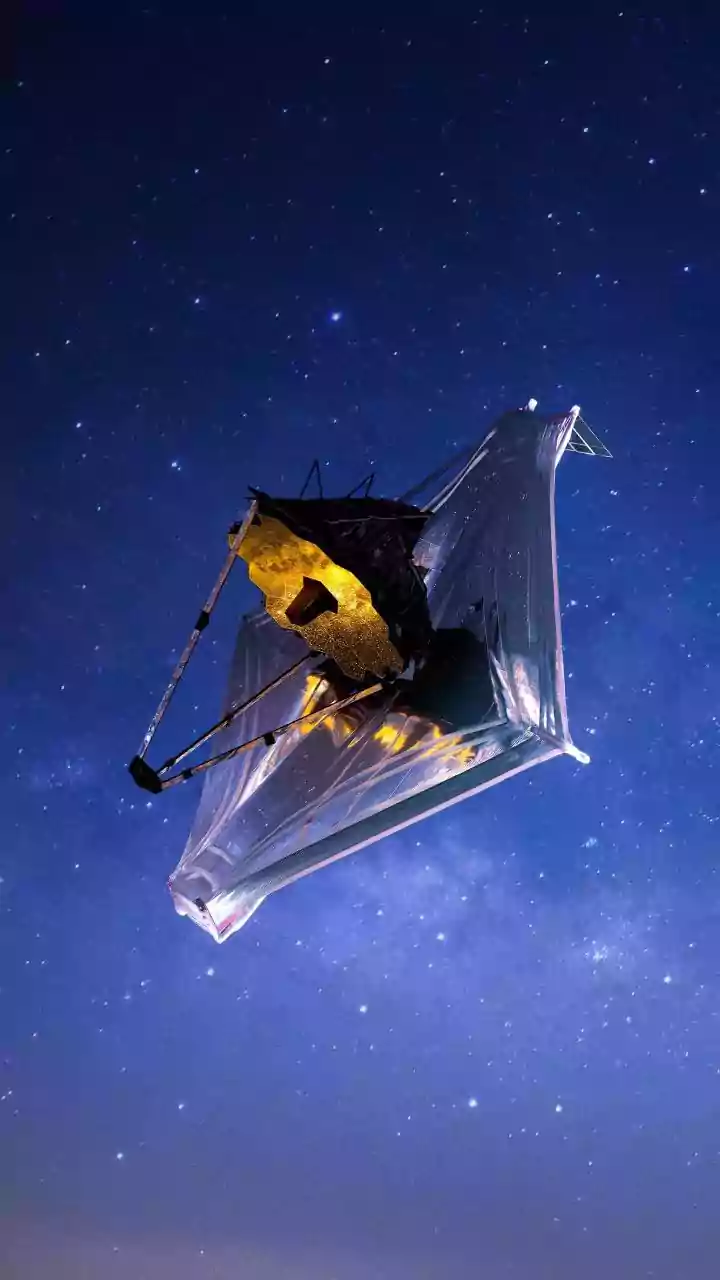
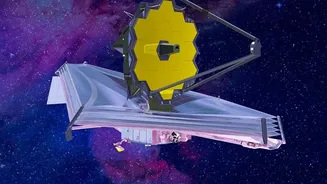
In what is becoming a regular cadence of cosmic revelations, NASA's James Webb Space Telescope has once again peered into the atmosphere of a planet far beyond our solar system and found definitive evidence of water vapour. One recent subject of study
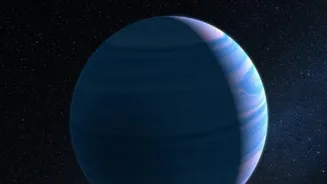
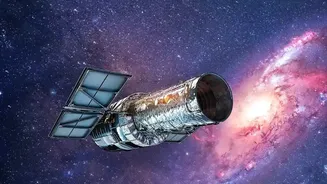
is a 'sub-Neptune' planet, a type of world that doesn't exist in our own solar system. These findings confirm the telescope's extraordinary ability to parse the chemical makeup of alien skies, a crucial step in identifying planets that might have the right conditions for life. While the Hubble Space Telescope first detected water on an exoplanet in 2013, the detail and clarity provided by JWST mark a monumental leap forward in our capabilities.
How Webb 'Sees' Water
The JWST doesn't have a lens that can zoom in to see clouds or oceans. Instead, its power lies in its advanced infrared instruments, like the Near-Infrared Spectrograph (NIRSpec) and Mid-Infrared Instrument (MIRI). This technique is called transmission spectroscopy. When an exoplanet passes in front of its host star from our perspective, a tiny fraction of the starlight filters through the planet's atmosphere. Different gas molecules absorb specific colours, or wavelengths, of light. Water vapour leaves a unique chemical fingerprint on the light that reaches the telescope. By analysing this spectrum of light, astronomers can identify the molecules present, including the tell-tale signature of H2O. JWST's incredible sensitivity allows it to detect even subtle traces of these elements hundreds of light-years away.
Not Earth 2.0, But Still Significant
It's important to note that the planets where water vapour has been found are not Earth-like. Many are 'hot Jupiters' or other gas giants orbiting extremely close to their stars, with surface temperatures reaching hundreds or even thousands of degrees Celsius. For example, the exoplanet WASP-18 b has temperatures of nearly 2,700 degrees Celsius, so hot it would tear most water molecules apart; seeing any water signature there is a testament to Webb's power. Another planet, GJ 9827d, is thought to be a 'steam world' with an atmosphere almost entirely made of water vapour, but with scorching temperatures around 430 degrees Celsius. Finding water on these worlds doesn't suggest they harbour life as we know it. Instead, it demonstrates that a fundamental ingredient for life is present in a wide variety of planetary systems across the galaxy, and that our technology can now detect it.
The Challenge of Interpretation
Detecting the signal is only the first step; interpreting it correctly is the next major challenge. In some cases, as with the rocky exoplanet GJ 486 b, scientists have to carefully determine if the water signal is coming from the planet's atmosphere or from cool spots on the star itself. Red dwarf stars, which are common hosts for rocky planets, can have water vapour concentrated in their cooler starspots, creating a signal that could mimic a planetary atmosphere. If the atmosphere on a hot rocky planet is real, it would likely need to be constantly replenished by volcanic activity spewing steam from the interior to counteract erosion from the star's radiation. Future observations with different instruments will help scientists distinguish between these possibilities and confirm the nature of these distant worlds.
The Search for Habitable Worlds Continues
Each detection of water vapour, even on inhospitable planets, refines the techniques astronomers use in the search for life. These observations help scientists understand how planetary systems form and how water is distributed throughout the cosmos. The ultimate goal is to turn this powerful tool towards smaller, rocky, Earth-sized planets orbiting within their star's 'habitable zone'—the region where temperatures are just right for liquid water to exist on the surface. The discovery of water in the planet-forming disk of the star system PDS 70 suggests that the raw materials for life are available from the very beginning of a planet's formation. The JWST is not just finding water; it is paving the way for the eventual discovery of a world that is not only habitable, but perhaps, inhabited.