







The Urban Heat Trap
Our cities are getting hotter, and not just because of climate change. A phenomenon known as the "urban heat island" effect plays a big role. Dense clusters of buildings, roads, and other concrete and asphalt surfaces absorb and retain the sun's heat far
more than natural landscapes do. Rooftops are major culprits, especially the flat concrete terraces common in India. All day, they soak up solar radiation, reaching temperatures much higher than the surrounding air. As evening falls, they release this stored heat, warming not just the building itself but the entire neighbourhood, making it difficult for the city to cool down overnight.
What is Cool-Roof Paint?
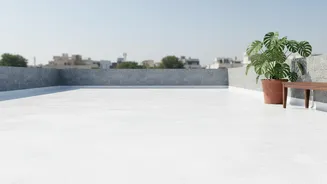
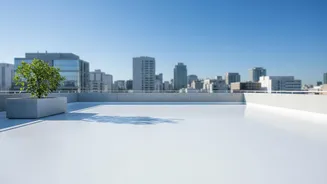
Enter cool-roof paint, a passive cooling solution that works like magic but is pure science. It’s a specially formulated coating designed to reflect sunlight and heat away from a building's surface. Unlike regular paints that absorb a large chunk of solar energy, these paints are engineered with reflective pigments. Think of it like choosing your outfit on a sunny day: a dark shirt absorbs heat and makes you feel warmer, while a white shirt reflects it and keeps you cooler. Cool-roof paints do the same for your home, acting as a highly reflective shield for your terrace.
The Science of Staying Cool
The effectiveness of these paints is based on two key properties: high solar reflectance and high thermal emittance. Solar reflectance is the paint's ability to reflect the sun's rays, including the invisible infrared and ultraviolet spectrum that carries much of the heat. High-quality cool-roof paints can reflect up to 90% or more of solar radiation. Thermal emittance is the surface's ability to radiate away any heat that it has absorbed. Together, these properties ensure that very little of the sun's heat actually penetrates your roof, keeping the surface itself and the rooms below it significantly cooler.
Real-World Temperature Drops
This isn't just a minor temperature tweak; the results can be dramatic. Studies and practical applications across India have shown that applying a cool-roof coating can reduce indoor temperatures by a noticeable margin. Depending on the product and local conditions, residents can experience a drop of 2°C to 5°C indoors. The roof surface itself can be up to 20°C cooler than an uncoated roof. For families living on the top floor of a building, this difference is transformative, turning a sweltering, unbearable space into a comfortable living area, even during the peak afternoon heat.
The 'No Energy' Advantage
The headline feature of cool-roof paints is that they achieve this cooling effect without consuming a single watt of electricity. This is what's known as a "passive" cooling strategy. It directly combats the reliance on active cooling methods like air conditioners, which are energy-intensive and expensive to run. By lowering the indoor temperature naturally, cool-roof paints can drastically reduce the need for ACs. This leads to substantial savings on electricity bills—some estimates suggest a reduction of up to 30%—and eases the strain on the city's power grid during peak summer demand. It’s a win for your wallet and a win for the environment, as less energy consumption means a lower carbon footprint.
Practical Points to Ponder
Before you rush to paint your terrace, there are a few things to consider. The effectiveness of the paint is rated by its Solar Reflectance Index (SRI); a higher SRI value means better performance. While traditional whitewash or 'chuna' is a basic form of cool roof, modern acrylic and elastomeric coatings offer better durability, water resistance, and longevity. Proper application on a clean, prepared surface is key to getting the best results. While there is an upfront cost, the long-term energy savings and improved comfort often provide a quick return on investment, making it a smart and sustainable choice for urban homes.