
Why Venus? Earth's Overlooked Twin
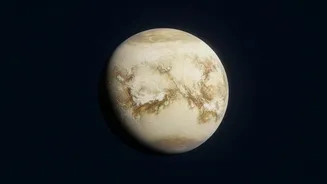
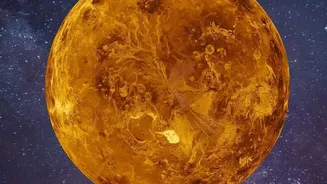
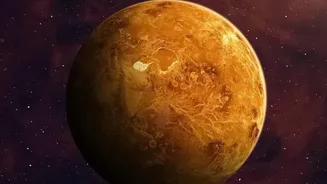
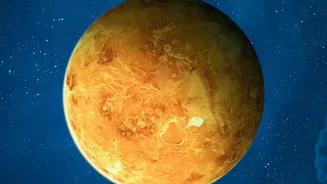
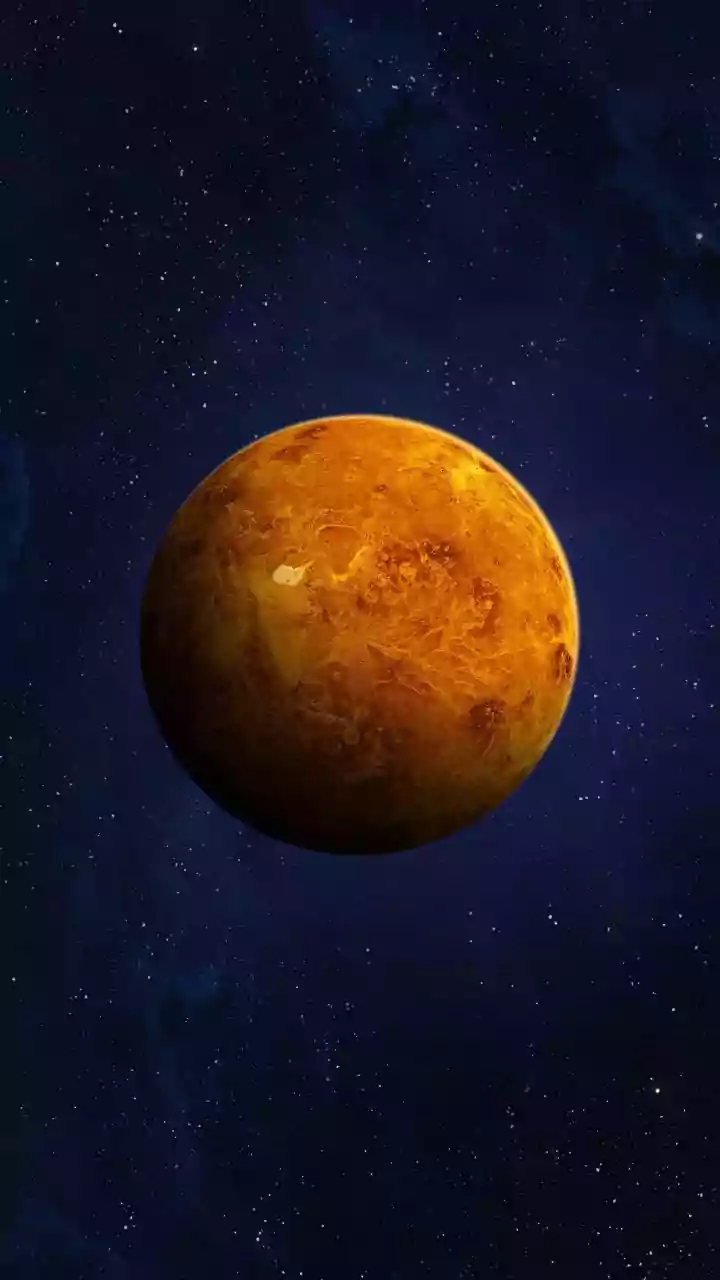
For decades, Mars has captured our imagination as the next frontier for exploration, but its sister planet, Venus, holds equally fascinating secrets. Venus is remarkably similar to Earth in size, mass, and composition, leading scientists to believe it may
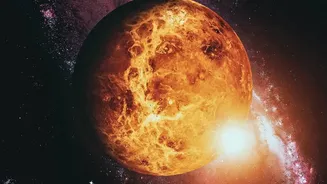
have once been a much more habitable world, possibly with liquid water oceans. Today, however, it is a hellscape. Its thick, toxic atmosphere, composed mainly of carbon dioxide with clouds of sulfuric acid, has created a runaway greenhouse effect, leading to surface temperatures hot enough to melt lead. Understanding how and why Venus diverged so dramatically from Earth is a critical piece of the puzzle in planetary science. It offers a cautionary tale about how a planet's climate can change, providing invaluable data for modeling the future of our own world.
A Mission to Uncover the Unknown
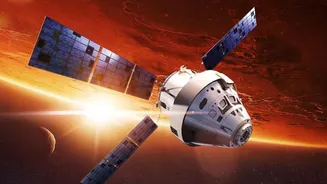
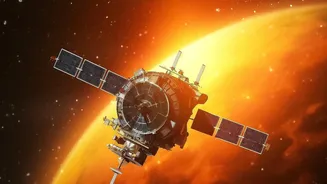
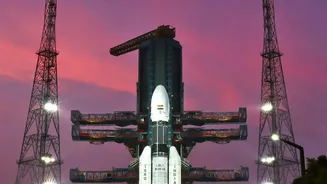
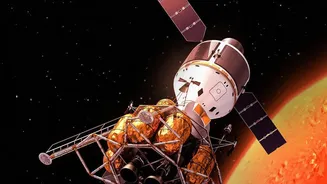
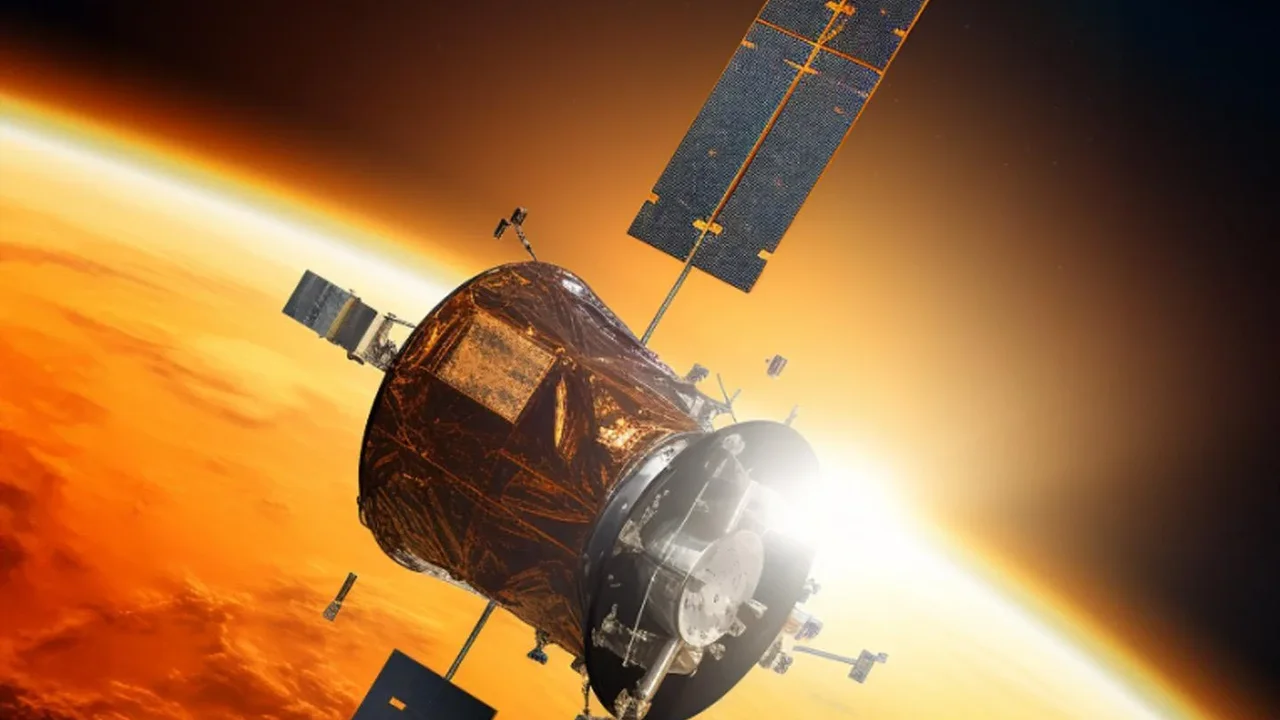
Enter Shukrayaan, ISRO's planned Venus Orbiter Mission. Following the monumental successes of Chandrayaan to the Moon and Mangalyaan to Mars, Shukrayaan represents India's next great leap in interplanetary exploration. The mission, whose name combines the Sanskrit words for Venus ('Shukra') and craft ('Yaan'), has been in development for years and is now slated for a launch in the coming years, with current timelines pointing towards 2028 or 2031 depending on optimal launch windows and final approvals. The orbiter is designed to spend over four years studying Venus from a highly elliptical orbit, equipped with a suite of sophisticated instruments to map its surface and analyze its dense atmosphere.
The Telltale Signature of Sulfur Dioxide
One of Shukrayaan's primary goals is to hunt for definitive proof of active volcanism, a question that has long intrigued scientists. Recent analysis of old data from NASA's Magellan mission has provided the first direct geological evidence of volcanic eruptions, but many questions remain. This is where sulfur dioxide (SO2) becomes a key player. On Earth, this pungent gas is a common byproduct of volcanic eruptions. In the upper atmosphere of Venus, solar radiation breaks down SO2 molecules relatively quickly. Therefore, a consistent or fluctuating presence of sulfur dioxide high above the cloud tops would strongly imply that it is being actively replenished from a source below—namely, erupting volcanoes. Previous missions have detected intriguing spikes in SO2 levels, but continuous, dedicated observation is needed to confirm the link.
The Right Tools for a Hostile World
To achieve its goals, Shukrayaan will carry around 100 kg of scientific instruments. Among its key payloads is a high-resolution Synthetic Aperture Radar (SAR), which is capable of peering through the planet's thick cloud cover to map the surface in detail, identifying lava flows and volcanic structures. This will be complemented by instruments specifically designed to study the atmosphere's composition, including its chemistry and dynamics. One of these, the Venus InfraRed Atmospheric Gases Linker (VIRAL), is being co-developed with international partners and will be crucial for measuring trace gases like sulfur dioxide. The mission will also be the first to carry a ground-penetrating radar to study the shallow subsurface of Venus, offering an unprecedented look beneath the planet's surface.
A Geologically Living Planet
Confirming active volcanism on Venus would be a monumental discovery. It would prove that Venus is not a geologically dead world but a dynamic and active planet, fundamentally changing our understanding of its evolution. It would tell us that Earth is not unique in our solar system in having ongoing volcanic processes that shape its surface and atmosphere. The data gathered by Shukrayaan will not only help solve this long-standing planetary mystery but will also provide context for the discoveries of NASA's and ESA's own upcoming Venus missions, VERITAS and EnVision. Together, these missions will usher in a new golden age of Venus exploration, peeling back the toxic clouds to reveal the secrets of Earth's enigmatic twin.