



Mapping a Survival Guide for the Moon
Before astronauts can call the Moon home, they need a detailed survival guide. The lunar environment is unforgiving, with extreme temperature swings, a constant threat of micrometeoroid impacts, and dangerous radiation. To prepare, NASA is deploying a suite
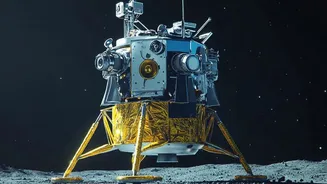
of instruments designed to act as humanity's advance scouts, laying the scientific groundwork for a future Moon Base. These projects, selected through the Payloads and Research Investigations on the Surface of the Moon (PRISM) program, will travel aboard commercial landers. They aren't just abstract experiments; they are practical fact-finding missions to answer critical questions about where to build, what resources are available, and how to keep future lunar inhabitants safe. The goal is to turn science fiction into an engineering blueprint.
Project 1: The Environmental Watchdog
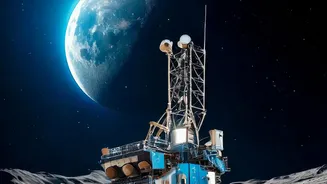
One of the chosen projects is the Lunar Environment Monitoring Station – South Pole (LEMS-SP). Think of it as a robotic weather station and security guard rolled into one. This autonomous suite of instruments will be placed near the lunar South Pole, a region of high interest for future settlement due to the potential for water ice. LEMS-SP will perform several crucial jobs. It includes a seismometer to listen for 'moonquakes' and track the frequency of micrometeoroid impacts, providing vital data for designing safe habitats and equipment. It will also monitor the sparse lunar 'atmosphere' (called an exosphere) to track volatile materials, which could include precious resources like water that drift into the frigid, shadowed regions. Operating for the long term, this station will create the first detailed environmental hazard map for a lunar outpost.
Project 2: Hunting for Hidden Ice
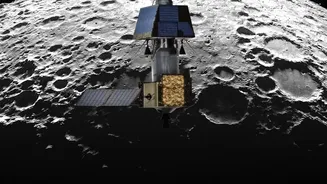
Finding and utilising water is the key to sustainable life beyond Earth. The Depth Imager with Spectral and Color Optics (DISCO) investigation is tasked with hunting for this vital resource. Water ice is believed to be trapped in permanently shadowed craters and small 'micro-cold traps' where sunlight never reaches. DISCO will provide the first direct, on-the-ground measurements of this hidden ice, moving beyond the orbital surveys that have hinted at its existence. By pinpointing where ice is located and estimating how much is there, DISCO will pave the way for future resource utilisation. Turning this ice into drinking water, breathable air, and even rocket fuel is a cornerstone of NASA's long-term settlement plans. The payload will also study how the lunar soil, or regolith, behaves, which is critical for designing rovers and landing pads.
Project 3: Scouting for Natural Shelters
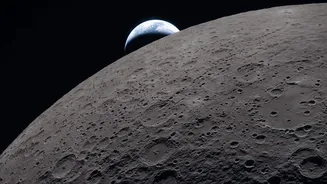
Why build a habitat from scratch if the Moon has already done some of the work? The third investigation, the Geophysical Instruments for Marius Lunar pit Investigation (GIMLI), is designed to explore this very question. Its target is the Marius Hills Pit, a deep hole on the lunar surface that could be a 'skylight' into a vast, underground lava tube. These ancient volcanic caves could offer future astronauts a ready-made shelter, providing natural protection from the extreme temperature swings, cosmic radiation, and micrometeoroid impacts that plague the surface. GIMLI will use a combination of ground-penetrating radar, seismic sensors, and gravity measurements to peer beneath the surface and determine if the pit leads to a large, stable cave. Discovering a lava tube would be a game-changer, potentially deciding the location of humanity's first off-world outpost.