


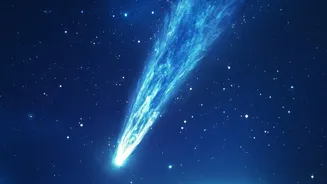
Natural Visitor: What is a Meteor?
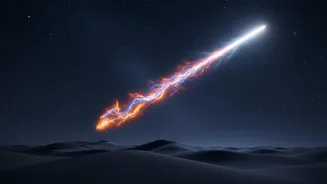
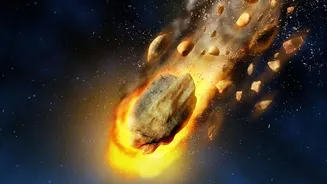
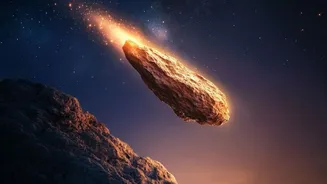
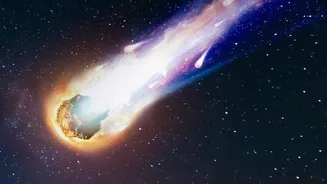
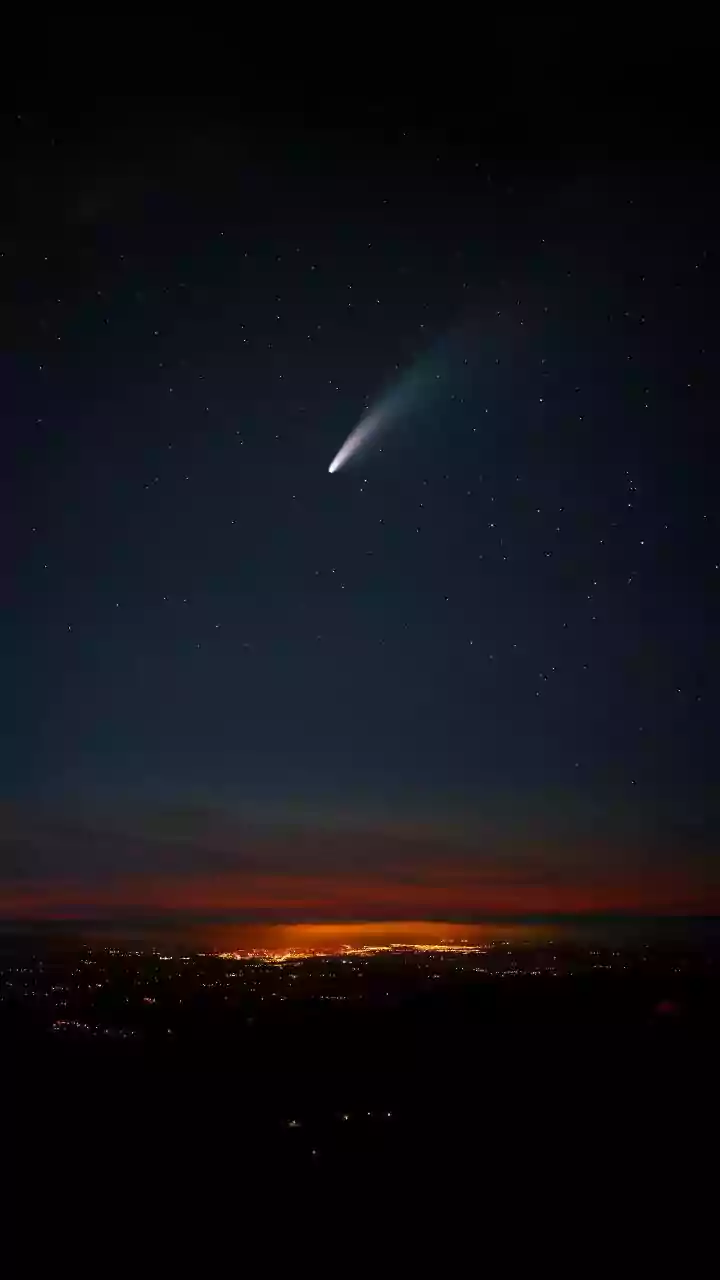
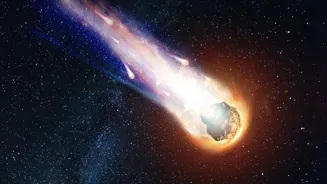
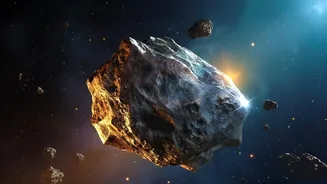
A meteor, or shooting star, is the visible streak of light produced when a small particle from space, called a meteoroid, enters Earth's atmosphere at high speed and vaporizes. These meteoroids are essentially space rocks, ranging from the size of a dust
grain to a small boulder. Most are fragments broken off from comets or asteroids, and some even originate from impacts on the Moon or Mars. When Earth's orbit intersects a trail of debris left by a comet, we experience a meteor shower, where numerous meteors appear to radiate from the same point in the sky. Made of rock and metal, their journey through our atmosphere is incredibly fast and brief, usually lasting only a few seconds.
Artificial Remnant: Defining Space Junk
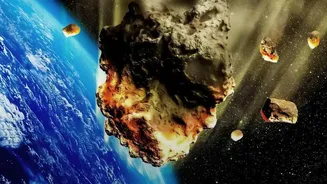
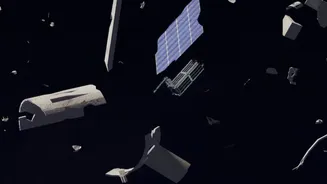
Space junk, or orbital debris, refers to any human-made object left in orbit that no longer serves a useful purpose. This includes everything from entire defunct satellites and spent rocket stages to tiny flecks of paint and fragments from satellite collisions. Unlike meteors, which are on a trajectory through the solar system, space junk is in orbit around the Earth. Its reentry is a result of its orbit decaying. There are an astonishing number of these objects, with estimates suggesting millions of fragments are currently circling our planet at high speeds, posing a significant threat to active satellites and future space missions.
Clues for the Casual Observer
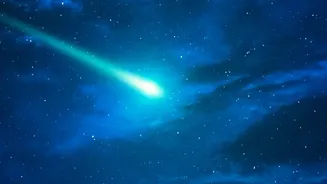
Even without special equipment, you can often distinguish between the two. The biggest clue is speed and duration. Meteors are incredibly fast, flashing across the sky in a second or two. Reentering space junk appears much slower, sometimes taking a minute or more to traverse the sky as it travels almost horizontally. It may also break apart into a cluster of bright points moving together. Color is another indicator. Meteors often display vibrant colors like green (from magnesium), yellow, or red, depending on their chemical composition. Space junk, on the other hand, tends to burn with a more consistent white, bluish-white, or sometimes reddish-orange hue from materials like aluminum and steel alloys.
The Scientist's View: Trajectory and Speed
Scientists rely on precise measurements to make a definitive identification. Radar and optical tracking systems map an object's path and velocity. Meteors enter the atmosphere at extreme speeds, typically between 11 and 72 kilometers per second, and can arrive from any direction. Their trajectories are linked to their origin in the solar system. Space debris, however, is already in Earth's orbit, so its entry speed is much slower, around 8 km/s. Furthermore, its path is tied to its previous orbital inclination, meaning it's often seen traveling parallel to the ground on a predictable path, unlike the often steep and random angle of a meteor.
Decoding the Fiery Glow
One of the most powerful tools scientists use is spectroscopy. This technique analyzes the light emitted by the burning object. As a meteoroid vaporizes, the elements within it—like iron, magnesium, and calcium—emit light at very specific wavelengths, creating a unique spectral signature that acts like a chemical fingerprint. This tells scientists about the object's natural, rocky or metallic composition. Space debris, made of human-engineered materials like titanium alloys, aluminum, and specialized plastics, produces a completely different spectrum when it burns. This analysis provides conclusive evidence of whether an object is a natural visitor from the cosmos or a piece of our own technology returning to Earth.
Why the Distinction Matters
Accurately identifying these objects is crucial for several reasons. For scientists, studying meteors provides invaluable data about the composition of asteroids and comets, offering clues about the formation of our solar system. On the other hand, tracking space junk is a matter of safety and security. With our increasing reliance on satellites for communication, navigation, and banking, the risk of collisions with space debris is a serious concern. Even a small fragment can cause catastrophic damage to an active satellite. Knowing what is reentering the atmosphere helps protect assets in space and can be used to warn of any potential hazards from larger pieces that might survive to reach the ground.