




A Groundbreaking Discovery
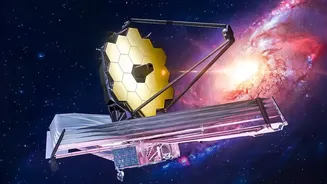
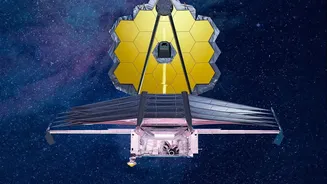
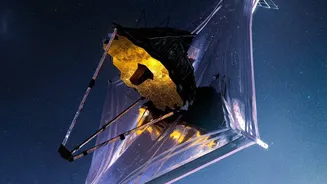
The James Webb Space Telescope is changing our view of the universe, and its latest observations have sent a ripple of excitement through the scientific community. Astronomers have confirmed the presence of water vapour in the atmospheres of super-Earths,
a class of planets larger than our own but smaller than Neptune. While JWST has detected water in the atmospheres of gas giants before, finding it on smaller, potentially rocky worlds is a significant leap forward. These findings, focused on planets like GJ 486 b and even hints around the famous TRAPPIST-1 system, represent a pivotal moment. They move us from merely cataloging distant planets to truly understanding their composition and, just maybe, their potential to harbour life. This isn't just another data point; it's the beginning of a new chapter in exoplanet exploration.
What Exactly is a 'Super-Earth'?
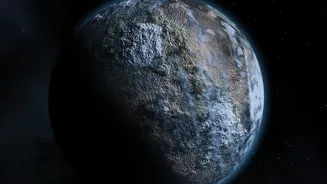
The term 'super-Earth' might conjure images of a larger, better version of our home planet, but the reality is more complex and mysterious. This classification refers only to a planet's size and mass—typically up to ten times the mass of Earth and with a radius larger than ours but smaller than Neptune's. These planets are incredibly common in our galaxy, yet our own solar system curiously lacks one, leaving scientists with many questions. Super-Earths can be rocky, gaseous, or a combination of both. They could be scorching 'lava worlds' orbiting close to their star, icy 'snowball planets', or even theoretical 'water worlds' completely covered by a deep ocean. Because we have no local examples, every super-Earth the JWST studies provides a crucial piece to the puzzle of how planets form and evolve across the galaxy.
How Webb 'Sniffs' Alien Atmospheres
Detecting molecules hundreds of light-years away sounds like science fiction, but the JWST does it with a remarkable technique called transmission spectroscopy. Think of it like analysing the makeup of a fog bank by seeing which colours of a background lighthouse are dimmed. As an exoplanet passes in front of its host star, a tiny fraction of the starlight shines through the planet's atmosphere. Different molecules in that atmosphere, like water vapour, carbon dioxide, or methane, absorb specific wavelengths, or colours, of light. By capturing the starlight before, during, and after the planet's transit, the telescope can measure the 'missing' light. This creates a chemical fingerprint, revealing which molecules are present in the planet's sky and in what quantities. It is this incredible sensitivity that allows JWST to find the tell-tale signature of water on these remote worlds.
Water, Water Everywhere, But Is It Habitable?
Finding water vapour is a monumental achievement, but it's important to keep the discovery in context. The presence of atmospheric water does not automatically mean a planet has liquid oceans, let alone life. For instance, the super-Earth GJ 9827 d has an atmosphere that appears to be almost entirely hot steam, making it more of a 'steam world' than a habitable one. The planet GJ 486 b, where hints of water were also seen, has a surface temperature of around 430 degrees Celsius—far too hot for life as we know it. However, these findings are crucial first steps. They prove that the tools and techniques work, paving the way for future observations of planets in the 'habitable zone'—the orbital sweet spot where liquid water could potentially exist on a planet's surface. These early discoveries are building a framework for identifying the most promising targets in our quest for a true Earth-like world.