



The Sun’s Volatile Temper
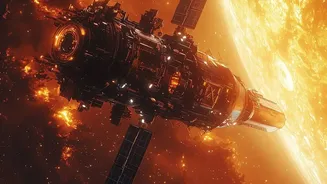
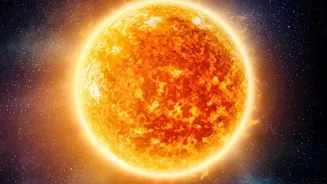
The Sun, our life-giving star, has a volatile side. It constantly releases a stream of charged particles called the solar wind. Occasionally, it erupts with much greater force, launching solar flares and massive clouds of plasma known as coronal mass ejections
(CMEs). When these eruptions are aimed at Earth, they can cause significant geomagnetic storms. While these storms create beautiful auroras, they also pose a serious threat to our technological backbone. They can induce powerful electrical currents in power lines, potentially overloading transformers and causing widespread blackouts. They can also damage sensitive satellite electronics, disrupt GPS signals, and create radio blackouts, affecting everything from aviation to global shipping.
The Challenge of a Speedy Threat
Predicting exactly when and where a solar storm will hit has been a massive challenge. The particles from a CME can travel from the Sun to Earth in a matter of days, but once they arrive, their interaction with our planet's magnetic field is complex. Previous models struggled to provide timely and specific warnings. They could tell us a storm was coming, but not precisely where its effects would be most severe on the ground. For utility companies and satellite operators, this lack of specific, actionable information made it difficult to take preventative measures, leaving critical infrastructure vulnerable.
Enter DAGGER: NASA's AI Forecaster
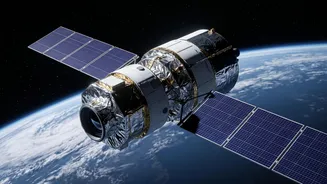
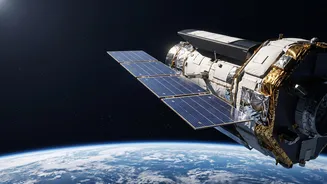
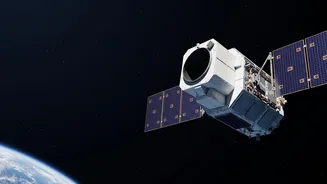
To address this, an international team of researchers, in a collaboration that includes NASA, developed a new tool: DAGGER, which stands for Deep Learning Geomagnetic Perturbation. This isn't just another incremental update; it's a revolutionary approach that harnesses the power of artificial intelligence. DAGGER combines real-time data from a fleet of sun-observing satellites with ground-based measurements. The model's key breakthrough is its ability to deliver rapid, accurate, and location-specific forecasts of geomagnetic disturbances anywhere on Earth.
A 30-Minute Warning to Act
The most significant promise of DAGGER is its ability to provide a 30-minute advance warning before a storm's impact. While thirty minutes might not sound like much, for infrastructure managers, it's a critical window of opportunity. In that time, power grid operators can take steps to protect their systems by rerouting power or taking sensitive transformers offline. Satellite controllers can put their spacecraft into a protective safe mode or adjust their orbits to minimize damage. This short but crucial lead time shifts the dynamic from simply bracing for impact to actively mitigating damage, potentially saving economies from billions of dollars in losses and preventing long-term blackouts.
How AI Learns to Read the Sun
DAGGER's power comes from a process called deep learning. The AI was trained on vast amounts of historical data from solar observation missions and ground-based magnetic field sensors. By analyzing countless examples of past solar storms and their corresponding effects on Earth, the model learned to recognize the complex patterns that precede a major geomagnetic event—patterns that are often too subtle or complex for humans or earlier models to detect quickly. The result is a system that can produce a new, updated global forecast in less than a second, giving us our most advanced look yet at incoming space weather.