


The Ancient Superfood for Modern Mornings
Ragi, or finger millet, is not a new discovery. This humble grain has been a staple in many parts of India for centuries, revered for its robust nutritional profile. What makes it perfect for today's fast-paced life is its versatility and immense health
benefits. Ragi is naturally gluten-free, making it an excellent choice for those with gluten sensitivities. It's packed with calcium, with some studies noting it has a higher calcium content than most other cereals, which is crucial for bone health. It is also a fantastic source of iron, which helps in preventing anaemia. Regular consumption of ragi can contribute to overall wellness, making these crepes more than just a meal; they're a step towards a healthier lifestyle.
Balancing Blood Sugar and Aiding Digestion
One of the most significant advantages of ragi is its high dietary fibre content. This fibre aids digestion, helps prevent constipation, and promotes a feeling of fullness, which can help in weight management by reducing the urge to snack between meals. For individuals managing diabetes, ragi is particularly beneficial. It has a low glycemic index, meaning it releases sugar into the bloodstream slowly, preventing the sharp spikes that can occur after eating refined grains. The polyphenols found in finger millet also contribute to its anti-diabetic properties, making it a smart addition to a balanced diet.
Crafting the Instant Ragi Batter
The beauty of these savoury crepes lies in their simplicity. You don't need hours of soaking or fermentation. An instant batter can be whipped up in minutes. For a basic batter, combine one cup of ragi flour with half a cup of rice flour and a quarter cup of rava (semolina) for crispness. To this dry mix, add salt to taste and about a cup of curd or buttermilk for a slight tang. Gradually whisk in water until you have a smooth, thin, pourable batter, similar to the consistency of a rava dosa batter. For added flavour and nutrition, you can mix in finely chopped onions, green chillies, ginger, and fresh coriander leaves directly into the batter. Let the batter rest for 10-15 minutes to allow the rava to absorb moisture.
Cooking the Perfect Crispy Crepe
Cooking ragi crepes, often called ragi dosa, is an art that's easy to master. Heat a non-stick or cast-iron tawa over medium-high heat. Once hot, drizzle a little oil or ghee. Because the batter is thin, you don't spread it in a circle with the ladle. Instead, pour the batter from a height, starting from the edges and working your way to the centre, filling in any large gaps. It should look like a lacy net. Drizzle a little more oil around the edges and on top. Let it cook for a few minutes until the bottom turns golden brown and the edges start to lift from the pan. There is no need to flip this type of dosa. Once it's crisp, simply fold it and serve hot.
Serving Suggestions and Variations
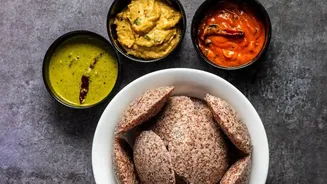
These savoury ragi crepes are incredibly versatile. They pair wonderfully with classic South Indian accompaniments like coconut chutney, tomato chutney, or a warm bowl of sambar. The earthy flavour of ragi complements the spice and tang of these side dishes perfectly. You can also experiment with the batter itself. Adding grated vegetables like carrots or finely chopped spinach can boost the nutritional value further. For a different texture, some recipes suggest using urad dal batter as a base and adding ragi flour for a version that requires fermentation but yields a softer crepe. Whichever path you choose, these crepes are a delicious way to integrate a true superfood into your daily routine.