


The Comeback of Nordic Walking
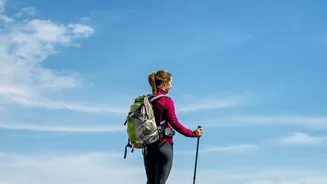
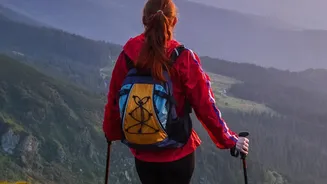
You may have seen them in parks or on trails: walkers moving with purpose, using poles that look like they belong on a ski slope. This is Nordic walking, an exercise that originated in Finland as a way for cross-country skiers to train during the snow-free
summer months. After years as a niche activity, it's now seeing a resurgence, particularly among those looking for a low-impact yet highly effective workout. The appeal is simple: by using poles to propel yourself forward, you transform a lower-body stroll into a comprehensive, full-body exercise. This technique engages the muscles in your arms, shoulders, chest, and core, turning a simple walk into something much more powerful.
What is Full-Body Walking?
The term "full-body walking" is often used to describe the effect of Nordic walking itself. Rather than being a separate discipline, it captures the key benefit of the activity: engaging up to 90% of your body's muscles, compared to about 50% with regular walking. Think of it less as a new type of walking and more as the ultimate outcome of proper Nordic technique. When you push off the poles with each stride, you're not just supporting yourself; you are actively engaging your upper body to increase your speed and workout intensity. This total-body activation is what leads to a significantly higher calorie burn and greater fitness gains.
The Science of a Better Workout
The benefits of adding poles to your walk are well-documented. Studies have consistently shown that Nordic walking burns significantly more calories than regular walking—with estimates ranging from an 18% to 67% increase, depending on the intensity and individual technique. This is because your heart has to work harder to pump blood to both your upper and lower body, boosting your heart rate without necessarily making you feel like you're working much harder. Furthermore, using poles can reduce the strain on lower-body joints like knees and hips, making it an excellent option for individuals with joint pain or those recovering from injury. The poles also provide added stability, which can improve balance and confidence, especially for older adults or people with mobility issues.
Technique and Equipment Matter
Getting started with Nordic walking is straightforward, but technique is key to unlocking the full-body benefits. The basic movement involves walking with your arms and legs in opposition—as your right leg steps forward, your left arm swings forward to plant the pole. The pole should be planted at an angle, pointing backward, to propel you forward as you push off. It's crucial to use poles specifically designed for Nordic walking. These are different from trekking or hiking poles, which are built for stability rather than propulsion. Nordic poles are lighter and have a special glove-like strap system that allows you to push off without gripping the pole tightly, enabling the correct arm swing and muscle engagement.
How to Get Started
The best way to begin is to start slowly and focus on coordinating your arm and leg movements. Many people find it helpful to drag the poles on the ground for a few minutes to get used to the rhythm before starting to plant them. For the best results and to ensure you're using the proper form, consider contacting a local Nordic walking club or finding a certified instructor. They can help you choose the right length of poles—generally, your forearm should be parallel to the ground when holding the grip—and teach you the technique to maximize your workout and avoid forming bad habits. Above all, consistency is key to seeing improvements in your fitness and overall health.