





The Silent Battle for Water
When we picture a tropical forest, we often imagine a perpetually lush, rain-soaked environment. But many of these ecosystems, including those in India’s Western Ghats, endure long dry seasons. With climate change expected to make these droughts more
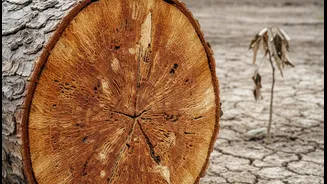
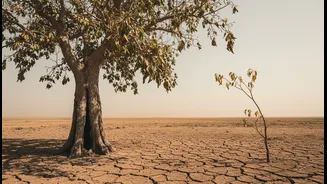
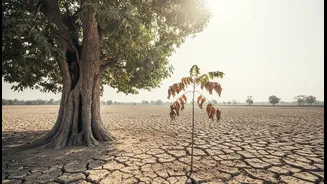
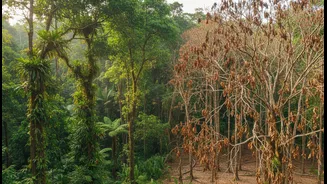
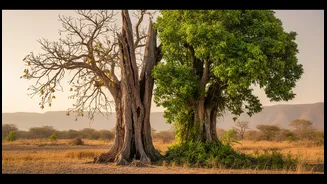
frequent and severe, the health of these forests is under threat. Trees, like all living things, need water to survive. During a drought, a silent battle unfolds. From the smallest sapling to the tallest giant, each tree fights to pull enough moisture from the soil to its highest leaves, a process crucial for photosynthesis and survival. When this system fails, it can lead to widespread tree mortality, impacting biodiversity, carbon storage, and even regional weather patterns. Scientists are now realising that to predict how a forest will fare, we need to understand the individual struggles happening within each tree.
A Look Inside a Tree’s Plumbing
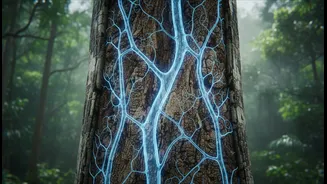
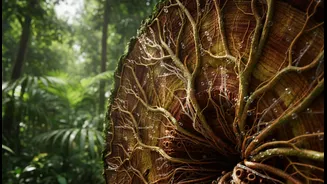
Every tree has an intricate internal plumbing system designed to transport water. Think of it like the pipes in a building. A network of tiny, tube-like vessels called xylem runs from the roots all the way up to the leaves. Water is pulled up through this system by a process called transpiration, where water evaporates from the leaves, creating a tension that draws more water up from below. It's like sipping a drink through a very, very long straw. Under normal conditions, this is a remarkably efficient process. But when the soil dries out, the tree has to pull much harder. This increased tension puts immense strain on the entire system, creating a high-stakes scenario for the tree’s survival.
When the System Breaks
During a severe drought, the tension inside the xylem can become so great that it causes a catastrophic failure. Tiny air bubbles, or embolisms, can get sucked into the water-carrying vessels, breaking the continuous column of water. This is known as hydraulic failure. An embolism is like an air bubble in a drinking straw—it blocks the flow, making it impossible to draw liquid up. As more and more vessels become blocked, the tree can no longer supply its leaves with water. The leaves wilt, photosynthesis stops, and if the condition persists, the tree can essentially die of thirst. This process of hydraulic failure is a major cause of tree death during droughts and a key focus for researchers trying to understand forest resilience.
The Tall vs. Small Debate Gets Complicated
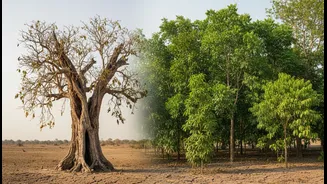
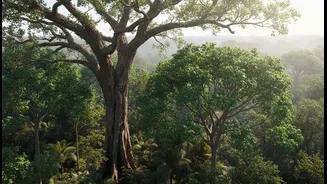
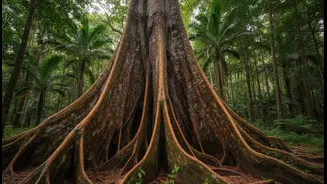
For years, the conventional wisdom was that taller trees were more vulnerable to drought. It seems logical: pulling water up a 70-metre trunk against gravity is a much bigger challenge than pulling it up a 10-metre one. This would mean the majestic giants of the forest, which store enormous amounts of carbon, are at the greatest risk. However, recent studies are turning this assumption on its head. Research on towering dipterocarp trees in Southeast Asia, published in the journal Science, revealed that these giants have evolved sophisticated adaptations. They develop wider xylem vessels at their base, acting like larger pipes to reduce resistance and move water more efficiently. Their uppermost leaves are also tougher and better able to withstand drier conditions. These findings suggest that for some species, at least, height does not automatically equal higher risk. In fact, other studies have shown that smaller trees, with their shallower root systems, can be more vulnerable during short, intense droughts.
Rethinking Forest Resilience
This evolving science shows that predicting a forest's response to drought is not as simple as measuring tree height. Factors like species-specific adaptations, root depth, and even vulnerability to pests all play a role. A 2026 study on dipterocarps found that during a major drought, tall trees showed no greater decline in growth than their shorter neighbours, suggesting they were coping just as well. This is crucial information for conservation and restoration efforts in India and beyond. Understanding which trees are truly the most vulnerable helps experts select the right species for reforestation projects aimed at building climate-resilient forests. The old questions about size are being replaced by more nuanced ones about how a tree’s unique anatomy and physiology allow it to manage water stress. The answers will be critical for protecting these vital ecosystems in a drier, warmer future.