





What Are AI Tone Differences?
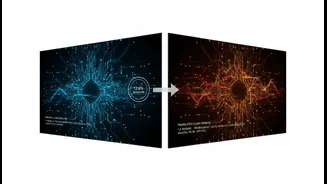
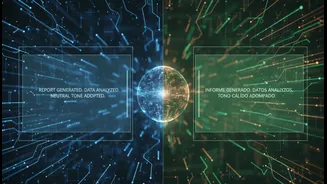
When an AI communicates, it does more than translate words; it adapts its entire communication style. This includes its tone, register (formality level), and politeness. For example, a request phrased in English might be direct and concise. The same request in Hindi
or Japanese might be worded more indirectly and deferentially by the AI. This happens because large language models (LLMs) are trained on vast datasets of human communication from across the internet, including books, articles, and conversations. The AI learns to associate certain tones and structures with different languages, mirroring the cultural communication patterns it has absorbed from this data. It’s not just about grammar; it’s about pragmatics—the unspoken rules of social language.
A Free Tutor for Language Students
For anyone learning a new language, understanding cultural nuance is often harder than memorising vocabulary. This is where observing AI can be incredibly useful. Students can use AI as a dynamic textbook for learning register. For instance, a student could ask a chatbot to draft an email to a professor in both English and their native language. By comparing the AI's word choice, sentence structure, and level of formality, the student gets a practical lesson in professional communication that a standard textbook might miss. It’s a powerful way to see how to convey respect or build rapport differently across cultures, turning the AI into a personalized, interactive learning tool. This practice helps bridge the gap between knowing words and knowing how to use them appropriately.
Sharpening Cross-Cultural Professional Skills
In India's multilingual professional landscape and in global business, being understood is paramount. Observing AI's tonal shifts provides a masterclass in cross-cultural communication. A manager might notice an AI phrasing constructive feedback more gently and indirectly in one language compared to another, reflecting common workplace etiquette. This observation can help professionals adapt their own communication style when dealing with international clients or diverse teams, preventing misunderstandings that arise from cultural differences in directness. Paying attention to these AI-driven nuances can make professionals more empathetic and effective communicators, which is a critical skill for career growth. It’s like having a low-stakes training ground to practice adapting your tone for different business contexts.
An Imperfect Mirror
While AI is a useful tool, it is not a perfect cultural guide. The models are trained on available data, which is often skewed towards Western or English-speaking perspectives. This can lead to the AI perpetuating stereotypes or failing to grasp the deep, lived context behind communication norms. For instance, an AI might generate culturally inappropriate suggestions or miss the subtle, hyperlocal nuances that define true fluency. Studies have shown that even advanced models can reflect the cultural biases present in their training data. Therefore, it's crucial to approach the AI's tonal shifts with a critical eye. Think of it as a helpful assistant for spotting patterns, not as an authoritative expert on culture. Human judgment and experience remain irreplaceable.