




Elon Musk has a new, audacious idea for the future of artificial intelligence: get it off the planet. He recently suggested moving massive AI data centers into orbit, a concept that sounds like science fiction but is rooted in a very real problem.
An Idea Born from Scarcity
During
a recent discussion at the Baron Investment Conference, Elon Musk floated the idea of building data centers in space. His reasoning is straightforward: artificial intelligence is becoming so powerful and growing so quickly that it's hitting a wall on Earth. The primary constraints are no longer just the number of available microchips, but the colossal amounts of electricity and land required to power and house them. Ground-based data centers are facing increasing local opposition due to their immense consumption of power and water, a sentiment Musk acknowledged. His solution? Go where land is irrelevant and solar power is nearly infinite.
The Allure of an Orbital Office
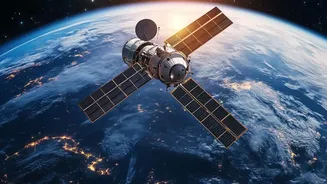
The theoretical advantages of space-based computing are compelling. In orbit, solar panels can be positioned for near-constant exposure to the sun, unhindered by weather or nighttime. This offers a steady and massive source of clean energy to feed power-hungry AI processors. The idea is to bypass Earth's strained electrical grids and the years-long delays associated with building new power plants. Furthermore, the vacuum of space presents a unique, if complex, cooling opportunity. Instead of relying on the massive water-based cooling systems used on Earth, orbital data centers would radiate their heat directly into space. Proponents argue this could solve two of AI's biggest environmental and logistical headaches at once.
The Astronomical Hurdles
While the vision is grand, the engineering and economic challenges are equally immense. First is the sheer cost and mass. Even with reusable rockets like SpaceX's Starship, launching the thousands of tons of servers, solar arrays, and support structures required for a large-scale data center is a monumental undertaking. Second, the environment of space is hostile to sensitive electronics. Cosmic radiation can corrupt data and degrade hardware, necessitating heavy and expensive shielding that adds to the launch mass. Third, cooling is a paradox; while space is freezing, a vacuum is an excellent insulator, making it difficult to shed heat. It requires massive, specialized radiator panels, which could be larger and heavier than the computers themselves. Finally, there is latency. Sending data to orbit and back takes time, which could be a major drawback for real-time AI applications.
A Vertically Integrated Vision
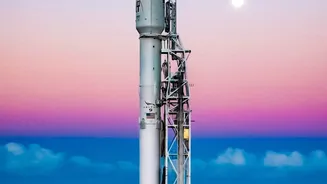
This out_of_this_world idea is a perfect example of the synergy Musk envisions between his companies. SpaceX would provide the launch capability with Starship, drastically lowering the cost of getting to orbit. Starlink, his satellite internet constellation, would provide the high_bandwidth laser links to transmit data between the orbital centers and Earth. And xAI, his artificial intelligence firm, would be the primary customer, requiring immense computational power for training its models. Musk has already spoken of launching test satellites with NVIDIA and Google AI hardware to see how they perform in space, with a project dubbed 'Starmind' targeting initial launches as early as next year.
Future Vision or Science Fiction?
So, is this a serious business plan or just blue_sky thinking? The consensus is that it's a long_term vision, not an immediate project. While small_scale tests are underway by several companies, experts believe commercial viability for large_scale orbital data centers is likely a decade or more away, pending significant breakthroughs. The cost premium compared to terrestrial data centers remains substantial. However, the proposal itself highlights the sheer scale of the AI industry's future needs. It forces a conversation about the sustainability of AI's growth on Earth. While it may seem outlandish today, Musk's proposal is a serious acknowledgement that the future of intelligence may require an infrastructure that is, quite literally, out of this world.