






Understanding Compost: Your Garden’s Best Friend
At its heart, composting is a natural recycling process. Microorganisms break down organic materials—like your leftover peels and used coffee—into a rich, dark, soil-like substance called compost. This finished product is treasured by gardeners for its ability
to dramatically improve soil health. It enhances soil structure, helps retain water, and reduces the need for chemical fertilisers. By composting, you're not just feeding your plants; you're creating a healthier ecosystem in your own backyard and keeping waste out of landfills, where it would otherwise produce harmful methane gas.
The Power of ‘Greens’: Vegetable Scraps
In the world of composting, materials are often categorised as either 'greens' or 'browns'. Vegetable scraps fall firmly into the 'green' category. This doesn't refer to their colour, but to their high nitrogen content. Nitrogen is a critical component for the tiny organisms that do the work of decomposition. It fuels their growth and reproduction, helping the compost pile heat up and break down materials efficiently. Things like fruit and vegetable peels, cores, and other plant-based kitchen waste are excellent sources of this essential element.
Coffee Grounds: The Surprising ‘Green’
Here's a common point of confusion: although they are brown in colour, used coffee grounds are also considered a 'green' material in composting. This is because they are rich in nitrogen, with a content of about 2% by volume. Adding coffee grounds to your pile boosts its nitrogen content, attracting beneficial microorganisms that accelerate decomposition. They also have the added benefit of improving the compost's structure and aeration. While fresh coffee grounds can be acidic, used grounds are nearly pH neutral, so they won't make your soil too acidic.
The Perfect Recipe: Balancing Carbon and Nitrogen
A healthy compost pile requires a balanced diet. The key is the carbon-to-nitrogen (C:N) ratio. The ideal starting point for a fast, hot, and odour-free compost pile is roughly 25 to 30 parts carbon for every 1 part nitrogen (30:1). Your vegetable scraps and coffee grounds provide the vital nitrogen ('greens'). To achieve the right balance, you need to mix them with carbon-rich 'browns'. These are typically dry, woody materials like dried leaves, shredded cardboard (non-glossy), paper, twigs, and straw. A good rule of thumb is to aim for a mix of about two to three parts 'browns' for every one part 'greens' by volume. If a pile gets smelly or slimy, it likely has too much nitrogen; simply add more 'browns' to fix it.
The Nutrient Payoff for Your Plants
So, what specific nutrients do these scraps provide? Nitrogen is the star player, essential for lush, leafy growth. But the benefits don't stop there. As coffee grounds break down, they release other important minerals like potassium, phosphorus, and magnesium. Vegetable scraps contribute a wide array of vitamins and micronutrients. Eggshells, another common kitchen scrap, are a great source of calcium. Unlike synthetic fertilisers that can release nutrients too quickly and burn plants, compost releases them slowly and gently. This steady supply nourishes your plants over the long term, improves soil structure, enhances water retention, and builds a robust soil ecosystem that can even help deter some pests and diseases.
What to Avoid in Your Home Compost
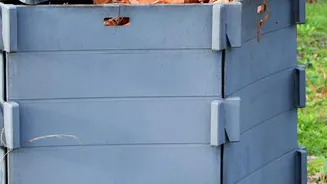
While most plant-based scraps are welcome, some items should be kept out of a typical home compost bin. Avoid adding meat, fish, bones, dairy products, and oily or greasy foods. These materials can create foul odours as they decompose and are highly attractive to pests like rodents. It's also best to avoid adding diseased plants, as the pathogens might not be killed if the pile doesn't get hot enough. Stick to fruit and vegetable scraps, coffee grounds, tea bags, crushed eggshells, and yard trimmings for a clean and effective compost pile.