





From Sci-Fi to Reality
For as long as we've launched satellites, they have been mostly solitary objects, sent into the harshness of space with everything they need for their entire mission. If a satellite ran out of fuel or a critical component failed, the multi-million or even
billion-dollar asset was often abandoned, becoming another piece of space debris. The idea of a 'space mechanic' has been around since the early days of spaceflight, but it's only now transitioning from a futuristic concept to a practical, and increasingly crucial, part of the space industry. Landmark missions, like the servicing of the Hubble Space Telescope by astronauts, proved that repairs in orbit were possible. Today, the focus has shifted to robotic and autonomous servicing, a leap in technology that promises to revolutionize how we operate in space.
The 'AAA' of Space
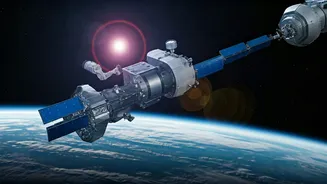
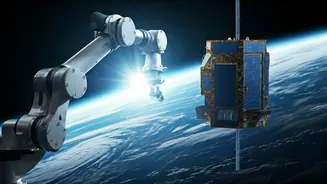
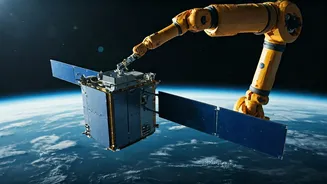
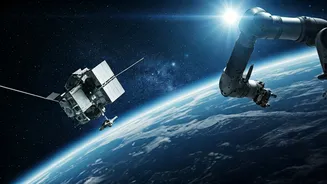
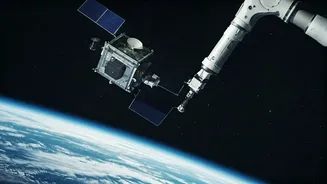
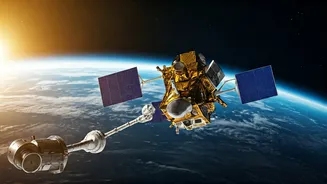
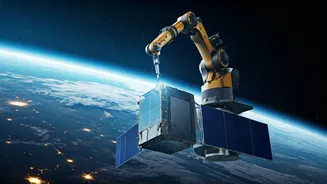
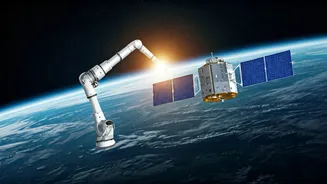
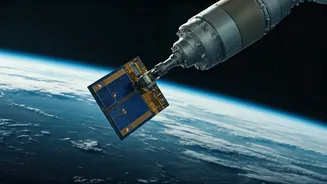
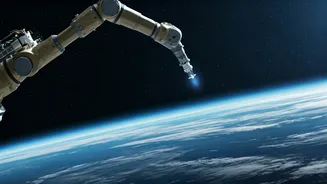
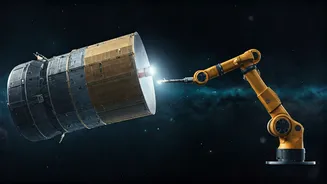
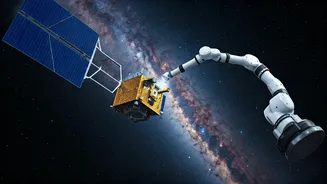
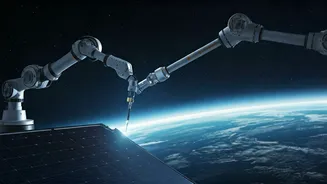
So, what exactly is on-orbit servicing? Think of it as roadside assistance for satellites. It covers a range of activities performed by a 'servicer' spacecraft on a 'client' satellite. This can include refueling a satellite that's low on propellant, repairing or replacing faulty components like a solar panel that failed to deploy, upgrading hardware with newer technology, or even moving a satellite to a different orbit. The process typically involves the servicer spacecraft rendezvousing with and carefully capturing the client satellite using robotic arms. Some missions involve a servicer that docks with a satellite to act as a new propulsion system, effectively a 'jetpack' to extend its life. This new capability marks a fundamental shift from a disposable to a sustainable and more flexible approach to space assets.
The Business Case Takes Flight
While the technology for on-orbit servicing has been developing for years, the biggest hurdle was proving its economic viability. That is now changing. The global on-orbit servicing market is projected to grow significantly, from just under $5 billion in 2025 to over $12 billion by 2035. The primary driver is the sheer cost of replacing satellites, especially large, expensive ones in geostationary orbit (GEO) that handle the bulk of our communications and broadcasting. For a satellite that cost hundreds of millions of dollars to build and launch, a multi-million dollar servicing mission to extend its life by several years is a compelling financial proposition. Government agencies, particularly the U.S. Space Force, are also major customers, viewing servicing as critical for national security and maintaining a dynamic presence in space. This government investment is helping to anchor the market, giving commercial companies the confidence to build out their capabilities.
Key Players and Upcoming Missions
A growing ecosystem of companies is entering the satellite servicing arena. Northrop Grumman's SpaceLogistics has already had success with its Mission Extension Vehicle (MEV), which has docked with Intelsat satellites to provide life extension services. Other major players include Maxar Technologies, Astroscale, Airbus, and Thales Alenia Space, each developing their own unique technologies. The year 2026 is shaping up to be a pivotal one, with several key missions planned. The U.S. is launching four separate missions to demonstrate capabilities like refueling and robotic repairs in GEO. One notable commercial mission scheduled for June 2026 is a partnership between NASA and Katalyst Space Technologies to save the Neil Gehrels Swift Observatory, a 22-year-old space telescope whose orbit is decaying. This rescue mission, if successful, will showcase the potential for servicing even satellites that weren't designed for it.
The Road Ahead: Challenges and a Sustainable Future
Despite the momentum, challenges remain. A key issue is the lack of standardization across satellites; different manufacturers use different fueling ports and designs, which complicates servicing missions. Efforts are underway to create universal standards to make future satellites more easily serviceable. There are also complex regulatory and legal questions to navigate regarding operations in close proximity to other nations' satellites. Looking forward, the implications of a mature on-orbit servicing industry are profound. It opens the door for in-space assembly of large structures, like future space stations or telescopes, and is a critical component of managing the growing problem of space debris. By enabling a more circular economy in orbit—one of repair, reuse, and recycling—satellite servicing isn't just a new market; it's a foundational technology for a more sustainable and ambitious future in space.