




How Your Phone Became a Makeup Mirror
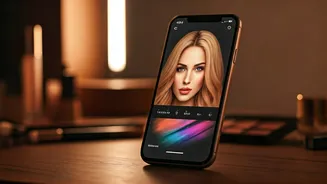
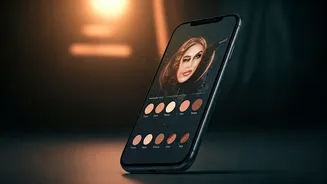
Virtual makeup try-on uses augmented reality (AR) and artificial intelligence (AI) to let you see what a product looks like on your face in real-time. Using your device's camera, the technology scans and maps your facial features—like your lips, eyes,
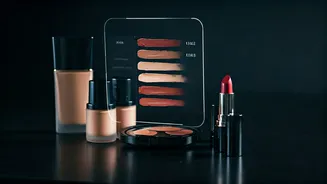
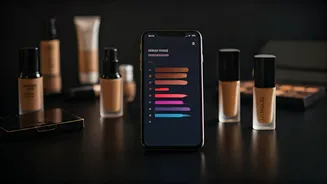
and cheeks. It then overlays a digital, true-to-life rendering of the makeup product. The effect is like a hyper-realistic social media filter, but designed with precise colour and texture to mimic the actual product. Major beauty tech companies like Perfect Corp. and ModiFace (acquired by L'Oréal) have developed sophisticated software that can now account for lighting, skin tone, and even the texture of the product, making the experience incredibly realistic. Many platforms also integrate AI to offer personalized shade recommendations based on your unique skin undertones.
A Win for Shoppers and Brands
For consumers, the benefits are obvious: convenience, personalization, and the freedom to experiment without commitment or hygiene concerns. You can try dozens of shades from the comfort of your home, boosting confidence in your purchasing decisions. For beauty brands, the impact is even more profound. Companies that have integrated virtual try-on report significant increases in customer engagement and conversion rates—in some cases by more than double. Estée Lauder saw a 2.5 times higher conversion rate after introducing its virtual lip try-on tool. This technology also helps tackle one of e-commerce's biggest problems: returns. By allowing shoppers to find the right shade the first time, some brands have seen return rates drop by as much as 64%. It also provides valuable data on customer preferences, helping brands forecast trends and refine their product development.
From Websites to Social Feeds
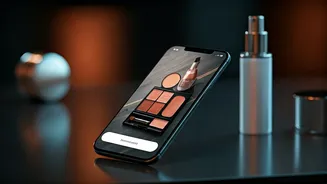
Virtual try-on is no longer confined to a brand's website. Major players in beauty are embedding this technology across the digital ecosystem. Sephora's Virtual Artist tool is available in its app and even on in-store kiosks. L'Oréal has partnered with Meta to allow users to virtually try on products directly within Instagram, seamlessly connecting the experience to Instagram Shopping. Google has also partnered with brands like MAC and Estée Lauder to allow users to try on products that appear in search results. This multi-platform approach meets customers where they are, transforming passive browsing into an interactive and engaging shopping journey. The goal is to make the transition from trying to buying as seamless as possible, no matter the platform.
The Technology Isn't Perfect—Yet
Despite its rapid advancement, virtual try-on technology still faces challenges. The accuracy of the simulation can be affected by factors like your device's camera quality and ambient lighting, which can sometimes lead to a disconnect between the virtual preview and the real-life product. Furthermore, the technology can't yet replicate the physical feel or texture of a product—how a lipstick glides on or how a foundation feels on the skin. There are also concerns about data privacy, as these tools collect detailed information about users' facial features and preferences. Brands and tech developers are actively working to address these limitations, continuously improving algorithms to deliver more accurate and true-to-life experiences.