





The Allure of the Botanical Print
Forget generic floral patterns; Indian botanical prints are a world away from simple flower designs. These motifs are a detailed celebration of nature, featuring stylised depictions of marigolds, lotuses, paisleys, and climbing vines that have been part
of India's design vocabulary for centuries. The appeal lies in their ability to be both intricate and calming. A hand-printed 'buta' (floral motif) on a tablecloth or a 'jaal' (lattice pattern) on a cushion cover brings a sense of handcrafted elegance that mass-produced items cannot replicate. These are not just patterns but stories told on cloth, connecting modern homes to a rich artistic lineage.
A Tradition Stamped by Hand
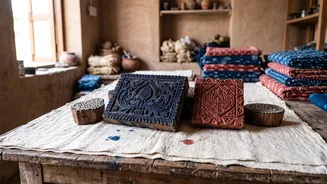
The magic of these textiles lies in the 'hand-printed' process, most famously the art of block printing. Centred in regions like Rajasthan, particularly in the towns of Sanganer and Bagru, this craft has a history spanning over 500 years. Artisans, often from the Chhipa community, use hand-carved wooden blocks made from teak or sheesham to stamp designs onto fabric. Each color in a design requires a separate block, meticulously aligned by eye. The slight variations in pressure and alignment are not flaws but the very signature of a handmade piece, ensuring that no two lengths of fabric are exactly identical. This ancient technique, using natural dyes and materials, is a testament to patience and extraordinary skill.
A Modern Renaissance
Contemporary Indian designers are breathing new life into these age-old motifs. They are taking traditional Sanganeri prints, known for their delicate florals on light backgrounds, and Bagru prints, with their bolder, earthier tones, and applying them to modern contexts. You'll find these botanical patterns on breezy kurta sets, elegant Chanderi sarees, and even on accessories like bags and footwear. Designers are experimenting with scale, placing oversized petals on one garment or using intricate, painterly compositions on another. This fusion of traditional craft with contemporary silhouettes makes the trend feel fresh, relevant, and deeply personal.
Styling Your Daytime Celebration
Incorporating these prints into a daytime festive gathering is about creating a look that feels celebratory but relaxed. For home decor, start with textiles. A vibrant hand-block printed cotton bedsheet can instantly transform a room. On the dining table, a runner or placemats with botanical designs can create a beautiful tablescape when paired with simple crockery and fresh flowers. For fashion, the key is balance. A floral printed saree or a lightweight kurta works beautifully for a sunlit lunch or puja. The idea is to let the print be the star; avoid overwhelming the space with too many competing patterns. Instead, mix printed pieces with solid colours and natural textures to create a setting that is warm, inviting, and effortlessly chic.
Beyond Aesthetics: A Conscious Choice
Choosing hand-printed textiles is also a move towards more conscious consumption. The handloom and hand-printing sectors are inherently more sustainable than industrial manufacturing, using less energy and often relying on natural, plant-based dyes. This approach not only has a smaller environmental footprint but also provides a vital livelihood for artisan communities, preserving skills that have been passed down through generations. In an age of fast fashion, opting for a hand-printed piece is a way to support slow, mindful production and bring an object with a genuine story and cultural value into your life.