

India's Plastic Predicament
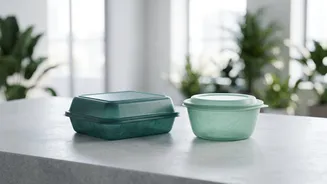
India faces a monumental challenge with plastic waste. The country generates millions of tonnes of plastic waste annually, with a significant portion coming from the packaging sector. This industry alone accounts for roughly 30% of all plastic consumption
in India. The rapid growth of e-commerce and food delivery platforms has only intensified the issue, normalizing single-use containers, cutlery, and wrappers that often end up in landfills or polluting our oceans. While recycling efforts are in place, the sheer volume of waste generated overwhelms the existing infrastructure, leaving a vast amount of plastic unaccounted for and posing a severe environmental threat.
The Green Algae Solution
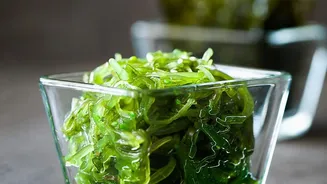
Enter seaweed, or macroalgae. This simple marine plant is at the heart of a packaging revolution. Unlike land-based crops used for other bioplastics, seaweed requires no freshwater, fertilizers, or agricultural land to grow. It thrives in the ocean, absorbing carbon dioxide as it grows. The magic lies in the natural polymers within the algae, like alginate and agar, which can be extracted and transformed into a plastic-like substance. The resulting material is not only biodegradable but often home-compostable, breaking down in a matter of weeks or months, unlike conventional plastics that persist for centuries. Some formulations are even edible and dissolve safely in water.
Meet India's Seaweed Pioneers
Several Indian startups are at the forefront of this green wave. Zerocircle, founded by Neha Jain, is a prominent example. The company creates fully bio-based and home-compostable packaging films from seaweed. By partnering with coastal communities in states like Gujarat and Tamil Nadu for seaweed cultivation, Zerocircle not only develops a sustainable product but also supports local economies. Another key player is the Bangalore-based Sea6 Energy. Founded in 2010, the company is developing a range of seaweed-based products, including compostable films, grease-proof coatings for paper boxes, and water-stable straws designed to replace their soggy paper counterparts. These companies are demonstrating that it is possible to create high-performance materials that don't harm the planet.
From Lab to Lunchbox: The Challenges Ahead
Despite its immense promise, algae-based packaging faces significant hurdles on its journey to the mainstream. The primary challenge is cost and scale. Currently, these materials can be more expensive than their petroleum-based counterparts. For instance, some of Zerocircle's initial products were priced at a premium, though the company expects costs to decrease as production scales up. Another challenge is performance and versatility. While algae-based materials work well for films and coatings, developing rigid, durable containers for all types of food requires further innovation. Finally, to truly succeed, these startups need to integrate their solutions into existing manufacturing and supply chains, proving to large brands that the switch from plastic is not just environmentally sound, but also logistically and economically feasible.