

A New Star in the Heavens
In early October 1604, observers across Europe and Asia noted a startling addition to the constellation Ophiuchus. A guest star had appeared, and within days, it grew bright enough to rival Jupiter and was even visible during the day. This celestial event
occurred at a pivotal time. The long-held Aristotelian view that the heavens were perfect and unchanging was already under scrutiny, thanks to a similar 'new star' observed by Tycho Brahe in 1572. German astronomer Johannes Kepler began a meticulous study of the 1604 event, documenting its brightness and position for over a year. His detailed work, 'De Stella Nova' ('On the New Star'), ensured the event would forever be linked with his name, now known as Kepler's Supernova. At the time, however, no one could explain what it truly was.
What 'Stella Nova' Really Meant
The term 'stella nova', Latin for 'new star', was the only one available to astronomers of the era. Any celestial object that suddenly appeared where none was seen before fell under this umbrella term. Without telescopes, observers could not tell the difference between a star that flared up temporarily and one that had violently exploded. They correctly determined that these new stars were far beyond the Moon, which contradicted the idea of an immutable cosmos, but the underlying mechanics remained a deep mystery. It would take centuries of scientific advancement to understand that these 'new stars' were not new at all, but rather represented two very different, and very dramatic, stellar phenomena: the nova and the supernova.
Supernova: A Star's Catastrophic Death
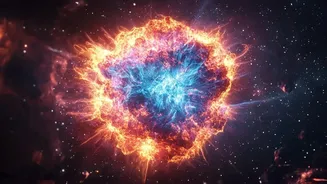
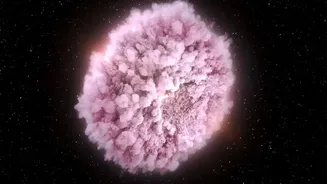
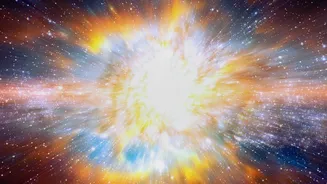
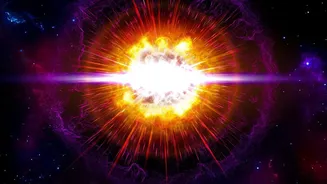
A supernova is one of the most violent events in the universe: the complete and utter destruction of a star. There are two main pathways to this explosive end. One involves a massive star, many times the mass of our Sun, running out of nuclear fuel and collapsing under its own gravity. The other, which is what happened with Kepler's Supernova, is a Type Ia explosion. This occurs in a binary star system where a small, dense stellar remnant called a white dwarf siphons material from a companion star. When the white dwarf accumulates too much mass, it triggers a runaway thermonuclear reaction that blows the entire star apart. The resulting explosion is so incredibly bright it can briefly outshine its entire galaxy, releasing enormous amounts of energy and heavy elements into space. A supernova is a one-time event; the star is obliterated.
Nova: A Surface-Level Eruption
A nova, while also dramatic, is a far less catastrophic event. Like a Type Ia supernova, a classical nova also happens in a binary system with a white dwarf. The white dwarf pulls hydrogen and other material from its companion star, which then accumulates on its surface. This layer of stolen material eventually becomes so hot and dense that it ignites in a thermonuclear flash, causing the star to brighten dramatically. The key difference is that this is only a surface explosion. The underlying white dwarf star remains intact and is not destroyed. Because the star survives, the process can repeat itself. Some binary systems are known as 'recurrent novae', experiencing these outbursts on a cyclical basis.
The Core Difference: Destruction vs. Eruption
The distinction is simple but profound: a supernova is the death of a star, while a nova is a temporary flare-up on a star's surface. A supernova is billions of times more luminous than a nova and marks the end of the star's life, leaving behind either a black hole, a neutron star, or in the case of a Type Ia like Kepler's, nothing but an expanding cloud of debris. A nova, on the other hand, is a recurring phenomenon. The star brightens significantly for a period of weeks or months before fading back to its original state, ready for the cycle to begin again. What Kepler and his contemporaries saw in 1604 was the former—a final, brilliant flash marking the end of a star's existence about 20,000 light-years from Earth.
The Legacy of Kepler's Star
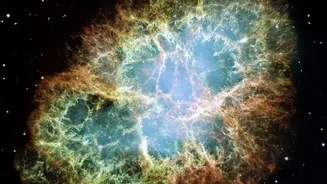
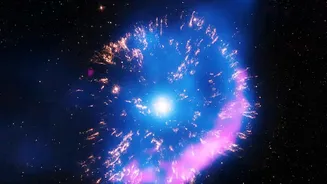
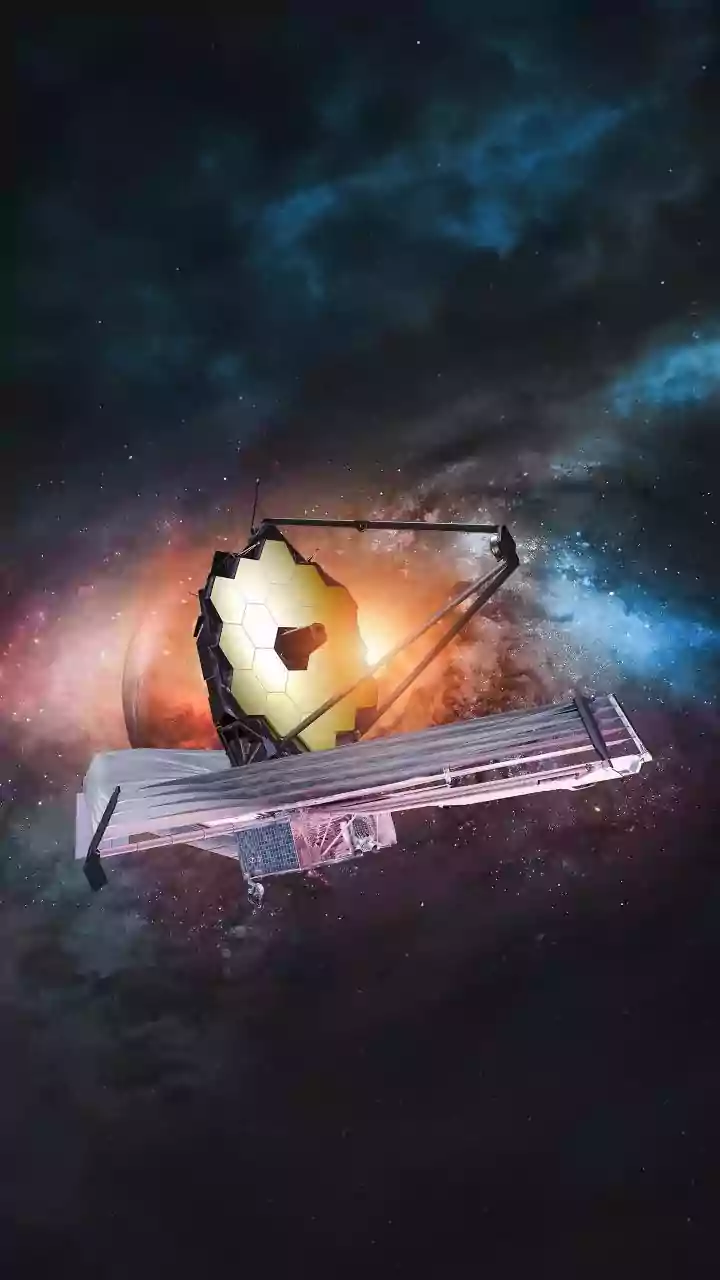
Today, modern telescopes like the Hubble, Spitzer, and Chandra X-ray Observatory can see what Kepler could only imagine: the aftermath. The remnant of SN 1604 is a beautiful, expanding shell of gas and dust, now about 14 light-years wide and still rushing outwards at immense speed. Studying this remnant has confirmed it was a Type Ia explosion and has helped astronomers understand how these events forge and distribute crucial elements, like the iron in our blood, across the galaxy. More than 400 years later, Kepler's 'new star' is still teaching us about the life and death of stars, a fitting legacy for the event that helped reshape our understanding of the universe.