




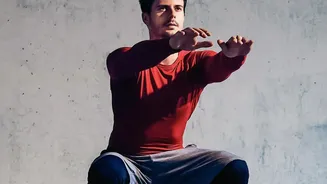
Why Depth Is Your Best Friend
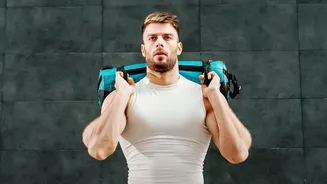
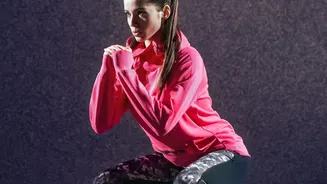
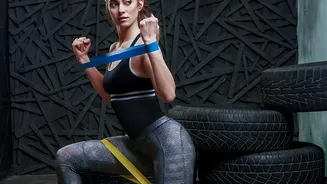
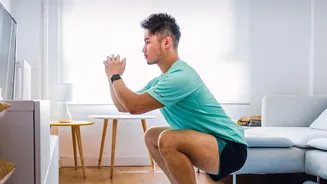
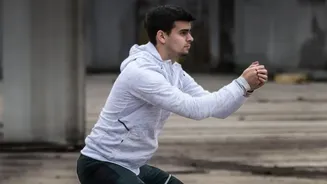
The single most effective way to increase the challenge of exercises like squats and lunges is to increase your range of motion. Going deeper into the movement—often called a 'deep squat'—forces your muscles to work harder through a longer path. Studies
show that deeper squats lead to greater muscle activation, particularly in the glutes and thighs. This increased activation is a trigger for muscle growth and strength gains. Think of it as the difference between taking small steps and long strides; the latter requires more effort and builds more power. Aiming to squat until your thighs are at least parallel to the floor is a good start, but working toward an even greater depth, as your mobility allows, will yield superior results.
The Art of Adjusting Depth Safely
Increasing your depth should be a gradual process, always prioritising good form to prevent injury. If you're new to deep squats, try using a low chair or stool as a target. Lower yourself until you lightly touch the surface, then stand back up. This builds control and confidence. As you get stronger, you can use a lower target or remove it entirely. Pay attention to your body: your heels should remain flat on the floor, and your spine should stay in a neutral, upright position. If your lower back rounds or your heels lift, you've gone too deep for your current mobility. Focus on ankle and hip mobility exercises to help improve your range of motion over time.
Manipulating Tempo for Maximum Burn
One of the simplest yet most brutal ways to make any exercise harder is to slow it down. This is called tempo training, and it dramatically increases the time your muscles spend under tension, which is a key driver for growth. For your next set of squats or lunges, try a '3-1-1' tempo: take three full seconds to lower yourself down, pause for one second at the bottom of the movement, and then take one second to return to the start. This controlled, deliberate movement eliminates momentum and forces your muscle fibres to do all the work, leading to a much greater challenge and better results without a single piece of equipment.
Changing Your Stance and Leverage
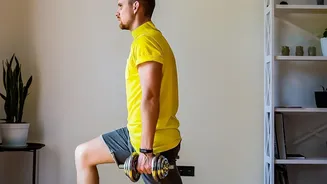
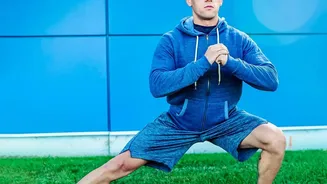
Slight changes in your foot placement can target different muscles and alter the difficulty of an exercise. A wider 'sumo' squat stance, with toes pointed slightly out, places more emphasis on the inner thighs and glutes. A narrow stance challenges your quadriceps more. You can also play with leverage. Elevating your back foot on a couch or chair for a Bulgarian split squat is a major step up from a standard lunge, demanding more stability and strength from your front leg. Similarly, elevating your front foot on a step or book during a lunge can help you achieve a greater depth and increase the stretch on your muscles.
Introducing Single-Leg Challenges
Progressing to single-leg exercises is the ultimate test of lower body strength and stability. When you stand on one leg, you remove a major point of support, forcing all the stabilising muscles in your hip, knee, and ankle to work overtime. Start with assisted movements. For example, try a single-leg squat while holding onto a door frame for balance. As you improve, you can work toward unsupported pistol squats or single-leg Romanian deadlifts. These advanced movements not only build powerful thigh muscles but also improve your balance and functional fitness in ways that two-legged exercises can't match.