








A New Era of Space Cooperation
In late June 2026, heads of space agencies from the eleven BRICS member nations convened in Bengaluru, India, for a pivotal meeting hosted by the Indian Space Research Organisation (ISRO). The summit's agenda was clear: to fortify cooperation on the peaceful
and sustainable use of outer space. This gathering marked a significant step in the evolution of the bloc's space ambitions, moving from theoretical agreements to concrete operational frameworks. A key focus was on ensuring the long-term sustainability of space activities, including strategies for debris-free missions and responsible governance. Discussions also advanced on forming a BRICS Space Council to provide a more structured institutional mechanism for their growing collaboration.
The Virtual Constellation
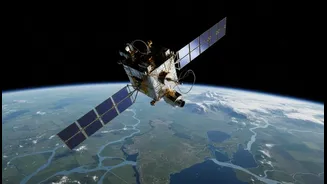
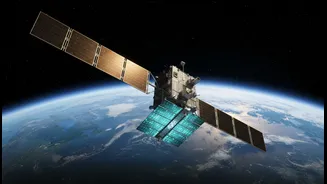
At the heart of this cooperation is the BRICS Remote Sensing Satellite Constellation (RSSC). First agreed upon in 2021, this is not a new set of satellites launched in unison, but a 'virtual constellation' of existing assets contributed by member nations. This includes satellites like India's Resourcesat series, China's Gaofen and Ziyuan satellites, Russia's Kanopus-V, and the CBERS satellites jointly developed by China and Brazil. By agreeing to share data from these powerful 'eyes in the sky', the BRICS nations have created a formidable tool. The recent meeting in Bengaluru included amending the agreement to officially bring new BRICS members into this data-sharing mechanism, significantly expanding its global coverage and potential.
Data as the Backbone for Sustainability
So how do these satellites form a 'backbone'? Remote-sensing satellites provide objective, wide-area data crucial for tackling some of the planet's biggest challenges. The information gathered is vital for monitoring climate change, from tracking melting ice sheets to observing deforestation. This data powers early warning systems for natural disasters, maps the extent of floods, and helps predict crop yields to ensure food security. For the BRICS nations, this shared data pool means enhanced capacity for disaster management, better environmental protection, and more informed policy-making on everything from urban planning to water resource management. It allows countries to monitor vast, remote territories and verify environmental conditions without relying on external sources.
Geopolitical Significance and India's Role
The BRICS space collaboration is as much about geopolitics as it is about science. By building an independent space infrastructure, the bloc is enhancing its strategic sovereignty. The cooperation aims to reduce technological disparities among member states through training and technology transfer, fostering a more equitable partnership. For India, hosting the 2026 meeting underscores its central role in this initiative. During the summit, Union Minister Dr. Jitendra Singh pitched the idea of a 'BRICS Space Economy,' urging nations to move from mere coordination to co-creation and co-innovation. The event also served as a showcase for India's burgeoning private space industry, with IN-SPACe facilitating presentations from local startups to the international delegations, highlighting the nation's growing capabilities in launch services and geospatial intelligence.