

A Cascade of Digital Darkness
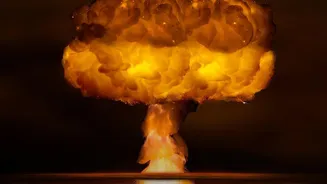
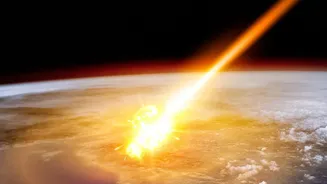
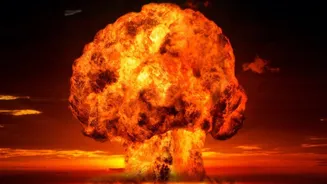
A new study from researchers at the University of Wisconsin-Madison and Princeton University has painted a stark picture of orbital vulnerability. According to their model, a single one-megaton nuclear weapon detonated 500 kilometres above the Earth could
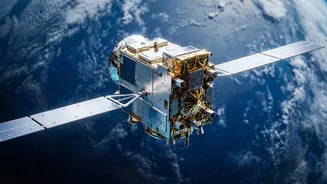
disable approximately 98% of all satellites in low-Earth orbit (LEO) within a single week. The paper, which is available on the preprint server arXiv, simulates a detonation over the South Atlantic, an area where the Earth's magnetic field is weaker. The findings show a rapid collapse: 25% of the satellite fleet would be disabled in one day, rising to 78% after three days, and culminating in near-total losses. The immediate blast isn't the primary threat; instead, it's the lingering after-effects that would cause a prolonged and devastating cascade of failures.
The Belt, Not the Blast
Unlike explosions on Earth, a nuclear detonation in the vacuum of space doesn't create a conventional shockwave. The main destructive mechanism is radiation. The initial burst of X-rays would instantly disable a small percentage of satellites. However, the far greater danger comes from what is left behind: an artificial radiation belt. High-energy electrons from the bomb's fission products would become trapped by Earth's magnetic field, creating a deadly zone of radiation that would persist for years. Satellites in LEO, which circle the planet every 90 minutes or so, would repeatedly fly through this belt, and each pass would degrade their sensitive electronics, leading to eventual failure. Even satellites with enhanced radiation shielding would only delay the inevitable, with models showing 97% would still be disabled within two weeks.
A Lesson from History
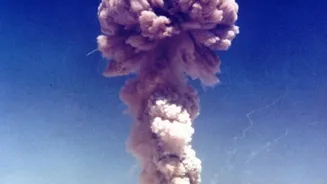
This is not merely a theoretical concern. In 1962, at the height of the Cold War, the United States conducted the 'Starfish Prime' test, detonating a 1.4-megaton warhead about 400 kilometres over the Pacific Ocean. The test created an unexpectedly powerful electromagnetic pulse (EMP) that caused electrical damage in Hawaii, nearly 1,500 kilometres away. More significantly, it created its own artificial radiation belt that damaged or destroyed at least a third of the few dozen satellites in orbit at the time, including the pioneering Telstar communications satellite. Today, with more than 13,000 active satellites in LEO, a similar event would be exponentially more catastrophic.
The Geopolitical Domino Effect
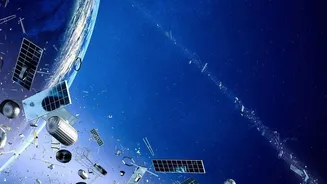
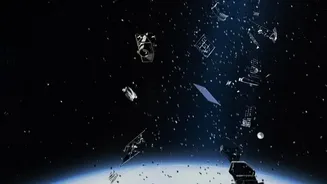
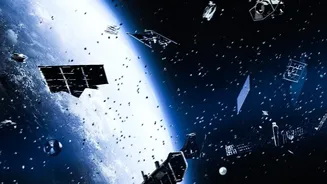
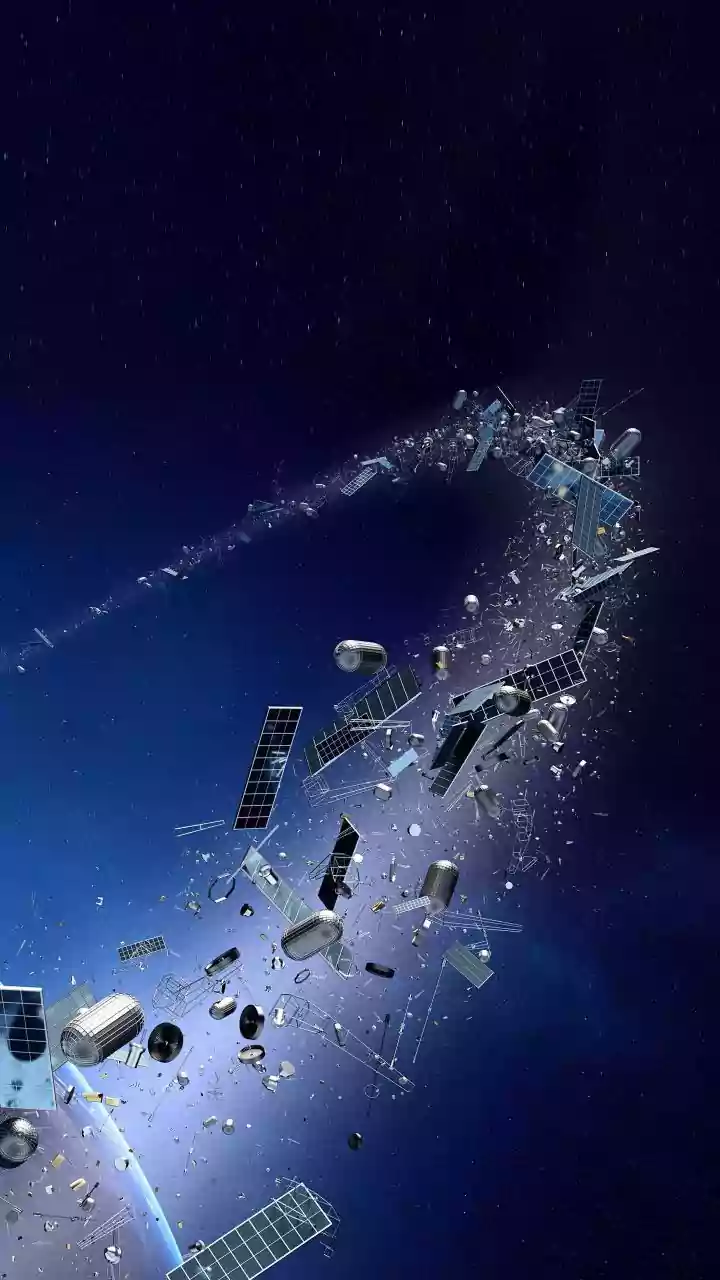
The weaponization of space is a growing concern among global powers. A space-based nuclear device is not a precision weapon; it is an indiscriminate tool of mass disruption. Such an act would cripple an adversary's military capabilities, which rely heavily on satellites for intelligence, communication, and navigation. However, the damage would not be contained. It would affect civilian and commercial satellites from all nations, effectively blinding the world. The resulting loss of GPS, global communications, and weather forecasting would have a calamitous effect on supply chains, financial markets, and emergency services on a global scale. The study also predicts that the loss of manoeuvrability would lead to around 20 major satellite collisions within two years, creating thousands of new pieces of space debris and making orbit unusable for years to come.