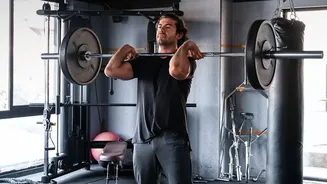







Beyond Just Burning Calories
For years, the fitness equation seemed straightforward: burn more calories than you consume. Cardio, with its ability to torch calories during a session, was the undisputed king. However, this view only tells half the story. While a 30-minute run certainly
burns calories, its metabolic impact largely ends when you step off the treadmill. Strength training, on the other hand, offers a powerful long-term advantage. By lifting weights or using resistance, you create microscopic tears in your muscles, which your body then repairs and rebuilds stronger. This process of building and maintaining lean muscle mass raises your resting metabolic rate. In simple terms, the more muscle you have, the more calories your body burns around the clock, even while you sleep or sit at your desk. This shift from short-term calorie burn to long-term metabolic enhancement is a primary reason beginners are embracing resistance work.
Sculpting the Body, Not Just Shrinking It
A common goal for beginners is 'weight loss', but what many truly desire is 'fat loss' and a more toned physique. Relying solely on cardio can sometimes lead to the loss of both fat and precious muscle tissue. This can result in a smaller but not necessarily stronger or more defined version of oneself. Structured strength training changes this dynamic completely. It sends a clear signal to the body to preserve and build muscle while in a calorie deficit. This is the key to improving body composition—the ratio of fat to muscle. The result isn't about 'shrinking' but 'sculpting'. Even if the number on the scale doesn't drop dramatically at first, your clothes may fit better, and you'll notice a firmer, more defined appearance. This visual and functional progress is often far more rewarding than chasing a number on a scale.
The Power of Progression and Structure
Endless cardio sessions can become monotonous. How do you measure progress on an elliptical besides just staying on it longer? Strength training, however, is built on a principle called 'progressive overload'. This simply means gradually increasing the demand on your muscles over time. Whether it’s adding a little more weight, doing one more repetition, or reducing rest time, you have concrete, measurable ways to see yourself getting stronger every week. This clear path of progression is incredibly motivating. It provides a sense of accomplishment and mastery that a long, steady-state cardio session often can't match. This structured approach not only enhances physical strength but also builds confidence and mental resilience, creating a positive feedback loop that encourages long-term consistency.
Debunking the 'Bulky' Myth
One of the most persistent myths, particularly among women, is the fear that lifting weights will make them look 'bulky'. This concern is largely unfounded. Building a large amount of muscle mass requires a very specific, highndvolume training regimen, a significant calorie surplus, and, frankly, hormonal profiles that women typically do not possess. For the average beginner, male or female, a structured resistance program of two to three days a week will lead to a leaner, stronger, and more 'toned' physique, not a bulky one. Muscle is denser and takes up less space than fat, so as you build muscle and lose fat, you will likely appear smaller and more compact. Fitness experts now widely promote the message that strength training is a crucial tool for women to build a strong, capable body.
An Investment in Lifelong Health
Beyond aesthetics and metabolism, resistance training is a powerful investment in your long term health. It is one of the most effective ways to build and maintain bone density, which is crucial for preventing osteoporosis later in life. Strong muscles and connective tissues also provide better support for your joints, improving stability and reducing the risk of injury in both the gym and daily life. Furthermore strength training can improve posture enhance balance and even support better blood sugar regulation By swapping some of that endless cardio for structured lifting beginners aren t just chasing short term results they are building a more resilient functional and healthier body for decades to come.