



The Moon's Brutal Power Problem
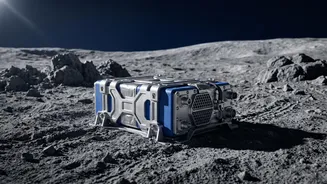
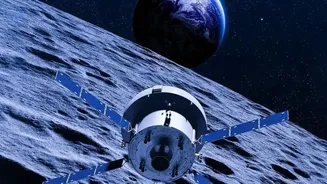
Imagine a night that lasts for 14 Earth days, where temperatures plummet to an unimaginable minus 200 degrees Celsius. This is the reality at the Moon's South Pole, a key destination for future Artemis missions. For any rover, habitat, or piece of astronaut
equipment to survive, let alone function, it needs a reliable power source. The problem is that the batteries we use every day in our phones, laptops, and electric cars simply can't handle it. At these cryogenic temperatures, their internal chemistry grinds to a halt.
Why Liquid-Based Batteries Fail
A conventional lithium-ion battery works by having charged particles, or ions, move through a liquid electrolyte between the anode and cathode. This liquid is the battery's fatal flaw in space. In the intense cold of the lunar night, the electrolyte freezes solid, stopping the flow of ions and potentially causing permanent damage. If that's not enough, the vacuum of space can cause the liquid to evaporate, and the Moon's daytime highs of over 100 degrees Celsius can cause it to overheat and fail. These batteries are simply not designed for such a punishing environment.
Enter the Solid Electrolyte: A Game Changer
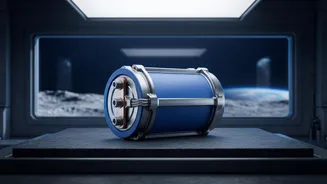
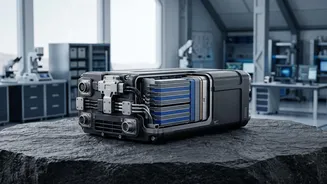
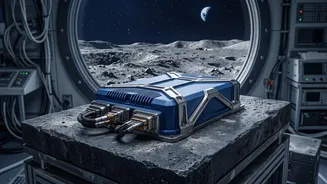
This is where NASA's research into solid electrolytes comes in. The project, named SPEARS (Solid Power for Extreme Environment Adaptability and Resilience in Space), replaces the problematic liquid with a solid material, often a thin layer of a special ceramic or polymer. This seemingly simple swap has profound implications. A solid electrolyte doesn't freeze, evaporate, or have the same flammability risks as its liquid counterpart. It acts as both the medium for ion transport and a physical separator, creating a more robust and stable battery cell.
The SPEARS Project's Big Bet
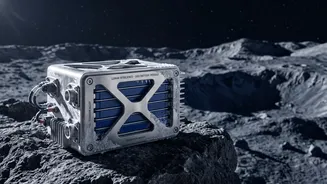
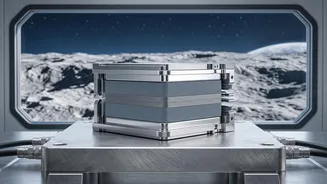
The goal of the SPEARS project is to develop solid-state batteries that can survive the Moon's wild temperature swings. Recent tests at NASA's Langley Research Center are promising. Prototype cells have proven they can survive exposure to temperatures from 100°C all the way down to -170°C without being damaged. While they don't operate at the absolute lowest temperatures, they don't break. This means they can sit dormant through the coldest parts of the lunar night and be warmed up with small heaters when needed, a huge advantage over batteries that would need constant heating just to prevent them from being destroyed. This drastically reduces the energy needed for thermal management, saving precious power and weight on missions.
More Than Just Resisting Cold
The benefits of solid-state batteries go far beyond temperature resistance. Because they are more compact and don't require the bulky casing and safety systems of liquid-filled batteries, they can be much lighter. They also have the potential for significantly higher energy density, meaning they can store more power for the same amount of weight—a critical factor when every kilogram launched into space costs a fortune. Enhanced safety is another key advantage; with no flammable liquid, the risk of battery fires, a major concern for any space mission, is greatly reduced.
From the Moon to Your Driveway
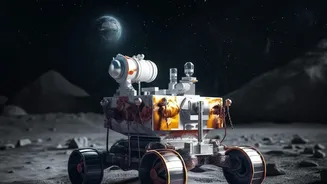
While NASA's immediate focus is powering rovers and astronaut gear, the research has massive implications back on Earth. The race to build a viable solid-state battery is already a major goal for the electric vehicle industry, with companies promising longer ranges, faster charging, and safer cars. The challenges NASA overcomes in making these batteries work in the vacuum of space—improving their durability, cycle life, and power output—could accelerate their commercial development. The technology that one day powers a lunar habitat could eventually find its way into our phones, drones, and the broader energy grid.