



Why You Can't Just Halve the Time
When you reduce the volume of food, you also change its geometry—specifically, the ratio of surface area to volume. Heat penetrates a smaller mass more quickly. For example, a cake pan that's half the size doesn't just hold half the batter; the batter might
also be shallower or deeper, which dramatically affects how it cooks. A shallower batter will cook much faster as the heat reaches the centre more quickly, while a deeper batter in a smaller pan will need more time, not less, for the centre to cook through without the edges burning. This is why simply cutting the cooking time in half is a recipe for either a burnt exterior or a raw middle.
The Universal Rule: Check Early and Often
There is no single magic formula for time adjustment that works for every dish. The most reliable strategy is to use the original time as a loose guide and start checking for doneness significantly earlier. A good rule of thumb for many dishes is to start checking at about 50% to 75% of the original cooking time. For a cake that originally took 60 minutes, start checking around the 30 to 45-minute mark. You can always cook something for longer, but you can never un-cook it. Frequent checks—every few minutes for quick-baking items like cookies and every 5-10 minutes for cakes and casseroles—are your best bet against overcooking.
Mastering Smaller Bakes
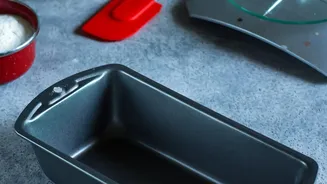
Baking is a science, and scaling is its trickiest variable. The first step is to choose the right-sized pan. Ideally, you want a pan with roughly half the surface area if you're halving the recipe to maintain a similar batter depth. For example, a recipe for a 9x13-inch pan (117 sq. inches) can often be halved into an 8-inch or 9-inch round pan. If you use a smaller pan that makes the batter deeper, you may need to lower the oven temperature by about 25°F (around 15°C) to allow the centre to cook before the edges over-bake. When going from a large cake to mini loaves or muffins, you might need to check for doneness after just half the original baking time.
Roasting Smaller Cuts of Meat
For roasts, thickness and weight are the primary factors determining cook time. While larger roasts are often calculated in minutes per pound, this logic doesn't scale down perfectly because a smaller roast still needs to come up to temperature. Cutting a large roast into two smaller pieces increases the surface area, which can speed up cooking. However, the most critical tool when cooking a smaller cut is a reliable meat thermometer. Cook to temperature, not to time. As a starting point, you might reduce the total time by about 25-30% compared to the original recipe, but begin taking temperature readings well before you expect it to be done.
Adjusting Stovetop Dishes
Soups, stews, and sauces are generally more forgiving. The main factor at play on the stovetop is evaporation. A smaller volume of liquid in a wide pot will reduce and thicken much more quickly. While you might bring the dish to a boil in less time, the simmering period for flavour development may not need to be reduced as drastically. For a chilli or stew, where long simmering melds the flavours, you might reduce a 90-minute simmer to 60 minutes, rather than halving it to 45. The key is to watch the consistency and taste as you go. If a sauce thickens too fast, you can always add a splash more liquid.