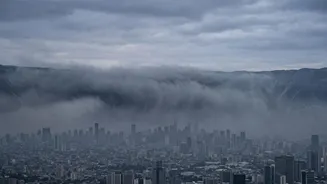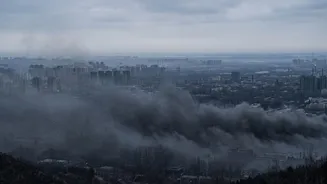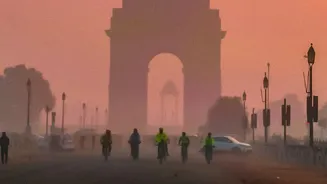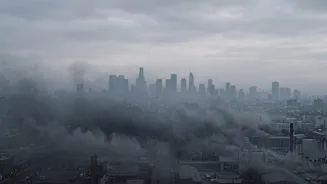







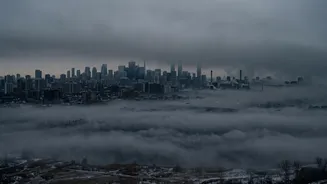
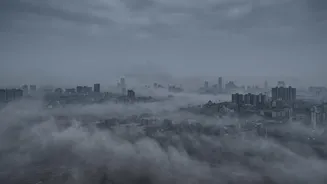
Every year, as autumn's crisp air gives way to winter's chill, residents of Delhi-NCR brace for a familiar, toxic reality: a thick blanket of smog. This annual plunge in air quality isn't a simple case of more pollution, but a complex crisis.
A Meteorological Trap
The primary
driver of this phenomenon is a weather event called temperature inversion. Normally, air is warmer near the ground and gets cooler with altitude, allowing pollutants to rise and disperse. But during winter nights, the ground cools rapidly, chilling the air just above it. This creates a layer of cool, dense air trapped beneath a layer of warmer air above. This 'lid' prevents pollutants from escaping vertically, concentrating them at breathing level. This effect is strongest in the early mornings, which is why air quality often feels most severe at the start of the day.
Slowing Winds and Geography
Compounding the inversion is a seasonal drop in wind speed. As the monsoon withdraws, the strong winds that help clear the air die down. Pollutants that would normally be blown away become stagnant, lingering over the region for days. Delhi's geography further complicates matters. The city lies in the Indo-Gangetic plain, a vast, flat basin. It is effectively hemmed in by the Himalayas to the north and the Aravalli Range to the south, creating a natural 'bowl' that makes it difficult for trapped air to escape horizontally.
The Arrival of Stubble Smoke
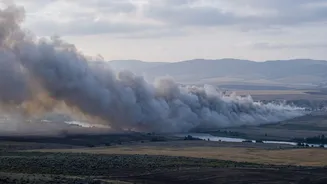
Into this atmospheric trap comes a massive, seasonal influx of pollution from stubble burning. In the neighbouring states of Punjab, Haryana, and Uttar Pradesh, farmers clear their fields for the next crop by burning the residue from the recent paddy harvest. This practice, concentrated between October and November, releases enormous quantities of particulate matter (PM2.5 and PM10), carbon monoxide, and other harmful gases into the atmosphere. Northwesterly winds, which are common after the monsoon, carry this smoke directly towards Delhi-NCR, often just as the winter inversion begins to take hold. On peak days, smoke from farm fires can contribute over 40% of Delhi's hazardous PM2.5 pollution.
The Baseline of Urban Pollution
While stubble burning is a major episodic contributor, it adds to an already high baseline of local pollution. Delhi-NCR has a constant stream of emissions from other sources that become far more dangerous when trapped by winter weather. Vehicular traffic is a significant and consistent source, with some studies attributing over 20-25% of winter particulate matter to vehicle emissions. Industrial pollution from factories and coal-fired power plants in and around the region, dust from countless construction sites, and the open burning of waste all contribute to the toxic mix. During winter, even emissions from small fires used for warmth add to the suffocating haze.