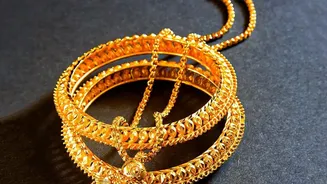








What Exactly Are Making Charges?
Making charges, also known as labour charges, are the fees you pay for the craftsmanship involved in turning raw gold into a finished piece of jewellery. This cost covers the entire process, from designing and casting to soldering, polishing, and setting
stones. Essentially, you are not just paying for the metal, but for the skill, time, and artistry required to create the ornament. These charges can vary widely, from as low as 3% for simple, machine-made items to over 25% for intricate, handcrafted designer pieces.
How Are These Charges Calculated?
Jewellers typically use one of two main methods to calculate making charges. The first is a percentage of the gold's value. For example, if the gold in a necklace is worth ₹50,000 and the making charge is 12%, you'll pay an additional ₹6,000. This is a common method, but it means the charge increases when gold prices rise, even if the labour remains the same. The second method is a fixed rate per gram of gold. For a 10-gram chain with a charge of ₹500 per gram, the making charge would be a flat ₹5,000. This method is often considered more transparent as it's not tied to fluctuating gold prices. The choice between these methods depends on the jeweller and the type of jewellery.
Understanding Wastage Charges
Another term you might encounter is 'wastage'. This charge is meant to compensate the jeweller for the small amount of gold that is lost or becomes unrecoverable during the manufacturing process, especially with complex, handmade designs. This can happen during cutting, filing, or polishing. Wastage is usually calculated as a percentage of the gold's weight, often between 3% and 7%, but it can be higher for very intricate pieces. Some jewellers combine wastage and making charges, which can make it difficult to understand the true cost of labour. It is always a good practice to ask for a clear breakdown of both.
Other Costs on Your Bill
Beyond making and wastage charges, your final bill will include other components. The Goods and Services Tax (GST) is a mandatory charge. In India, a 3% GST is applied to the total value of the gold and an additional 5% GST is levied on the making charges. You may also see a small fee for hallmarking, which is the official certification of the gold's purity by the Bureau of Indian Standards (BIS). Always look for the BIS hallmark and the 6-digit HUID code on your jewellery, which verifies its purity.
Red Flags: When to Be Cautious
Being an informed buyer helps you avoid unfair practices. A major red flag is a lack of transparency. If a jeweller is unwilling to provide a detailed breakdown of charges, be wary. Another trick is charging for the total weight of a studded piece at the price of gold, meaning you pay for the weight of gemstones as if they were gold. Be cautious of offers like "zero making charges," as the cost is often hidden elsewhere, such as in an inflated gold rate, exaggerated wastage fees, or overpriced stones. Finally, while some negotiation on making charges is common and even expected, especially with independent jewellers, be wary of any deal that seems too good to be true.