







A Celestial Spectacle Beckons
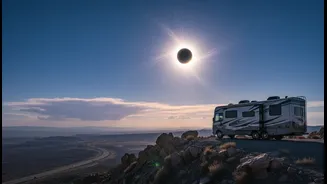
On August 12, 2026, a total solar eclipse will trace a path across Greenland, Iceland, and northern Spain, offering a breathtaking sight for millions. This event, the first total solar eclipse visible in continental Europe in over two decades, is expected
to draw huge crowds, especially to Spain where the weather prospects are excellent. For many in India, this presents a perfect opportunity to combine international travel with a once-in-a-lifetime astronomical event. During the brief period of totality, when the Moon completely blocks the Sun, it is safe to look with the naked eye. However, for all the partial phases before and after, proper eye protection is non-negotiable.
Why Your Eyes Are at Risk
Staring at even a sliver of the partially eclipsed sun can cause severe and permanent eye damage, a condition known as solar retinopathy. The intense solar radiation can burn the cells in your retina, the light-sensitive tissue at the back of your eye. What makes this so insidious is that there is no pain during the injury. The damage often becomes apparent hours later, manifesting as blurred vision, distorted vision, or even a permanent blind spot. Children are especially vulnerable, as their younger eyes transmit more light to the retina. It is crucial to understand that regular sunglasses, no matter how dark, offer zero protection against this kind of injury.
The ISO 12312-2 Safety Standard
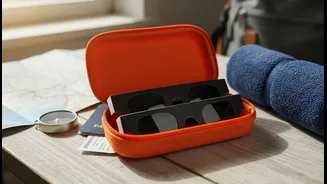
The only way to safely observe the partial phases of a solar eclipse is through special-purpose solar filters, such as those found in eclipse glasses or handheld viewers. These products must comply with the ISO 12312-2 international safety standard. This certification ensures the viewer filters out more than 99.99% of intense visible light and blocks harmful ultraviolet (UV) and infrared (IR) radiation. When you buy solar viewers, you must look for the “ISO 12312-2” or “ISO 12312-2:2015” designation printed on them. Without this standard, you are gambling with your eyesight.
How to Identify Counterfeit Viewers
Unfortunately, the popularity of eclipses has led to a market flooded with counterfeit and unsafe viewers. Merely seeing the ISO logo is not enough, as this can be easily faked. To protect yourself, buy from reputable vendors recommended by astronomical organizations. Legitimate glasses should have the manufacturer's name and address printed on them. A simple home test can also help: when you put them on indoors, you should not be able to see anything except for very bright lights, which should appear faint. The lenses on authentic viewers are often silver on the outside and black on the inside. If you can see ordinary objects through the lenses, they are not safe for solar viewing.
Securing Your Viewers in India
With the eclipse on the horizon, now is the time to source your viewers, not at the last minute. Waiting too long often leads to panic buying from unverified sellers on online marketplaces. Reputable suppliers in India include specialized science shops and opticians who stock certified products. Some companies even import filter material from trusted US manufacturers like Thousand Oaks Optical. You can also check with local astronomy clubs or planetariums, as they often procure and sell safe viewers ahead of major celestial events. Ordering well in advance ensures you receive genuine products and can check them thoroughly before your trip.