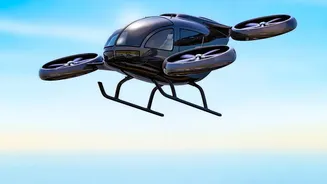








What Exactly Is an eVTOL?
An eVTOL is an electric Vertical Take-Off and Landing aircraft. Think of it as a smarter, quieter, and greener cousin of the helicopter. Unlike conventional helicopters that rely on a single large rotor and a combustion engine, eVTOLs use multiple electrically
powered rotors. This design allows them to take off and land vertically like a helicopter but often transition to fly forward like a conventional plane. The use of electric propulsion means they are significantly quieter, produce zero operational emissions, and have the potential to be much cheaper to operate and maintain over time. Various designs are being developed by global giants and startups, including companies like Joby Aviation, Archer Aviation, and Volocopter.
The Promise: A Third Dimension for Urban Travel
The primary appeal of eVTOLs is their potential to create a new layer of transportation within cities, known as Urban Air Mobility (UAM). For India's megacities, which are choked by severe traffic congestion, this is a compelling vision. Proponents envision a network of 'vertiports'—small, designated landing and takeoff pads—on rooftops or at transport hubs. A commuter could book an air taxi through an app, travel from a city center like Connaught Place to a suburb like Gurugram in a matter of minutes, not hours. The initial focus would likely be on premium routes, such as connecting airports to city centers, which could drastically cut down travel times.
Why India Is Taking Serious Notice
India's interest in eVTOLs goes beyond just easing traffic for a select few. The government sees this as a multi-faceted opportunity. Firstly, it aligns with national goals for developing smart cities and sustainable transport. Secondly, there's a significant 'Make in India' component. By fostering a domestic ecosystem for eVTOL manufacturing and operations, India could become a key player in this emerging global market. Companies like The ePlane Company, an IIT Madras-incubated startup, are already developing their own aircraft, with plans for air ambulances and passenger taxis. Global players like Archer Aviation have partnered with Indian firms like InterGlobe Enterprises with the aim of launching services in India as early as 2026.
Building the Regulatory Runway
Before air taxis can become a reality, a robust regulatory framework is essential. India's Directorate General of Civil Aviation (DGCA) is proactively working on this. Rather than waiting for the technology to arrive, the DGCA has already issued guidance for vertiport design and aircraft type certification, aligning with international bodies like the FAA in the US and EASA in Europe. Several working groups are focused on critical areas including pilot licensing, air traffic management, and maintenance protocols. This methodical approach, focusing on rules and safety first, is intended to give manufacturers and investors the confidence to plan for the Indian market.
Hurdles on the Horizon
Despite the optimism, the path to a sky full of air taxis is filled with challenges. The first major hurdle is infrastructure; building a network of vertiports in already crowded cities requires significant investment and navigating complex land acquisition issues. Air traffic management is another critical piece of the puzzle—how will these low-flying vehicles safely coexist with existing air traffic, drones, and each other? Furthermore, India's extreme weather conditions, like monsoons, present operational challenges. Finally, the question of affordability remains. For eVTOLs to be a true mobility solution and not just a luxury, the cost of a ride will need to be accessible to a broader population, a balance that will be difficult to strike in the initial years.