



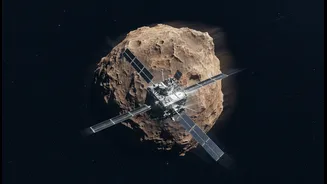


The Mission That Refused to End
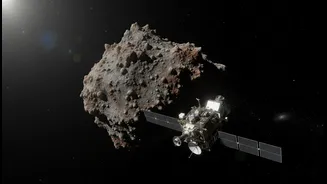
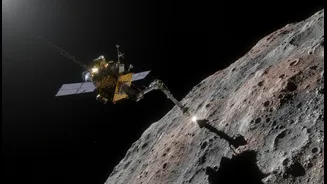
In December 2020, the Hayabusa2 spacecraft successfully delivered a capsule to Earth containing precious samples from the asteroid Ryugu. For many missions, this would be the grand finale. However, the Japan Aerospace Exploration Agency (JAXA) found their
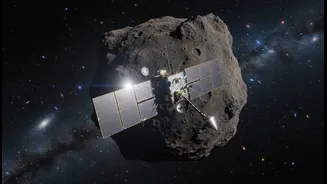
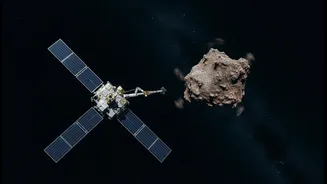
probe was still in excellent health, with about half of its xenon fuel remaining. Instead of retiring the veteran explorer, they approved an audacious extended mission called Hayabusa2#, pronounced 'Hayabusa Sharp'. This new decade-long journey will push the spacecraft to its limits, testing its long-term endurance and providing invaluable data on operating a probe well beyond its original design life. The mission is a testament to resilient engineering and opportunistic science, proving that a successful mission can still offer new discoveries.
A New Target and a New Challenge
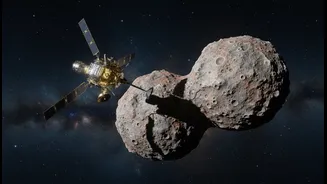
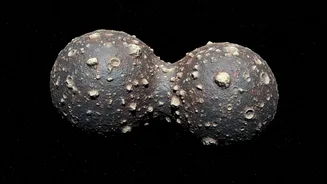
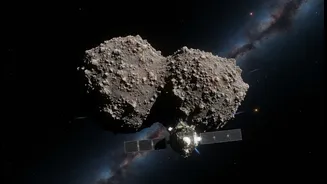
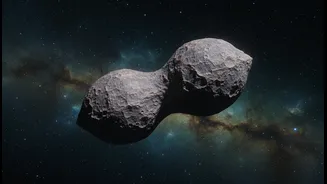
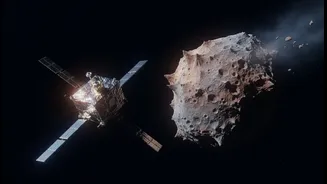
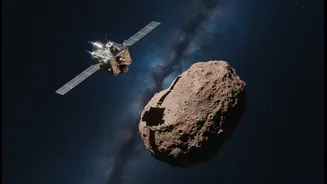
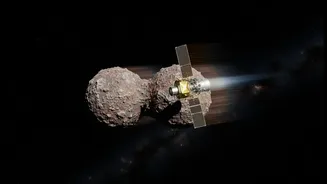
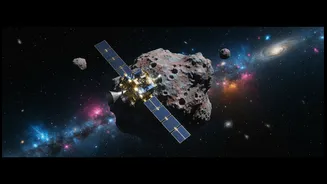
The extended mission includes a July 2026 high-speed flyby of an asteroid named Torifune, and a final rendezvous in 2031 with a truly exotic object: 1998 KY26. While the Torifune flyby itself offers new science, it's the final target that has scientists buzzing. 1998 KY26 is a micro-asteroid, initially thought to be around 30 meters in diameter but recent observations suggest it may be as small as 11 meters across. What makes it truly remarkable is its incredibly fast rotation. It spins on its axis roughly every five to ten minutes, so quickly that it's near the physical limit where a loose pile of rubble would fling itself apart. This makes it a scientifically fascinating and difficult target, representing a class of tiny asteroids never before visited by a spacecraft.
Rewriting the Mission Design Rulebook
The success of Hayabusa2's primary mission and its ability to embark on a long extension is already changing how space agencies plan for the future. Previously, missions were often designed with just enough fuel and durability to complete their main objectives. Hayabusa2 demonstrates the immense value of building in margins. Future probes may be designed with more generous fuel reserves and more robust systems, with the explicit goal of seeking out targets of opportunity after their primary work is done. This approach maximizes the scientific return on the massive investment required to launch a spacecraft. It shifts the thinking from a single-shot mission to creating a long-term exploratory platform that can adapt to new discoveries. The mission is also a crucial test of long-term spacecraft operation, yielding engineering data that will inform the design of future probes destined for the outer solar system and beyond.
A Sharper Focus on Planetary Defense
Studying a tiny, fast-spinning object like 1998 KY26 has major implications for planetary defense. While large, dinosaur-killing asteroids are rare, smaller objects a few dozen meters across are far more common and can still cause significant regional damage if they strike Earth, as seen in the 2013 Chelyabinsk event. These objects are difficult to track and their physical properties are largely unknown. Understanding whether they are solid rocks or loosely-bound 'rubble piles' is critical for developing effective deflection strategies. A mission like NASA's DART showed we can move an asteroid, but the success of such a kinetic impactor depends heavily on what the target is made of. By studying 1998 KY26 up close, Hayabusa2 will provide the first ground-truth data on this common but mysterious class of near-Earth objects, making humanity safer in the process.