



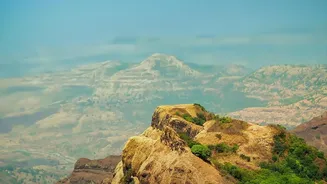
The Classic Ghat Drive: Panchgani to Mahabaleshwar
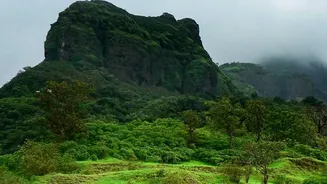
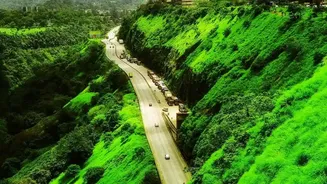
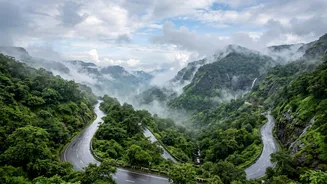
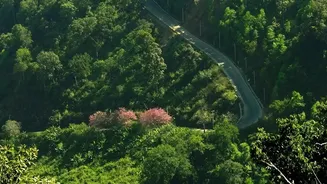
This is the quintessential entry to the region for many travellers. The drive from the base town of Wai up the Pasarni Ghat to Panchgani is a journey of sharp bends and evolving landscapes. During the monsoon, the valley turns into a vibrant green carpet,
with numerous small, seasonal waterfalls appearing by the roadside. As you climb, the air gets cooler and mist often rolls across the road, creating a dramatic and moody atmosphere. Stop at Parsi Point in Panchgani for a panoramic view of the Krishna Valley and Dhom Dam's backwaters before continuing the short, scenic drive to Mahabaleshwar. This stretch, though popular, is a perfect introduction to the magic of the ghats in the rain.
The Lake Route: Mahabaleshwar to Tapola
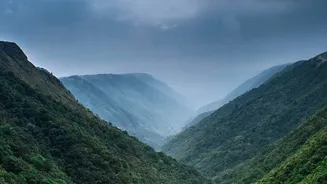
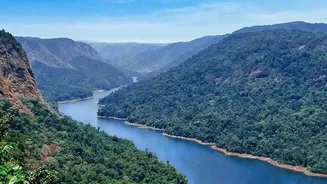
Often called 'Mini Kashmir', the 25-kilometre drive from Mahabaleshwar to Tapola is one for the soul. This narrow, winding road takes you away from the main tourist trail and deeper into the forests of the Sahyadris. The main attraction is not a single viewpoint, but the journey itself, which culminates at the stunning Shivsagar Lake, the vast backwaters of the Koyna Dam. In the monsoon, the lake is full, and the surrounding hills are covered in a dense, green blanket. The drive is famously foggy, so visibility can be low, demanding a slow and careful pace. Once there, a boat ride on the serene, expansive waters is the best way to soak in the tranquillity of the region.
The Waterfall Trail: Satara to Thoseghar Falls
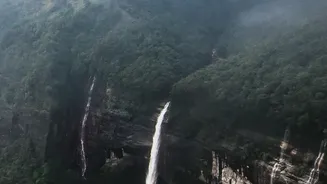
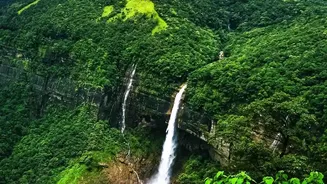
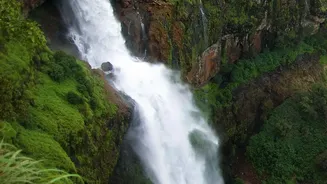
For those who find joy in the thunderous roar of waterfalls, the drive from Satara to Thoseghar is a must-do. Located about 20-25 km from Satara city, the route takes you through rustic countryside that is at its greenest during the monsoon. The destination is a series of spectacular waterfalls, with one plunging from a height of nearly 200 meters. A well-maintained platform allows for safe viewing of the falls, which are at their most powerful from July to October. You can extend this drive to the nearby Chalkewadi Windmill Farms, where giant turbines play hide-and-seek in the clouds, creating a surreal and mesmerising landscape.
The Plateau Path: Satara to Kaas Plateau
While the famous floral bloom of Kaas Pathar occurs post-monsoon (late August to early October), the drive to this UNESCO World Heritage site is a spectacular monsoon experience in itself. The 25 km road from Satara climbs through the ghats, offering breathtaking views of the Urmodi Dam reservoir and the surrounding valleys. The journey is marked by lush meadows, small streams, and a refreshing lack of crowds. Even without the full carpet of flowers, the vibrant greenery and cool, misty climate make it an incredibly peaceful and scenic drive. The nearby Kaas Lake is another point of serene beauty along this route.
Essential Monsoon Driving Tips
Driving in the ghats during monsoon requires caution. Roads can be slippery, and visibility is often poor due to heavy rain and thick fog. Always check weather and road conditions before starting, as landslides can cause closures. Drive slowly, use your fog lamps, and avoid honking unnecessarily. It is advisable to start early and avoid driving on unfamiliar ghat roads after dark. Many viewpoints might be engulfed in mist, so be prepared for a trip where the journey itself is the primary attraction. Keep a flexible itinerary and be ready to stop for hot corn and tea from roadside stalls—it's all part of the experience.