




A Sudden Burst of Light
Imagine watching a distant galaxy for years, seeing only the steady, calm light of its stars. Now, picture its core suddenly flaring up with a brilliance that outshines everything around it. This is exactly what happened in late 2019 with a galaxy named
SDSS1335+0728, located about 300 million light-years away. The previously unremarkable galaxy, found in the Virgo constellation, began to glow dramatically, catching the attention of astronomers using the Zwicky Transient Facility in California. This sudden and sustained brightening was unlike anything they had seen before.
What It Means for a Black Hole to 'Wake Up'
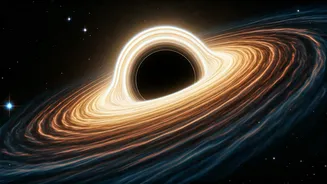
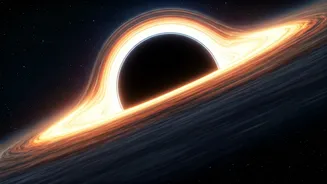
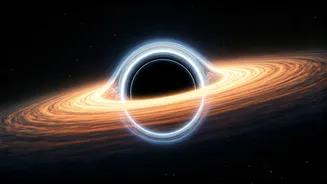
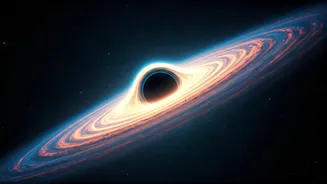
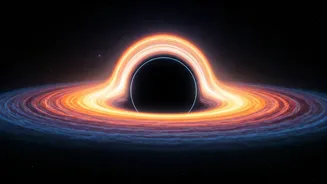
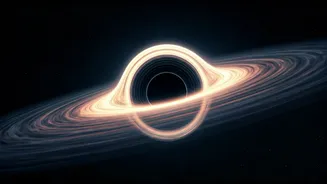
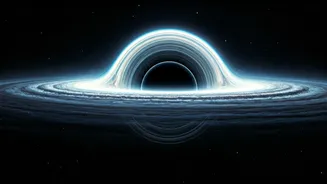
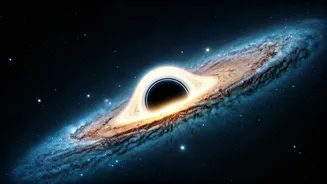
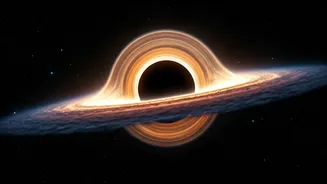
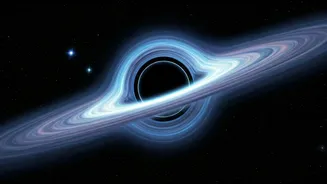
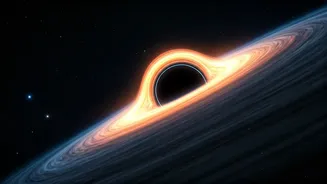
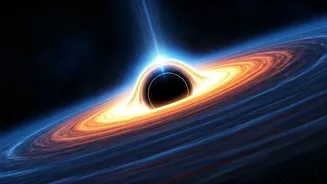
Most large galaxies, including our own Milky Way, have a supermassive black hole at their center. These behemoths, with masses millions or even billions of times that of our sun, are usually dormant, or 'sleeping'. They are not directly visible because nothing, not even light, can escape their gravitational pull. However, when a black hole starts actively feeding on the gas, dust, and stars in its vicinity, it 'wakes up'. The material doesn't fall straight in; instead, it forms a swirling, superheated disc around the black hole called an accretion disc. This disc becomes so hot and bright that it can outshine the entire host galaxy, creating what astronomers call an Active Galactic Nucleus (AGN).
The Awakening of SDSS1335+0728
The changes in galaxy SDSS1335+0728 were unprecedented. After the initial brightening in 2019, it didn't fade away as one might expect from a supernova or a single star being torn apart (a tidal disruption event), which typically last for a few hundred days at most. Instead, this galaxy has continued to brighten for years, radiating more light across ultraviolet, optical, and infrared wavelengths. Then, in February 2024, it also began emitting X-rays, further evidence of a major energetic process at its core. According to the European Southern Observatory (ESO), which has been tracking the event with its Very Large Telescope, this is likely the result of the black hole, with a mass of about one million suns, beginning to feast on a massive supply of gas.
A First-of-its-Kind Observation
What makes this event so significant is that it's the first time astronomers have observed the awakening process in real-time. In the past, scientists have seen galaxies that were already active and others that were quiet. Finding one in the act of switching on is like catching a missing link in the story of galactic evolution. It gives scientists a unique opportunity to study how these powerful cosmic engines form and what triggers their activity. While researchers are still working to definitively rule out a very unusual and slow-moving tidal disruption event, all signs currently point to the birth of a new Active Galactic Nucleus.
What Happens Next?
Astronomers will continue to monitor SDSS1335+0728 closely. The ongoing observations will be crucial to confirm that this truly is a black hole turning on and to understand the physics of how it happens. This 'ultimate cosmic event' provides an invaluable natural laboratory for testing theories about black hole growth and its impact on the host galaxy. The discovery also raises fascinating, albeit remote, questions about our own galaxy. The supermassive black hole at the center of the Milky Way, Sagittarius A*, is currently sleeping. While there's no indication it will wake up soon, events like the one in SDSS1335+0728 show that galaxies are dynamic, ever-changing places.