





The Inheritor's Dilemma
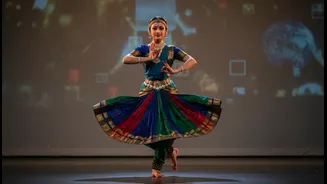
For a young dancer learning Bharatanatyam in a suburban American basement or a Kathak artist training in a London studio, the experience is fundamentally different from that of their counterparts in India. Living abroad can deepen the emotional connection
to heritage, making the dance a vital link to cultural identity. However, it also presents a unique challenge: how to authentically represent an art form whose cultural and spiritual context is not part of their daily life? These artists are often seen as culture-bearers, tasked with preserving a tradition. Yet, they are also individuals shaped by global influences, leading to a constant negotiation between the pull of authenticity and the push of their lived, multicultural experience.
New Stories, Ancient Language
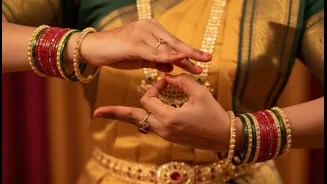
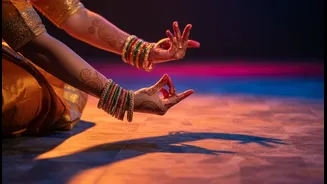
Traditionally, classical dance has been a medium for narrating Hindu mythology and epic tales. Today, young performers abroad are expanding this narrative scope. They are using the sophisticated vocabulary of mudras (hand gestures) and abhinaya (expressions) to explore contemporary themes that resonate with their own lives and diverse audiences. Choreographies now tackle subjects like identity, migration, social justice, and mental health. This doesn't necessarily mean abandoning tradition, but rather using its powerful framework to tell new stories, proving the art form’s dynamism and relevance in the modern world.
The Fusion Frontier
The word "fusion" can be contentious in classical arts, often raising fears of dilution. However, for many young dancers, blending styles is a natural form of expression. Collaborations with ballet, contemporary, and even hip-hop artists are becoming more common, creating new kinetic vocabularies. Some of the most celebrated dancers in the diaspora, like Akram Khan, have built their careers on fusing Kathak with modern dance, creating work that is seen as expressive of a contemporary, hybrid identity. These experiments challenge the boundaries of the form, sparking a crucial dialogue about what constitutes evolution versus compromise.
The Digital Stage and Global Guru
Technology has completely reshaped the landscape for diaspora dancers. Social media platforms like Instagram and YouTube provide global visibility, allowing artists to bypass traditional gatekeepers and connect directly with audiences worldwide. A performance is no longer limited to a local auditorium; it can reach millions with a single click. This digital stage also changes the learning process. The rigid guru-shishya parampara (teacher-disciple tradition) is evolving, with online classes and workshops making it possible to learn from masters across continents. While this democratises access, it also raises questions about the loss of embodied learning and nuance that comes from in-person training.